

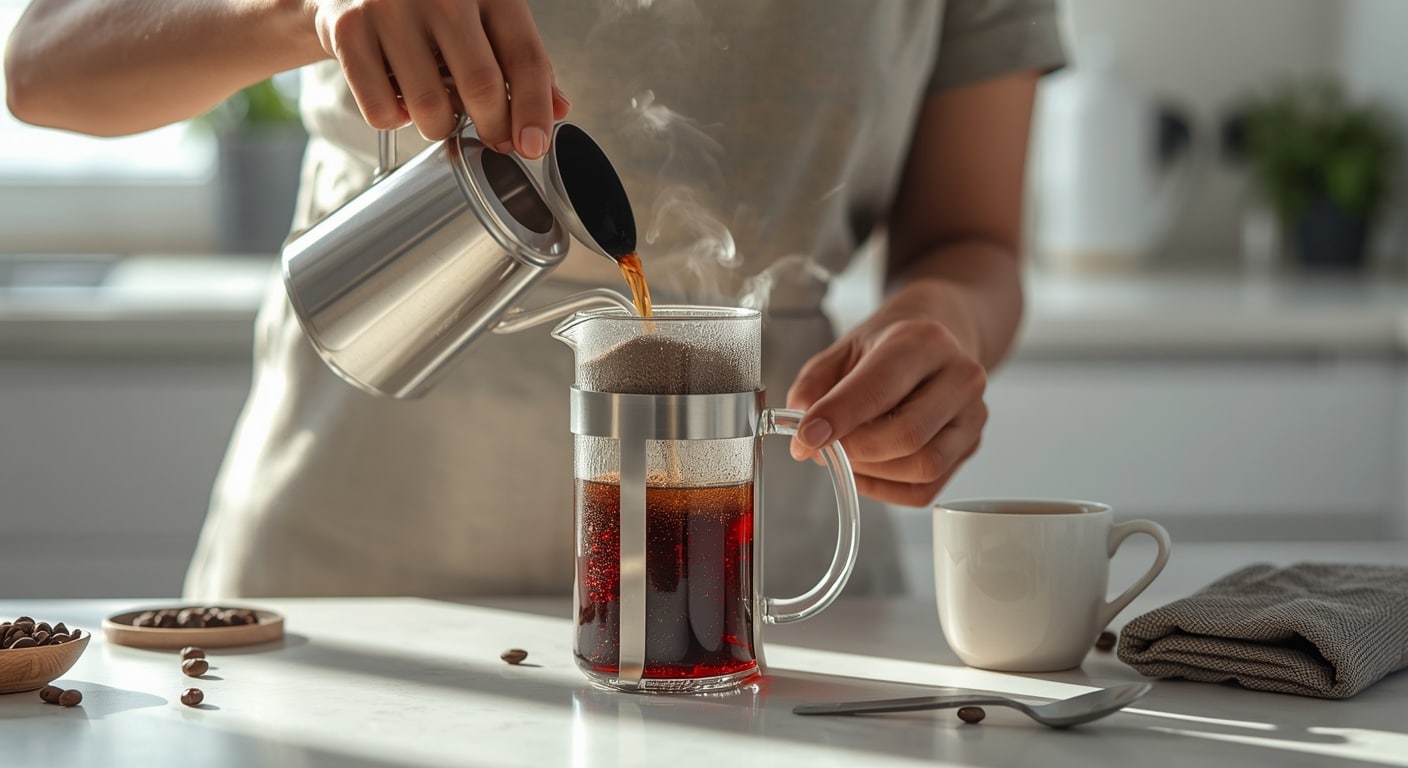
French press coffee is one of the easiest and most rewarding ways to brew coffee at home. It needs very little equipment, brings out rich flavour, and gives you full control over strength, body, and brew time. In Malaysia, where many coffee drinkers enjoy both traditional kopitiam styles and modern specialty coffee, the French press remains a practical brewing method because it is affordable, simple to use, and suitable for everyday brewing.
If you are new to manual brewing, this guide will show you exactly how to use a French press, what coffee-to-water ratio to use, how coarse your grind should be, and which common mistakes to avoid. Whether you are brewing one mug before work or making enough for friends after dinner, these steps will help you make cleaner, fuller, and more balanced french press coffee.
What Is French Press Coffee?
French press coffee is made by steeping ground coffee in hot water and then separating the grounds with a metal mesh plunger. Unlike paper-filter brewing methods, a French press allows more oils and fine particles to remain in the cup. That is why the result often tastes fuller, heavier, and more textured than drip coffee.
If you are exploring different manual brewers, our guide to coffee brewing methods can help you compare the French press with pour over, AeroPress, moka pot, and more.
Why Many People Like the French Press
1. It is easy to learn
You do not need advanced barista skills to make a good cup. Once you understand the basic ratio, grind size, and brew time, the process is very repeatable.
2. It is budget-friendly
A French press is often more affordable than espresso machines and many electric brewers. This makes it a good choice for students, young professionals, and home coffee drinkers in Malaysia.
3. It brings out body and richness
Because there is no paper filter, more coffee oils stay in the brew. This gives french press coffee a rounder mouthfeel and stronger body.
4. It works well for different roast styles
You can use medium or dark roasts for a classic bold cup, or a lighter roast if you want more fruit and floral notes. The results depend heavily on the beans and grind consistency.
What You Need to Make French Press Coffee
Before you start, prepare the following:
- French press
- Fresh coffee beans
- Burr grinder if possible
- Hot water
- Kettle
- Scale or measuring spoon
- Timer
- Spoon for stirring
- Mug or server
If you are unsure which beans to use, read our coffee beans guide to understand roast levels, origins, and flavour profiles better.
The Best Grind Size for French Press Coffee
Grind size is one of the most important parts of brewing french press coffee. The usual recommendation is a coarse grind, similar to sea salt. This helps prevent over-extraction and reduces the amount of sludge in the cup.
If the grind is too fine, the coffee may taste bitter, muddy, and overly strong. Fine grounds can also slip through the filter and make your coffee gritty. If the grind is too coarse, the brew may taste weak, sour, or under-extracted.
When possible, grind fresh just before brewing. Fresh grinding preserves aroma and gives you more control over flavour. A burr grinder is better than a blade grinder because it produces more even particle sizes.
French Press Coffee Ratio: How Much Coffee to Use
A good starting ratio for french press coffee is 1:15 or 1:16, which means 1 gram of coffee for every 15 to 16 grams of water.
Here are some easy examples:
- 20g coffee to 300g water for 1 to 2 cups
- 30g coffee to 450g water for 2 cups
- 40g coffee to 600g water for 3 to 4 cups
If you prefer a stronger cup, try a 1:14 ratio. If you want something lighter and easier to drink, try 1:16 or 1:17.
Consistency matters more than guessing. Using a scale makes a big difference, especially when you are adjusting one variable at a time.
Best Water Temperature for a French Press
The ideal water temperature is usually around 92 to 96 degrees Celsius. If you do not have a thermometer, bring the water to a boil and let it rest for about 30 to 45 seconds before pouring.
Water that is too hot can extract bitterness more quickly. Water that is too cool may leave the coffee flat or sour. In Malaysia’s warm climate, some people overlook the importance of water quality, but it matters a lot. Filtered water generally produces a cleaner and sweeter cup than heavily chlorinated tap water.
How to Use a French Press: Step-by-Step
Step 1: Preheat the French press
Rinse the French press with hot water first. This helps stabilise the brewing temperature and keeps the coffee from cooling too quickly. Discard the rinse water before adding coffee.
Step 2: Add ground coffee
Place your French press on a scale and add your ground coffee. For a standard starting point, use 30g of coffee for 450g of water.
Step 3: Start with a small pour
Pour in about twice the weight of water compared to coffee, just enough to wet all the grounds. For 30g of coffee, begin with around 60g of water.
Step 4: Let the coffee bloom
Wait for about 30 to 45 seconds. During this stage, the coffee releases trapped gas, especially if it is freshly roasted. Blooming helps improve extraction and balance.
Step 5: Pour the rest of the water
After the bloom, slowly pour the remaining water until you reach your target weight. Make sure all the grounds are saturated.
Step 6: Stir gently
Use a spoon to give the coffee a gentle stir. You do not need to stir aggressively. The goal is simply to help all the grounds make contact with the water.
Step 7: Place the lid on top
Put the lid on the French press with the plunger pulled all the way up. Do not press yet. Let the coffee steep.
Step 8: Brew for about 4 minutes
Four minutes is a common starting point for french press coffee. If your coffee tastes too weak or sour, try a slightly longer steep next time. If it tastes too bitter or heavy, try a shorter brew or a coarser grind.
Step 9: Break the crust if needed
At the top, you may see a crust of floating grounds. Some brewers break this crust with a spoon and skim off the foam and loose grounds for a cleaner cup. This step is optional, but it can improve clarity.
Step 10: Press slowly and steadily
Push the plunger down gently. Do not force it. If there is too much resistance, your grind may be too fine. Pressing too hard can disturb the sediment and create a muddier cup.
Step 11: Pour immediately
Once plunged, serve the coffee right away. Do not leave it sitting in the French press for too long, or it may continue to extract and become bitter. If you made a larger batch, pour the extra coffee into a separate server or mug.
A Simple French Press Recipe to Start With
Try this beginner-friendly recipe:
- 30g coarse ground coffee
- 450g hot water at about 94 degrees Celsius
- Bloom for 30 seconds
- Total steep time: 4 minutes
- Press slowly and pour immediately
This recipe should give you a balanced cup with good body. From here, make small adjustments based on taste.
How to Adjust Your Brew for Better Taste
If your coffee tastes bitter
- Use a coarser grind
- Shorten the brew time
- Lower the water temperature slightly
- Reduce agitation
If your coffee tastes sour or weak
- Use a slightly finer grind
- Increase brew time a little
- Make sure the water is hot enough
- Check your ratio and use more coffee if necessary
If your coffee tastes muddy
- Use a coarser and more even grind
- Press more gently
- Skim the surface before plunging
- Pour carefully and avoid the last bit of sediment
Common Mistakes When Making French Press Coffee
Using stale beans
Even the best technique cannot fully fix dull beans. Buy freshly roasted coffee when possible and store it in an airtight container away from heat, moisture, and direct sunlight.
Grinding too fine
This is one of the most common reasons for bitter, silty coffee. A too-fine grind also makes plunging difficult.
Guessing the coffee and water amount
Scoops can work, but a scale is much more reliable. A small change in ratio can noticeably affect flavour.
Leaving coffee in the press too long
Once brewed, coffee should be poured out. Letting it sit with the grounds causes over-extraction.
Using poor water
Coffee is mostly water, so water quality matters. Try filtered water if your brew tastes flat or unusual.
What Beans Work Best for a French Press?
There is no single best choice, but medium and medium-dark roasts are often very enjoyable in a French press because they bring body, sweetness, and chocolate or nutty flavours. Dark roasts can also work if you like a heavier and bolder cup. Lighter roasts are possible too, but you may need to dial in the grind and brew time more carefully to highlight acidity and complexity.
For coffee drinkers in Malaysia, this can be a fun way to explore beyond familiar profiles. You might enjoy trying beans from local roasters and comparing how Brazilian, Ethiopian, Indonesian, or regional blends behave in a French press. If you are looking to understand local coffee culture and trends, our Malaysia coffee guide offers useful context.
French Press vs Other Brewing Methods
French press vs pour over
French press usually produces a fuller and heavier cup, while pour over tends to be cleaner and brighter. If you like body and simplicity, the French press is a strong choice.
French press vs espresso
Espresso is more concentrated, intense, and equipment-dependent. French press is slower, easier, and more affordable for home use.
French press vs drip coffee machine
Drip machines are convenient for larger batches, but a French press gives more manual control and often more texture in the cup.
How to Clean a French Press Properly
Cleaning matters because old coffee oils can turn rancid and affect flavour. After brewing:
- Discard the used grounds into the bin or compost
- Rinse the beaker with warm water
- Wash the plunger and filter parts with mild soap
- Dry thoroughly before reassembling
Every now and then, take apart the filter assembly for a deeper clean. This helps remove trapped fines and oil buildup.
Tips for Better French Press Coffee at Home
- Buy whole beans and grind fresh
- Use a burr grinder if possible
- Preheat the press before brewing
- Measure coffee and water with a scale
- Use filtered water
- Pour brewed coffee out immediately
- Change only one variable at a time when adjusting
Is a French Press Good for Beginners?
Yes. A French press is one of the best brewing tools for beginners because the process is straightforward and forgiving. You do not need paper filters, complicated pouring technique, or expensive equipment. Once you get the grind size and ratio right, making french press coffee becomes part of an easy daily routine.
Final Thoughts
French press coffee is popular for good reason. It is simple, flexible, and capable of producing a rich, satisfying cup with very little equipment. Start with a coarse grind, use the right water temperature, stick to a sensible ratio, and steep for around four minutes. From there, adjust based on taste.
The best way to improve is to brew regularly and pay attention to small details. Once you understand how grind size, time, and ratio affect the cup, you will be able to make better french press coffee consistently at home.
If you enjoy practical coffee guides like this, subscribe to our newsletter for more brewing tips, bean guides, and coffee insights for Malaysia.
