

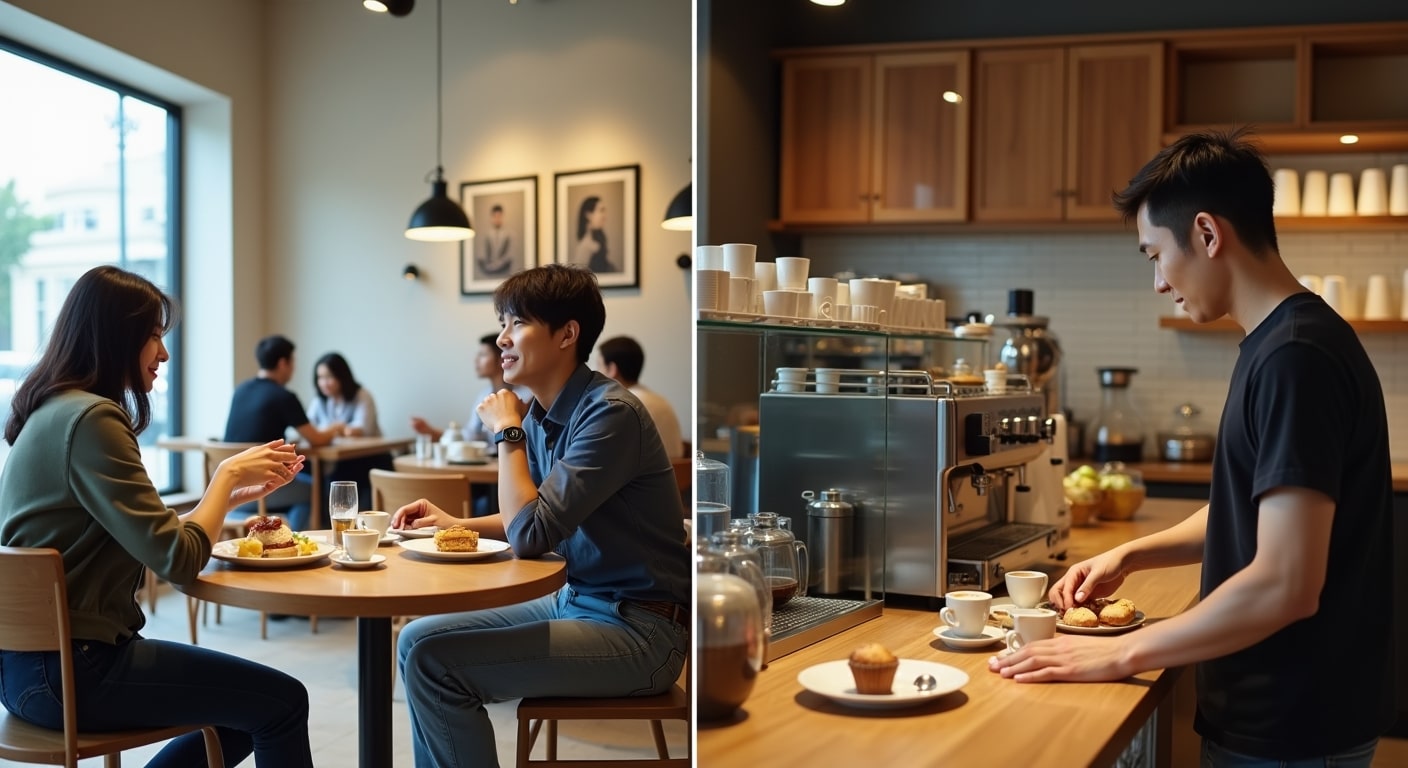
In Malaysia, the terms cafe and coffee shop are often used interchangeably, but they do not always mean the same thing. If you have ever wondered about the real difference in cafe vs coffee shop, you are not alone. The distinction matters for customers choosing where to spend their time, for business owners shaping a brand, and for anyone exploring the local food and beverage scene. While both places serve coffee, the concept, menu, atmosphere, and customer expectations can be quite different depending on location, style, and target market.
In everyday Malaysian usage, the answer is not always black and white. A neighbourhood kopitiam, a specialty espresso bar in Kuala Lumpur, and an Instagram-friendly brunch spot in Penang may all be called different things by different people. Understanding the difference helps you better describe a venue, choose the right experience, and make sense of how the local cafe industry has evolved.
Why the cafe vs coffee shop distinction matters
At a glance, both cafes and coffee shops are places where people buy coffee and light meals. However, customer expectations can change significantly based on the label. A coffee shop may suggest a quick caffeine stop, takeaway drinks, or a straightforward coffee-focused menu. A cafe often suggests a broader lifestyle experience, including ambience, dine-in comfort, stylish interiors, and more extensive food options.
For customers, that difference affects where they go for meetings, solo work sessions, brunch dates, or a fast morning coffee. For owners, it influences branding, menu design, fit-out decisions, and pricing strategy. If you are exploring the local scene, our guide to the best cafes in Malaysia shows how varied these concepts can be across the country.
What is a cafe?
A cafe is usually seen as a more experience-driven food and beverage space. In Malaysia, cafes commonly offer specialty coffee, non-coffee beverages, pastries, cakes, brunch items, pasta, sandwiches, and desserts. The environment is often designed to encourage people to stay longer, with air-conditioned seating, aesthetic decor, music, and a setting suitable for conversation or laptop use.
The modern Malaysian cafe scene has grown rapidly, especially in cities like Kuala Lumpur, Petaling Jaya, Johor Bahru, Penang, and Melaka. Many cafes build a clear identity around themes such as artisanal coffee, minimalist interiors, local ingredients, desserts, or all-day breakfast. The visual and social aspect also matters. Customers often expect a cafe to be comfortable, photogenic, and suited to both dining and social media sharing.
Typical features of a cafe
A cafe often includes a broader menu beyond beverages. You may see espresso-based drinks, matcha, chocolate drinks, tea, breakfast platters, pastries, rice bowls, and signature desserts. Service may be counter-based or table service depending on the concept. In many Malaysian cafes, presentation is carefully considered, and seasonal specials are common.
Cafes are also more likely to position themselves as lifestyle spaces. Some cater to remote workers with power sockets and Wi-Fi, while others focus on weekend brunch crowds. If you enjoy discovering new concepts around the country, a cafe hopping guide in Malaysia can help you see how different cafes build their identity.
What is a coffee shop?
A coffee shop traditionally focuses more directly on coffee itself. In many markets, this could mean a smaller outlet, grab-and-go format, or a simple dine-in setting with coffee as the main product. In Malaysia, though, the term coffee shop can mean different things depending on context.
For some people, a coffee shop refers to a modern beverage shop serving espresso, filter coffee, and a limited food menu. For others, especially in local usage, it can also refer to a kopitiam-style establishment. This is where the discussion becomes more interesting in Malaysia than in some other countries.
The Malaysian meaning of coffee shop
In Malaysia, “coffee shop” may describe a traditional kopitiam that serves local coffee, toast, eggs, noodles, and everyday meals. These venues are often community-oriented, practical, and less focused on curated aesthetics. At the same time, an English-speaking urban customer might use “coffee shop” to describe a specialty coffee bar with a more compact menu than a brunch cafe.
Because of this dual meaning, the phrase cafe vs coffee shop in Malaysia is shaped by both global trends and local food culture. A kopitiam is not the same as a Western-style coffee chain, and neither is exactly the same as a modern cafe. For a broader look at coffee culture and terminology, you can explore our Malaysia coffee guide.
Main differences between a cafe and a coffee shop
1. Menu range
The biggest difference is often the menu. A cafe usually offers a wider selection of food and drinks. Beyond coffee, there may be breakfast, brunch, lunch items, desserts, and specialty beverages. A coffee shop may keep food lighter and simpler, especially if coffee is the main attraction.
That said, Malaysian kopitiam-style coffee shops often have extensive local food choices, so context matters. In modern urban usage, however, a “cafe” usually signals more variety and a stronger food programme.
2. Atmosphere and design
A cafe generally places more emphasis on ambience. Seating comfort, interior design, branding, music, and visual appeal are usually part of the concept. Customers may stay for one to two hours or more. A coffee shop may be more functional, especially if it serves office workers, takeaway customers, or regulars who want a quick stop.
This is why many people choose cafes for catch-ups, casual meetings, and weekend outings, while coffee shops can be better for convenience and routine coffee runs.
3. Customer behaviour
In a cafe, customers often spend more time dining, relaxing, working, or socialising. In a coffee shop, customer flow may be faster, with more focus on ordering, drinking, and leaving. Of course, there are exceptions. Some specialty coffee shops attract coffee enthusiasts who stay to enjoy hand-brewed beans, while some cafes are busy enough that turnover is still quick.
4. Brand positioning
A cafe often sells not just food and drinks, but a complete brand experience. This can include interior style, plated dishes, curated playlists, merchandise, and social media appeal. A coffee shop is more likely to position itself around coffee quality, accessibility, or speed of service. In Malaysia, chains and independent operators may use either label depending on how they want customers to perceive them.
5. Price expectations
Customers often expect cafes to charge slightly higher prices because of the experience, larger menu, and more elaborate presentation. Coffee shops may be seen as more affordable or more coffee-led, though premium specialty coffee shops can also charge high prices for single-origin beans and manual brew methods.
How the Malaysian cafe scene has blurred the lines
One reason the cafe vs coffee shop debate can be confusing is that many Malaysian businesses combine both concepts. A venue might serve excellent specialty coffee like a coffee bar, but also operate with a full brunch menu and cafe-style interior. Another place may call itself a cafe but mainly focus on takeaway beverages and baked goods.
Malaysian consumers are also flexible with language. People may call almost any stylish beverage space a cafe, even when the menu is small. Others use coffee shop for anything coffee-related, including chains and independent roasters. In local neighbourhood settings, “coffee shop” may still strongly suggest kopitiam culture.
This overlap reflects how dynamic the market has become. International cafe culture, specialty coffee trends, local heritage concepts, and social dining habits have all influenced how businesses present themselves.
Cafe vs coffee shop for different occasions
For a quick caffeine stop
If you want speed and convenience, a coffee shop may be the better fit. Many have a simpler ordering process and are built for efficient service. This works well for commuters, office workers, and takeaway customers.
For brunch or a longer meal
A cafe is usually the better option if you want a sit-down meal, dessert, or a more relaxed social experience. Many cafes in Malaysia are designed specifically for lingering over coffee and food.
For work or study
Cafes often attract students, freelancers, and remote workers because they offer more seating comfort, Wi-Fi, and a calmer environment. However, policies vary, and some busy cafes limit long stays during peak periods.
For traditional local flavour
If your idea of a coffee shop includes kaya toast, soft-boiled eggs, and local kopi, then a Malaysian kopitiam delivers an experience that is different from both a modern brunch cafe and a specialty coffee bar. This is one of the unique aspects of the local market.
Which term should business owners use?
For operators, choosing between “cafe” and “coffee shop” is partly a branding decision. If the business focuses on dine-in experience, food variety, and lifestyle appeal, “cafe” may be the better fit. If the concept is built around coffee expertise, takeaway convenience, or a more direct beverage offer, “coffee shop” can make sense.
In Malaysia, the choice should also consider audience perception. A youthful urban crowd may respond well to the word cafe, while a concept inspired by tradition may intentionally use coffee shop or kopitiam to signal familiarity and heritage. The label should match the actual experience; otherwise, customers may arrive with the wrong expectations.
So, is a cafe the same as a coffee shop?
The short answer is no, but they can overlap. In a basic sense, both serve coffee and offer a place for customers to gather. The difference lies in emphasis. A cafe usually offers a broader food menu, more curated ambience, and a lifestyle-driven experience. A coffee shop usually puts more emphasis on coffee, convenience, or tradition, depending on the format.
In Malaysia, the answer depends heavily on whether you are talking about modern urban outlets, chain stores, specialty coffee bars, or traditional kopitiam settings. That is why understanding local context is important. The words may sound similar, but the customer experience can be very different.
Final thoughts on cafe vs coffee shop in Malaysia
When comparing cafe vs coffee shop, the best way to think about it is through customer expectations. A cafe is usually more about the overall experience, while a coffee shop is usually more focused on the coffee or practical dining function. In Malaysia, local usage adds another layer because coffee shop can also refer to traditional kopitiam culture.
As the industry continues to evolve, more venues will blend both concepts. For consumers, that means more choice. For business owners, it means clearer branding matters even more. If you enjoy discovering standout concepts around the country, consider subscribing to our newsletter for more guides, cafe roundups, and coffee insights from the Malaysian scene.
