

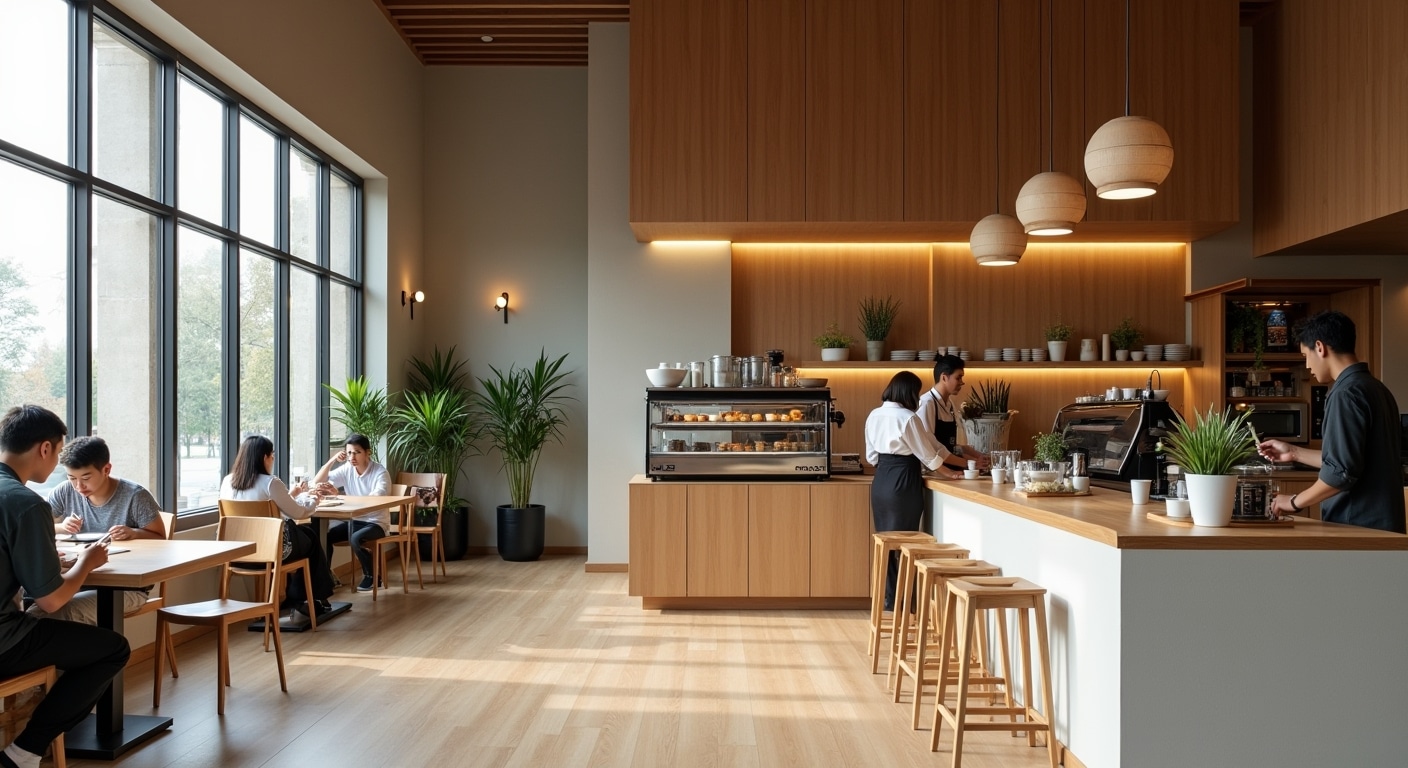
Minimalist cafe design has become a popular direction for cafe owners in Malaysia who want to create a calm, memorable, and highly practical customer experience. A well-executed minimalist concept is not about making a space feel empty. Instead, it is about removing clutter, choosing purposeful details, and shaping an environment that feels clean, warm, and easy to enjoy. For cafes in busy urban areas like Kuala Lumpur, Petaling Jaya, Penang, and Johor Bahru, this approach can also support better customer flow, stronger branding, and more efficient use of limited floor space.
Whether you are opening a new concept, renovating an existing coffee shop, or refreshing your brand for a more modern audience, minimalist cafe design can help your space feel timeless rather than trendy. It also works across different business models, from neighbourhood espresso bars to dessert cafes and brunch spots. The key is to balance simplicity with comfort, so customers still feel invited to stay, take photos, and come back again.
Why minimalist cafe design works so well
The appeal of minimalist cafe design comes from clarity. Customers walk into a space and immediately understand the mood, flow, and identity of the cafe. There are fewer visual distractions, so the coffee bar, seating, and brand details stand out more clearly. In a competitive market where people often discover places through social sharing and cafe-hopping culture, a clean and thoughtful interior can make a strong first impression. If you want to understand how local consumers explore new coffee spots, it helps to look at the broader cafe-hopping culture in Malaysia and how aesthetics influence customer choices.
Minimalism also supports operations. Cleaner layouts are generally easier to maintain, staff movement tends to be smoother, and seating arrangements can be more flexible. This matters especially in smaller shoplots and compact retail units, where every square foot affects service speed and revenue potential.
Start with a clear design concept
Before choosing furniture or paint colours, define what minimalism means for your brand. Some cafes lean toward Scandinavian simplicity with pale wood and soft daylight. Others interpret minimalism through industrial textures, concrete surfaces, and muted black accents. Some use warm Japanese-inspired elements such as natural wood, soft beige tones, and handcrafted ceramics.
The important part is consistency. Minimalist cafe design should not feel random or unfinished. Your materials, colour palette, menu boards, lighting, tableware, and signage should all feel related. If your brand is centred on slow coffee, pour-over service, and a calm environment, then the space should reflect that. If your concept is takeaway-driven with limited seating, the design can be more compact and functional while still looking polished.
Questions to define your design direction
Ask yourself a few practical questions before finalising the concept:
- Who are your main customers: office workers, students, neighbourhood families, or speciality coffee enthusiasts?
- Do you want customers to stay longer or keep the table turnover fast?
- Will the cafe be more daytime-focused, or should it transition into an evening setting?
- How much of the bar and brewing process do you want to showcase?
- What feeling should people remember after leaving your cafe?
These answers guide everything else, from seating density to colour temperature.
Use a restrained colour palette
One of the easiest ways to achieve minimalist cafe design is through colour control. Most successful minimalist cafes rely on a limited palette of two to four main tones. In Malaysia, warm whites, beige, taupe, soft grey, light oak, and charcoal are especially effective because they create a cool visual balance in our bright tropical climate.
Lighter colours can also help a shoplot feel larger and more breathable. If the unit has strong natural lighting, soft matte finishes often work better than overly glossy surfaces. You can still add contrast through dark window frames, metal fixtures, or statement pendant lights, but the overall effect should remain cohesive rather than busy.
Popular minimalist colour combinations
- Warm white and light wood for a soft, modern look
- Greige and black accents for a more urban feel
- Sand, olive, and natural timber for an earthy café concept
- Concrete grey with walnut details for a refined industrial touch
Accent colours should be used carefully. A minimalist cafe does not need many loud visual elements to feel memorable.
Choose materials that feel honest and durable
Material selection is one of the most important parts of minimalist cafe design. Customers can immediately sense whether a space feels authentic or overly staged. Natural and tactile materials often work best because they bring warmth into a simple interior. Timber, stone, textured plaster, linen, ceramic, glass, and powder-coated metal can all fit a minimalist concept when combined thoughtfully.
For Malaysian cafe environments, material choices should also account for humidity, maintenance, and long-term durability. It is wise to balance beauty with practicality, especially in high-touch areas like countertops, tabletops, and service stations. If you are planning a renovation or new fit-out, working with a cafe interior specialist can help you select finishes, surfaces, and spatial solutions that support both aesthetics and daily operations without making the space feel overdesigned.
Where to use key materials
- Wood for tables, counters, shelving, and chairs
- Stone or quartz for durable bar tops and service counters
- Textured paint or plaster for visual depth on feature walls
- Glass for frontage, partitions, or pastry display areas
- Metal for lighting, chair frames, and subtle structural detail
The best minimalist spaces often mix textures rather than relying on a single finish everywhere.
Design the layout around movement
Minimalism should improve function, not just appearance. A beautiful cafe that feels awkward to navigate will quickly frustrate both customers and staff. Good layout planning is especially important in narrow retail lots, corner units, and smaller neighbourhood spaces.
Start by mapping the customer journey from entrance to counter, pickup point, seating area, washroom access, and exit. The ordering process should feel intuitive. Queues should not block seated guests. Service stations should be easy for staff to reach. Bags, strollers, and takeaway customers should not create congestion during peak periods.
Layout ideas for minimalist cafes
- Keep the counter visible from the entrance
- Use built-in bench seating to save space
- Leave enough walking clearance between tables
- Separate takeaway and dine-in flow where possible
- Reduce decorative objects that interrupt movement
Minimalist cafe design works best when empty space is treated as a design asset, not wasted area. Breathing room makes the cafe feel calmer and more premium.
Make the coffee bar a visual focal point
In many successful cafes, the coffee bar becomes the centrepiece of the entire space. This is a natural fit for minimalist cafe design because the bar can serve as both a functional work zone and a strong visual anchor. Clean lines, neat equipment placement, hidden storage, and well-planned lighting can make the brewing area look intentional and professional.
If your concept focuses on speciality coffee, consider allowing the espresso machine, grinders, and manual brewing tools to be part of the visual experience. Customers often enjoy seeing a tidy, well-designed bar in action. This design choice also reinforces quality and craft, especially for an audience that is increasingly interested in beans, brewing methods, and coffee origins. For broader context on local coffee culture and consumer expectations, you can explore this guide to coffee in Malaysia.
Tips for a cleaner bar presentation
- Hide excess stock below the counter
- Use matching containers and utility tools
- Choose simple menu boards with readable typography
- Keep cable management controlled and discreet
- Limit countertop displays to essentials
Use lighting to soften the minimalist look
One common mistake in minimalist cafe design is making the space feel too cold. Lighting solves much of this. Even a simple interior can feel warm and comfortable when the lighting plan is considered carefully. In Malaysia, cafes often receive strong daylight during parts of the day, so it helps to layer natural and artificial lighting rather than relying on one type only.
Warm white lighting is usually more inviting than harsh cool tones. Pendant lights above tables, concealed strip lighting under shelves, wall sconces near textured finishes, and focused lighting above the coffee bar can all add depth. The goal is to create atmosphere while keeping the overall look clean.
Lighting priorities for cafes
- Enough brightness for ordering and reading menus
- Softer ambient lighting for longer stays
- Highlighting for pastry displays and feature walls
- Consistency in colour temperature across the space
Good lighting also improves the way your cafe appears in customer photos, which matters for social sharing and online discovery.
Select furniture that is simple but comfortable
Furniture defines how customers experience your cafe over time. Minimalist furniture does not mean uncomfortable furniture. The ideal pieces have clean silhouettes, durable finishes, and proportions that fit your floor plan. Softly curved backs, well-sized tabletops, and mixed seating types usually work better than making every chair and table identical.
A useful strategy is to create subtle zoning through furniture. For example, use counter seating near the window for solo guests, two-top tables for couples, and a bench-lined communal section for small groups. This gives the cafe flexibility without adding visual clutter.
Furniture considerations
- Choose table sizes that fit your average group size
- Avoid oversized chairs in compact layouts
- Use stain-resistant finishes where possible
- Balance aesthetic appeal with cleaning ease
- Test comfort before making bulk purchases
Keep decor intentional and limited
Minimalist cafe design does not remove personality. It simply asks that each decorative element has a reason to be there. Instead of filling walls and shelves with many small objects, choose a few stronger visual moments. This might be a sculptural pendant light, a textured wall finish, a single large artwork, a clay vase with branches, or beautifully arranged retail coffee products.
Plants can also work well in minimalist cafes, but they should support the space rather than dominate it. Select a few varieties with clean forms and place them strategically near windows, corners, or bench seating. Too many plant types can make the interior feel less cohesive.
Use branding in a subtle way
A minimalist interior should still communicate your brand identity. The logo, packaging, menu design, staff uniforms, signage, and takeaway cups all contribute to the overall impression. In fact, subtle brand elements often feel more premium than oversized signage or excessive graphics.
Think about where your name appears, how fonts are used, and whether your packaging matches the interior tone. If your cafe targets a design-conscious crowd, consistency across physical and digital touchpoints becomes even more important. Cafes that stand out visually often gain stronger word-of-mouth and are more likely to be included in curated lists of appealing spots, such as roundups of the best cafes in Malaysia.
Plan storage so the space stays clean
No minimalist cafe can remain attractive if daily clutter is always visible. Storage planning is often overlooked during renovations, but it has a major effect on whether the design remains successful after opening. Everything from takeaway cups and cleaning tools to extra beans, retail stock, and packaging materials needs a proper home.
Built-in cabinetry, under-bench storage, hidden utility shelves, and well-organised back-of-house areas support the minimalist look far more than decorative styling alone. The fewer loose items that sit in customer view, the easier it is to maintain a calm and polished atmosphere.
Consider acoustics and comfort
A simple visual design should not create an echo-heavy environment. Hard surfaces such as concrete, glass, and tile may look beautiful, but they can make the space noisy when the cafe gets busy. This is an important issue in Malaysia, where weekend brunch traffic and peak coffee hours can quickly fill a room.
To keep your minimalist cafe design comfortable, add sound-softening elements in subtle ways. Upholstered bench seating, acoustic panels disguised within the design, curtains, textured wall finishes, and timber details can all help reduce harsh sound reflections. Customers may not notice these features directly, but they will feel the difference.
Adapt minimalism to the Malaysian setting
The best minimalist cafe design ideas are not copied blindly from overseas references. They are adapted to local climate, customer behaviour, and business realities. In Malaysia, that might mean planning stronger air-conditioning efficiency, choosing materials that handle humidity better, or creating a frontage that still feels open and welcoming during hot afternoons.
It can also mean incorporating local sensibilities into the space. A minimalist cafe in Malaysia can still feel rooted in place through subtle textures, handcrafted elements, local materials, or menu presentation that connects with the local market. Minimalism should support your business identity, not erase it.
Recommended services for cafe owners
If you are planning a new cafe or upgrading an existing one, it helps to work with professionals who understand both design and day-to-day operational needs. Useful support may include space planning, custom carpentry, lighting design, material selection, counter workflow design, and branding alignment for your interior. A thoughtful cafe interior approach can help you create a minimalist space that looks strong on opening day and still works efficiently months later.
Final thoughts
Minimalist cafe design is effective because it combines aesthetics with function. When done well, it can make a small cafe feel more spacious, strengthen brand identity, improve workflow, and create a setting customers genuinely want to revisit. The goal is not to remove personality, but to express it with more clarity and discipline.
For Malaysian cafe owners, this design direction offers flexibility across many concepts, from speciality coffee bars to lifestyle cafés and neighbourhood hangouts. By focusing on smart layouts, durable materials, warm lighting, restrained colours, and intentional details, you can build a space that feels calm, modern, and commercially practical at the same time.
