

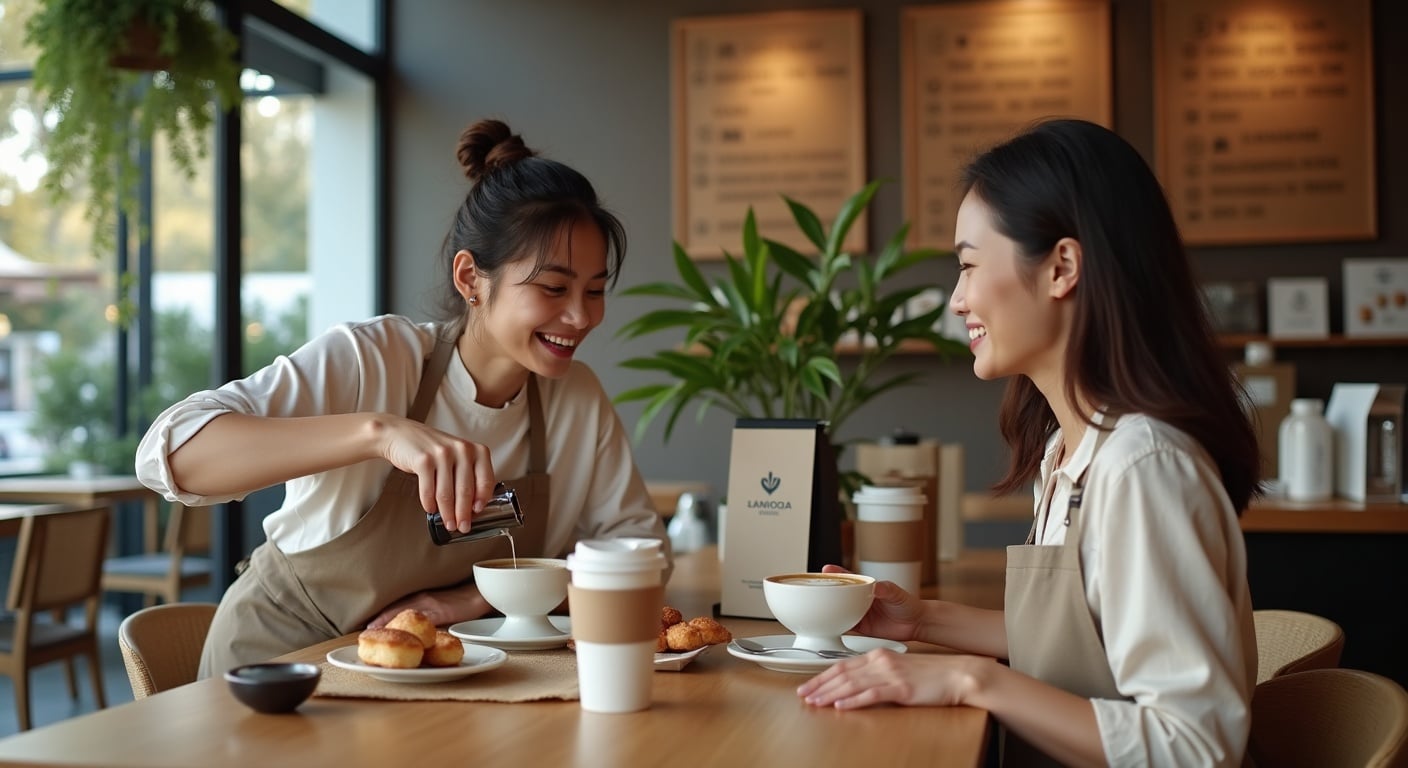
Strong cafe branding ideas can make the difference between a shop that blends into a busy street and one that becomes a regular stop for customers. In Malaysia, where cafe culture is highly visual, social-media driven, and influenced by neighbourhood taste, branding is not just about choosing a logo. It is about shaping how people feel when they discover your cafe online, walk past your storefront, order a drink, and decide whether to come back. Whether you run a specialty coffee bar in Kuala Lumpur, a lifestyle cafe in Johor Bahru, or a cosy neighbourhood spot in Penang, your brand should help customers remember you for the right reasons.
Good branding also supports practical business goals. It can help position your pricing, attract your ideal crowd, and improve online visibility. For cafe owners building long-term growth, branding should connect your physical space, social content, menu language, and customer experience into one clear identity. Below are practical cafe branding ideas that work especially well in the Malaysian market.
Why cafe branding matters in Malaysia
Malaysia has a competitive cafe landscape. Customers often choose where to visit based on more than coffee quality alone. They may look at Instagram-worthy interiors, halal-friendly menu options, neighbourhood convenience, ambience for work or meetups, and online reviews before they visit. This means your brand needs to communicate clearly across multiple touchpoints.
A clear brand helps your cafe stand out among dessert cafes, brunch spots, specialty coffee bars, and hybrid lifestyle spaces. If your positioning is unclear, customers may remember the latte art but forget your cafe name. Strong branding improves memory, trust, and word-of-mouth. It also gives structure to your marketing, from photo styling to Google Business Profile updates.
If you want inspiration from standout concepts and local cafe trends, browsing guides like the best cafes in Malaysia can help you understand what makes certain brands more memorable than others.
Start with a clear brand concept
Define what your cafe stands for
One of the most important cafe branding ideas is to decide exactly what your cafe represents. Are you a minimalist specialty coffee bar focused on beans and brew methods? A family-friendly brunch cafe? A heritage-inspired kopitiam-modern concept? A pet-friendly community space? Your brand concept should be specific enough that customers can describe it in one sentence.
Try to define your cafe using these points:
- Target audience: students, office workers, families, tourists, coffee enthusiasts
- Core offering: specialty coffee, brunch, desserts, pastries, local fusion menu
- Atmosphere: quiet, premium, playful, creative, community-driven
- Price position: affordable neighbourhood, mid-range casual, premium lifestyle
- Personality: warm, modern, artisanal, nostalgic, bold, eco-conscious
When these points are clear, decisions about naming, visuals, menu design, and social media become more consistent.
Build around a real customer experience
Many cafes focus heavily on aesthetic design but forget the experience behind the look. Branding should reflect what customers actually get. If you present your cafe as calm and premium, but your service is rushed and your table layout feels cramped, the brand promise breaks. A strong brand is not decoration alone. It is alignment between perception and reality.
Create a memorable visual identity
Choose colours and typography that match your concept
Your colour palette and fonts influence first impressions immediately. Neutral earth tones can signal craft and comfort. Black and white can feel modern and premium. Bright colours may suit playful dessert or youth-focused brands. In Malaysia, where many customers discover cafes through social media, visual consistency matters even more because your feed often acts as the first storefront.
Keep your palette simple and recognisable. Two to four main colours are usually enough. Use fonts that are readable across signage, menus, packaging, and digital posts. Overly decorative fonts may look stylish in a logo but become difficult to use across daily operations.
Design a logo that works everywhere
Your logo should work on shop signage, takeaway cups, social media profile pictures, delivery platform images, and merchandise. Complex logos often lose clarity in smaller sizes. A strong cafe logo is usually simple, distinctive, and easy to identify quickly. You do not need to include a coffee cup icon unless it genuinely suits your concept. Sometimes a wordmark or icon tied to your story is far more memorable.
Keep your interior and branding connected
One of the most practical cafe branding ideas is to ensure your interior design supports your brand identity. If your branding is earthy and artisanal, your materials, lighting, tableware, and packaging should reflect that. If your concept is sleek and urban, visual clutter can weaken your image. Customers notice inconsistency even if they do not describe it directly.
This matters especially in cafe hopping culture, where visitors compare spaces rapidly and often share photos online. Looking at trends in Malaysia cafe hopping destinations can show how interiors, presentation, and concept work together to create a brand people want to post.
Develop a strong brand voice
Speak consistently across all channels
Your brand is not only visual. The way you write captions, menu descriptions, signs, and replies to customer reviews also shapes identity. A friendly neighbourhood cafe might use warm and conversational language. A premium specialty coffee bar may sound more refined and educational. A youth-focused cafe may sound playful and informal.
What matters is consistency. If your social media voice is trendy and humorous but your in-store materials are stiff and overly corporate, the experience feels disconnected. Build a simple tone guide for your team so captions, promotions, and customer responses feel aligned.
Name drinks and menu items strategically
Menu branding is often overlooked. Signature drinks, seasonal specials, and house desserts can reinforce your identity. For example, if your cafe is inspired by local ingredients, your menu can highlight gula Melaka, pandan, coconut, or regional flavour twists in a way that feels intentional. If your positioning is craftsmanship, descriptions can explain roast style, origin, or brew notes without becoming too technical.
Make your menu part of your brand
Use menu design to support positioning
A laminated menu with cluttered categories can make even a stylish cafe feel generic. A clean, thoughtfully structured menu improves readability and helps customers understand your concept quickly. Grouping items properly, featuring house signatures, and using simple design hierarchy can make ordering easier while reinforcing your image.
Your pricing also communicates brand position. If your visual identity suggests premium quality but your menu is packed with too many low-margin items and discount signals, the brand can feel confused. The best menus balance what customers want with what the business can sustain.
Highlight local relevance
For Malaysian cafes, local relevance can be a powerful brand strength. This does not mean every cafe must serve traditional drinks or dishes. It means understanding local taste preferences, dietary expectations, and cultural cues. You can localise your cafe through ingredients, festive specials, naming, service style, or neighbourhood storytelling while still maintaining a modern identity.
Build branding through customer experience
Train staff to represent the brand
Customers often remember service more than decor. Staff greeting style, product knowledge, attentiveness, and problem handling all affect your brand image. If your concept is centred on specialty coffee, staff should be able to explain core drinks confidently. If your brand is warm and community-driven, guests should feel welcomed rather than processed.
Simple standards can help:
- How customers are greeted
- How drinks and food are introduced
- How issues are resolved
- How takeaways are packed
- How tables and counters are maintained
Branding becomes stronger when service behaviour matches the promise of the brand.
Create small memorable details
Not every branding move has to be expensive. Stickers on takeaway cups, branded tray liners, a signature scent, a photo-friendly corner, custom playlist choices, or handwritten thank-you notes on delivery orders can all create memory. These small details can elevate how customers talk about your cafe.
Strengthen your online brand presence
Use local SEO to support brand discovery
One of the smartest cafe branding ideas today is to treat online search visibility as part of your brand, not just a marketing add-on. When people search for cafes near them, brunch spots, or specialty coffee in their area, your brand should appear clearly and professionally. This is where local SEO matters. Your Google Business Profile, Google Maps presence, website content, business categories, and reviews all shape how customers discover and judge your cafe before visiting.
Make sure your branding is consistent across your website, maps listing, social accounts, and delivery platforms. Use the same cafe name, logo style, tone, and updated photos. Website content should explain your concept, menu highlights, location details, and what makes your cafe worth visiting. Better online visibility helps convert first-time searchers into actual foot traffic.
Make your Instagram and website visually aligned
If your cafe has a premium aesthetic in-store but your online profiles are inconsistent, blurry, or outdated, your brand weakens. Use similar colours, photo editing styles, and messaging across digital channels. You do not need every post to look identical, but the overall impression should feel coherent.
Your website should also support the customer journey. Include opening hours, exact location, contact details, menu highlights, parking notes if relevant, and updated imagery. For cafes educating customers about coffee, supporting content like a coffee guide for Malaysia readers can also help frame your brand as more informed and credible.
Use packaging and takeaways as branding tools
Turn every order into a brand touchpoint
Takeaway and delivery orders are often the first experience customers have with your cafe. Branded cups, sleeves, boxes, stickers, and thank-you cards can strengthen recognition. Even if your packaging budget is limited, consistency in labels, colours, and presentation can make a difference.
Think about functionality too. Packaging should protect food quality and maintain presentation. If your brand claims premium quality but your drinks leak or your desserts arrive messy, the experience damages trust.
Encourage social sharing naturally
Packaging can also support user-generated content. A nicely designed cup, a playful message under the lid, or a neatly packed pastry box may encourage photos and stories without directly asking. The key is to make the share-worthy moment feel genuine rather than forced.
Tell a story customers can remember
Share your founder story or concept inspiration
Customers connect more easily with brands that feel human. Your story does not need to be dramatic. It may be about your passion for specialty coffee, inspiration from Malaysian flavours, a family baking tradition, or the desire to create a better neighbourhood gathering space. A strong story gives context to your aesthetic and menu.
Use this story selectively on your website, menu, social media captions, or in-store signage. Keep it concise and authentic. Customers can usually sense when a backstory is manufactured just for marketing.
Anchor your brand in place
Neighbourhood identity is a strong branding opportunity in Malaysia. A cafe in TTDI, Bangsar, Ipoh, George Town, or Kota Kinabalu may attract different audiences and expectations. Referencing the local area through imagery, special menu items, collaborations, or community events can make your brand feel rooted rather than generic.
Avoid common cafe branding mistakes
Copying trends too closely
Trends can help inspire design, but direct imitation weakens differentiation. If your cafe looks and sounds like five others in the same city, branding loses power. Use trends selectively while building a clear identity that is recognisably yours.
Changing your look too often
Rebranding every few months can confuse customers. It is fine to refresh seasonal visuals or improve weaker assets, but your core identity should remain stable enough for people to remember. Recognition takes repetition.
Ignoring practical business alignment
Branding should match operations. A highly polished premium concept must be supported by product quality, cleanliness, service, and pricing logic. If branding creates expectations your business cannot maintain, customers may feel disappointed even if the cafe is decent overall.
Recommended services for stronger cafe branding
If you want your branding to attract more discovery as well as foot traffic, it helps to combine design with smarter digital foundations. Useful support may include brand identity refinement, website content planning, Google Business Profile optimisation, local SEO setup, professional cafe photography, social media content direction, and review management. For many Malaysian cafes, the best results come when the physical brand experience and online visibility are built together rather than separately.
A simple starting point is to review whether customers can clearly understand your concept from your signage, Instagram, Google Maps listing, and website within a few seconds. If not, improving those touchpoints can strengthen both branding and customer acquisition.
Final thoughts on cafe branding ideas
The best cafe branding ideas are not only about looking stylish. They help customers understand who you are, what makes your cafe different, and why they should return. In Malaysia’s crowded cafe scene, strong branding gives structure to your concept, menu, service, interior, packaging, and digital presence. When all these pieces work together, your cafe becomes easier to remember, easier to recommend, and easier to find online.
Start with clarity. Define your audience, sharpen your concept, and make sure your brand promise appears consistently in-store and online. You do not need the biggest budget to build a memorable cafe brand, but you do need consistency, relevance, and a clear point of view.
