

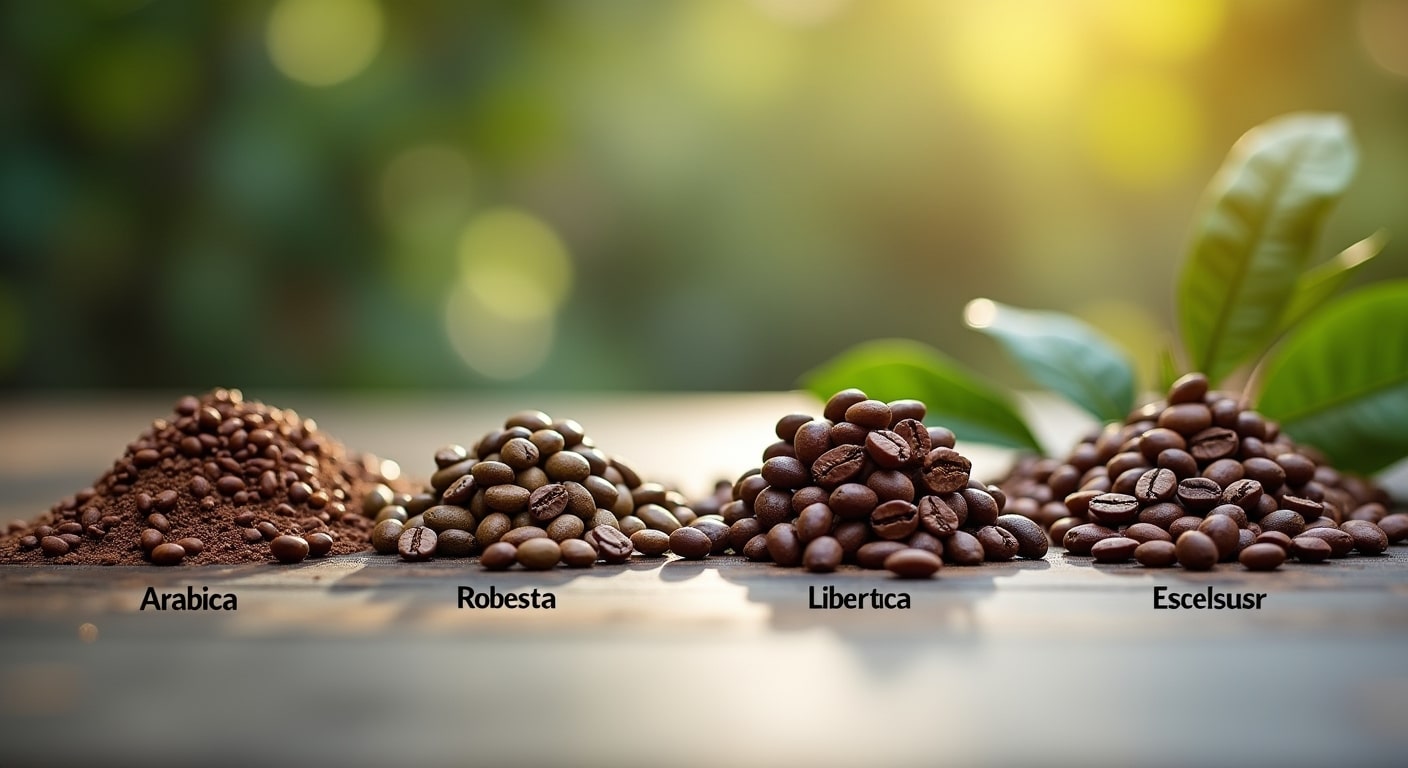
Understanding coffee bean types is one of the best ways to improve how you choose, brew, and enjoy coffee. Whether you are drinking kopi at home, exploring specialty cafes in Malaysia, or learning more about beans before buying a bag, knowing the differences between Arabica, Robusta, Liberica, and Excelsa can help you make better coffee decisions. Each type has its own flavour profile, caffeine level, growing conditions, and common uses. In this guide, we explain the main coffee bean types in simple terms, along with how they affect taste and brewing.
What Are the Main Coffee Bean Types?
When people talk about coffee bean types, they usually mean the four commercially known species most often discussed in the coffee world: Arabica, Robusta, Liberica, and Excelsa. While Arabica and Robusta dominate global production, Liberica also has a special place in Southeast Asia, including Malaysia. Excelsa is less common but still worth understanding because of its distinctive flavour contribution in some blends.
If you are just starting out, it also helps to read a broader coffee beans guide so you can connect bean species with roast levels, origins, and freshness.
Arabica Coffee Beans
What is Arabica?
Arabica is the most widely recognised of all coffee bean types and is often associated with specialty coffee. It accounts for the majority of global coffee production and is prized for its smoother, more nuanced flavour.
How Arabica Tastes
Arabica beans usually have a sweeter and softer taste than other coffee bean types. Depending on origin and roast, you may notice notes such as chocolate, caramel, nuts, citrus, berries, florals, or stone fruit. The acidity is generally brighter and more refined, which makes Arabica popular for pour over, filter coffee, and espresso in specialty cafes.
Growing Conditions
Arabica tends to grow best at higher altitudes with cooler temperatures. It is more delicate than Robusta and more vulnerable to pests and disease, which is one reason it often costs more. The plant also requires more careful farming and processing.
Caffeine Content
Arabica usually contains less caffeine than Robusta. This lower caffeine level contributes to its smoother and less bitter cup profile.
Best Uses for Arabica
Arabica is ideal if you enjoy black coffee, hand-brewed coffee, espresso with clarity, or milk-based drinks where flavour complexity still comes through. Many premium cafe beans are mostly or fully Arabica because of these qualities.
Robusta Coffee Beans
What is Robusta?
Robusta is the second most common of the major coffee bean types. It is known for being hardier, more resistant to disease, and easier to grow in warmer, lower-altitude environments. Robusta is common in instant coffee, traditional blends, and some espresso blends that aim for stronger body and heavier crema.
How Robusta Tastes
Robusta typically has a bolder, stronger, and more bitter flavour than Arabica. Common tasting notes include earthy, woody, dark chocolate, and nutty tones. Some Robusta coffees can have a harsher finish, but high-quality Robusta can still be enjoyable, especially when roasted and brewed well.
Caffeine Content
One of the biggest differences between Arabica and Robusta is caffeine. Robusta usually contains significantly more caffeine, which contributes to its bitterness and stronger perceived intensity.
Why Robusta Is Used
Robusta performs well in espresso blends because it can add body, crema, and punch. It is also commonly used in instant coffee due to its cost-effectiveness and bold flavour. In Malaysia, where stronger coffee styles are appreciated by many drinkers, Robusta can appeal to those who enjoy intense, full-bodied cups.
Who Should Choose Robusta?
If you like strong coffee, prefer coffee with milk and sugar, or want a more intense morning brew, Robusta may suit your taste. It can also be a practical option for those seeking more caffeine.
Liberica Coffee Beans
What is Liberica?
Liberica is one of the less common coffee bean types globally, but it is especially relevant in Malaysia and parts of Southeast Asia. This makes it particularly interesting for local coffee drinkers who want to understand regional coffee identity beyond the usual Arabica-versus-Robusta comparison.
How Liberica Tastes
Liberica is known for its unusual and distinctive flavour. Depending on processing and roast, it may show smoky, fruity, floral, woody, or jackfruit-like notes. The aroma can be intense and memorable, which is why Liberica often creates strong opinions among coffee drinkers. Some people love its uniqueness, while others need time to appreciate it.
Why Liberica Matters in Malaysia
Malaysia has a meaningful connection to Liberica, especially in traditional and local coffee culture. If you want more context on local coffee traditions, cafe trends, and coffee drinking habits, our Malaysia coffee guide offers a broader look at the local scene.
Texture and Body
Liberica often produces a heavier-bodied cup with a distinctive aromatic character. In some traditional preparations, it can work well for coffee drinkers who prefer something bold yet different from Robusta.
Who Should Try Liberica?
Liberica is worth trying if you want to explore coffee beyond mainstream choices. It is particularly appealing for drinkers curious about Malaysian coffee heritage or those looking for flavours that stand out from standard cafe offerings.
Excelsa Coffee Beans
What is Excelsa?
Excelsa is sometimes grouped as a separate coffee type in everyday discussion, although botanically it is often considered related to Liberica. In practical coffee conversations, however, it is still frequently listed among the main coffee bean types because its cup profile is distinct.
How Excelsa Tastes
Excelsa is often described as tart, fruity, and complex, sometimes balancing dark roast depth with bright, wine-like acidity. It can add character to blends and create more layered flavour experiences.
How It Is Used
Excelsa is less commonly sold as a mainstream single-origin option compared with Arabica. More often, it appears in blends where roasters want to introduce fruitiness, complexity, or a unique finish.
Who Should Try Excelsa?
If you enjoy adventurous coffees with unusual flavour combinations, Excelsa may be worth seeking out. It is not always easy to find, but it can be rewarding for coffee drinkers who want something different.
Comparing the Four Main Coffee Bean Types
Flavour
Arabica is usually smoother, sweeter, and more complex. Robusta is stronger, more bitter, and earthier. Liberica is distinctive and aromatic, sometimes with smoky or fruity character. Excelsa tends to be tart, layered, and fruit-forward.
Caffeine
Robusta generally has the highest caffeine content, followed by Liberica and Excelsa depending on classification and source, while Arabica usually has less caffeine.
Price
Arabica often costs more because it is more difficult to grow and is highly valued in specialty coffee. Robusta is usually more affordable. Liberica and Excelsa pricing can vary depending on rarity, local availability, and market demand.
Growing Conditions
Arabica prefers higher elevations and milder climates. Robusta is more resilient and grows well in hotter, lower-altitude regions. Liberica is known for thriving in certain tropical environments, which is part of why it has remained relevant in Southeast Asia.
Which Coffee Bean Type Is Best?
There is no single best option among coffee bean types because the right choice depends on personal taste, brewing method, and what kind of coffee experience you want.
- Choose Arabica if you want smoother flavour, higher complexity, and a more refined cup.
- Choose Robusta if you want stronger coffee, more caffeine, and a bolder taste.
- Choose Liberica if you want something uniquely Malaysian or regionally distinctive.
- Choose Excelsa if you enjoy experimental, fruity, and unusual flavour profiles.
How Roast Level Changes Coffee Bean Types
It is important to remember that bean type is only one part of the flavour story. Roast level also changes how coffee tastes. A dark-roasted Arabica can taste more bitter and smoky than a lightly roasted Robusta from a high-quality producer. Likewise, a medium roast can highlight sweetness, while a lighter roast may reveal more acidity and origin character.
This is why understanding coffee bean types should go together with learning about brewing and roasting. For example, different beans may perform better in espresso, French press, pour over, or cold brew. If you want to explore that next step, our guide to coffee brewing methods can help you match bean choice with brew style.
How to Choose the Right Coffee Bean Type for Your Brew
For Espresso
Arabica is common in specialty espresso for sweetness and complexity, while Robusta is often added to blends for body and crema. If you like classic Italian-style espresso with more intensity, a blend with some Robusta may suit you.
For Pour Over
Arabica is usually the preferred choice because it highlights origin characteristics, acidity, and delicate flavour notes.
For Traditional Local Coffee
Liberica and Robusta can be especially relevant depending on the style, roast, and local preference. In Malaysia, these beans connect closely with traditional coffee drinking habits.
For Milk-Based Drinks
If you drink latte, cappuccino, or flat white, both Arabica and Robusta-based blends can work well. Arabica offers balance and sweetness, while Robusta adds punch that cuts through milk.
For Strong Daily Coffee
Robusta is often the practical choice for drinkers who want high caffeine and bold flavour. It can also be suitable for budget-conscious coffee use at home.
Common Misconceptions About Coffee Bean Types
“Arabica is always better than Robusta”
Not always. Arabica is more celebrated in specialty coffee, but high-quality Robusta can be excellent in the right roast and brew. The quality of farming, processing, roasting, and freshness matters a lot.
“Robusta is only for cheap coffee”
Robusta is widely used in lower-cost coffee, but that does not mean it has no value. Fine Robusta has gained more attention in recent years, especially as consumers appreciate stronger flavour styles and different cup profiles.
“Coffee bean type is the only thing that matters”
Bean type is important, but origin, altitude, processing method, roast level, freshness, grind size, and brewing technique all affect the final cup.
Why Learning Coffee Bean Types Helps You Buy Better Coffee
When you understand coffee bean types, labels on coffee bags become easier to interpret. You can better predict whether a coffee will be floral or earthy, light or intense, smooth or bold. This helps whether you are buying supermarket beans, ordering from a Malaysian roaster, or selecting beans for your cafe setup at home.
You will also be able to ask better questions: Is this 100% Arabica? Is it a blend? Is the Robusta included for body? Is this Liberica grown locally? These details can guide you toward coffees that actually match your taste preferences instead of relying only on packaging or price.
Final Thoughts on Coffee Bean Types
The four main coffee bean types each bring something different to the cup. Arabica is smooth and nuanced, Robusta is strong and caffeinated, Liberica is distinctive and regionally significant, and Excelsa adds complexity and fruitiness. For coffee drinkers in Malaysia, understanding these differences is especially useful because local coffee culture includes both global favourites and regional varieties with their own identity.
The best way to learn is to taste them for yourself. Try the same brewing style with different bean types, compare flavour notes, and notice how roast level changes the result. Over time, you will develop a clearer idea of what you enjoy most.
Stay Updated on Coffee Knowledge
If you enjoy practical coffee guides like this, subscribe to our newsletter for more tips on beans, brewing, cafe trends, and coffee culture in Malaysia.
