

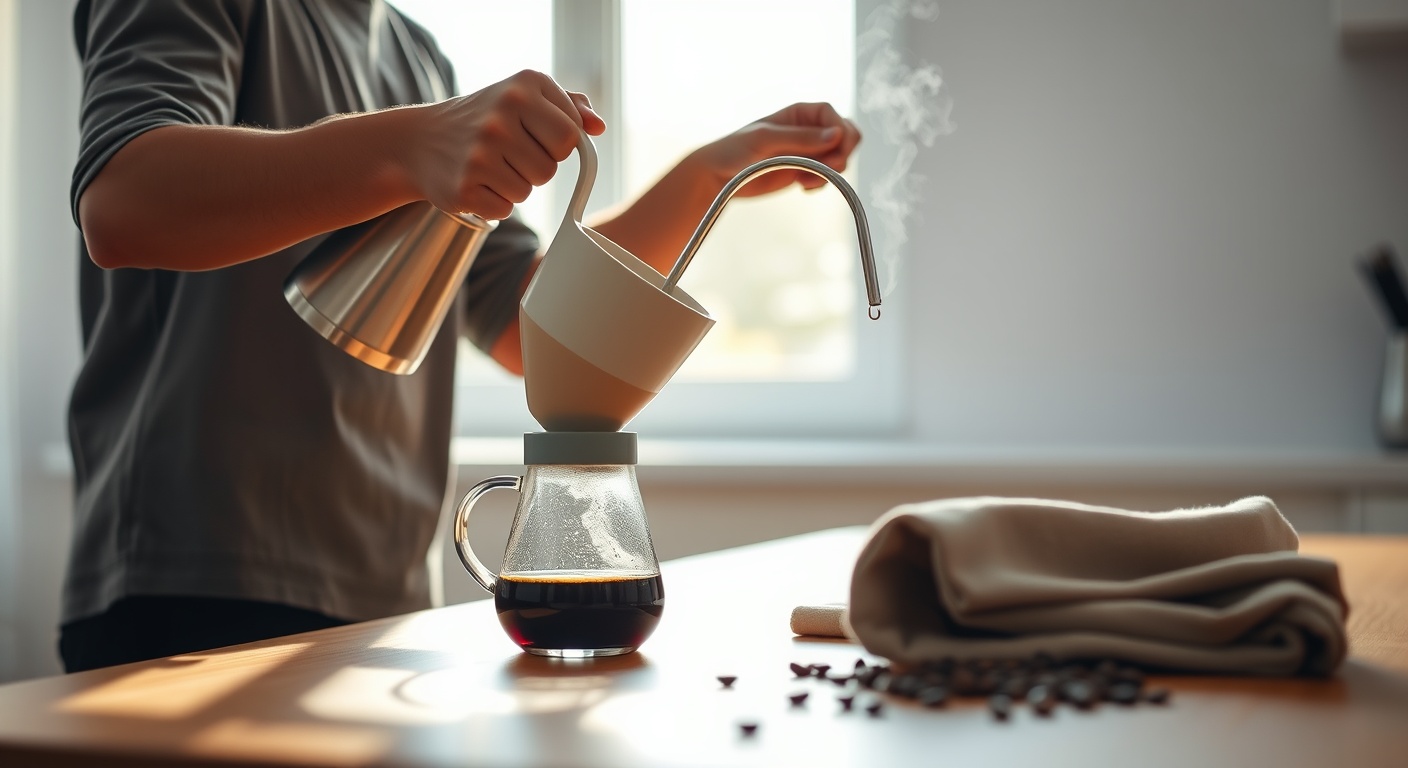
Pour over coffee is one of the easiest ways to make a clean, flavourful cup at home, yet many beginners feel intimidated by all the variables. The good news is that you do not need expensive gear or barista-level skills to brew well. Once you understand a few basics such as coffee-to-water ratio, grind size, water temperature, and pouring technique, pour over coffee becomes simple, repeatable, and enjoyable. Whether you are brewing before work in Kuala Lumpur, making a slow weekend cup in Penang, or learning more about specialty coffee in Malaysia, this guide will help you get better results with confidence.
What Is Pour Over Coffee?
Pour over coffee is a manual brewing method where hot water is poured over ground coffee in a filter, allowing brewed coffee to drip into a cup or server below. Unlike automatic drip coffee machines, pour over brewing gives you more control over extraction. You decide how fast to pour, how much water to use, and how long the brew takes.
That control is why many coffee lovers prefer pour over coffee. It often produces a cleaner cup with more clarity, allowing you to notice delicate notes such as citrus, florals, chocolate, nuts, or tropical fruit, depending on the beans. If you are still exploring different brew styles, our guide to coffee brewing methods can help you compare pour over with French press, espresso, AeroPress, and more.
Why People Love Pour Over Coffee
Pour over coffee remains popular because it combines simplicity with quality. The equipment is relatively affordable, cleanup is easy, and the method works well for many coffee origins and roast levels. It is also ideal for people who enjoy the brewing process itself.
Clearer flavour
Paper filters remove much of the oil and sediment, creating a clean cup that highlights the character of the bean.
More brewing control
You can adjust grind size, brewing time, water temperature, and pouring pattern to suit the coffee.
Accessible for home use
A dripper, paper filters, kettle, grinder, and scale are enough to get started. Even in Malaysia’s warm climate, where iced coffee is common, pour over coffee works beautifully over ice too.
What Equipment You Need
You do not need the fanciest setup, but a few core tools make a big difference.
Dripper
Common options include the Hario V60, Kalita Wave, and Origami dripper. Each design affects flow rate and extraction slightly, but all can make excellent pour over coffee.
Paper filter
Use the correct filter for your dripper. Paper filters help produce a clean and bright cup.
Fresh coffee beans
Fresh beans matter more than having expensive gear. If you are unsure what to buy, start with medium roast beans that are easy to extract and balanced in flavour. You can learn more about choosing origins, roast styles, and freshness in this coffee beans guide.
Grinder
A burr grinder is highly recommended because it produces more even grounds than a blade grinder. More even particles mean more even extraction.
Gooseneck kettle
This helps you pour with better control. It is not absolutely essential, but it makes pour over coffee much easier, especially for beginners.
Digital scale
Brewing by weight is far more accurate than guessing with spoons. A scale helps you stay consistent.
Timer
Many scales include one, or you can use your phone. Total brew time helps you diagnose issues.
The Best Coffee-to-Water Ratio for Pour Over Coffee
A good starting ratio for pour over coffee is 1:15 to 1:17. That means 1 gram of coffee for every 15 to 17 grams of water. For beginners, 15 grams of coffee to 250 grams of water is a simple and reliable recipe.
Here are a few easy starting points:
- 15g coffee to 250g water for one mug
- 18g coffee to 300g water for a slightly larger cup
- 30g coffee to 500g water for two servings
If the cup tastes too strong, use a little more water or slightly less coffee. If it tastes weak, use a little less water or slightly more coffee. Keep the changes small so you can understand what affects the flavour.
How Fine Should You Grind?
Grind size is one of the biggest factors in pour over coffee. A good starting point is medium to medium-fine, similar to table salt. If the grind is too fine, water flows too slowly and the coffee may taste bitter, harsh, or muddy. If the grind is too coarse, water passes through too quickly and the coffee may taste sour, thin, or underdeveloped.
Different drippers and filters may need slightly different grind sizes. For example, a V60 often works well with medium-fine grinds, while some flat-bottom drippers prefer a touch coarser. Humidity can also affect grinding and brewing, which is worth noting in Malaysia’s tropical weather.
Best Water Temperature for Pour Over Coffee
A practical range is 90 to 96 degrees Celsius. If your water is too cool, extraction may be weak and sour. If it is too hot, you risk over-extracting and pulling out too much bitterness, especially with darker roasts.
If you do not have a temperature-controlled kettle, simply boil the water and let it rest for about 30 to 45 seconds before pouring. For lighter roasts, use the hotter end of the range. For darker roasts, a slightly lower temperature often works better.
Step-by-Step: How to Use Pour Over Coffee
Here is a simple method that works well for beginners and can be adjusted later as your technique improves.
1. Heat your water
Boil fresh water, then let it settle into the ideal brewing range if needed.
2. Weigh and grind your coffee
Measure 15 grams of coffee for 250 grams of water. Grind it at a medium to medium-fine setting.
3. Rinse the filter
Place the paper filter in the dripper and rinse it thoroughly with hot water. This removes any papery taste and preheats the dripper and server. Discard the rinse water before brewing.
4. Add the ground coffee
Pour the coffee grounds into the filter and gently shake to level the bed. A flat coffee bed helps encourage even extraction.
5. Start the bloom
Begin your timer and pour about twice the coffee weight in water, so roughly 30 grams for 15 grams of coffee. Wet all the grounds evenly and let the coffee bloom for 30 to 45 seconds. This stage allows trapped carbon dioxide to escape, helping the main brew extract more evenly.
6. Continue pouring slowly
After the bloom, pour the remaining water in slow, controlled circles. Start from the centre, move outward, then return inward without pouring too heavily on the filter walls. Aim to keep the water level stable rather than dumping all the water at once.
7. Finish at your target weight
Stop pouring when you reach 250 grams of water. The coffee should continue dripping through the bed until the brew is complete.
8. Check total brew time
A typical brew should finish in around 2:30 to 3:30, depending on your dripper, coffee, and grind size. If it finishes much faster, the grind may be too coarse. If it takes much longer, the grind may be too fine.
9. Swirl and serve
Give the brewed coffee a gentle swirl in the server or cup to mix the layers. Then taste it and note what you would like to improve next time.
How Pouring Technique Affects Taste
In pour over coffee, your pouring style matters. Pouring too aggressively can disturb the bed and cause uneven extraction. Pouring too slowly with poor coverage may leave dry spots, leading to weak or inconsistent flavour.
Use slow, controlled circles
A gooseneck kettle helps direct the stream where you want it. Gentle circular pours usually work best for even saturation.
Avoid pouring only in the centre
This can create channels where water rushes through one area of the coffee bed instead of extracting all the grounds evenly.
Do not flood the filter
Very large pours can reduce control and impact brew consistency. Many brewers prefer breaking the main pour into two or three pulses.
Common Mistakes Beginners Make
If your first few cups are disappointing, that is normal. Pour over coffee often improves quickly once you identify small issues.
Using stale beans
Old coffee loses aroma and complexity. Buy freshly roasted beans when possible and store them well.
Skipping the scale
Eyeballing coffee and water makes it hard to repeat good results.
Wrong grind size
Too fine leads to bitterness and slow drawdown. Too coarse leads to sourness and a watery cup.
Not rinsing the paper filter
This can leave a papery taste in the cup and fail to preheat your brewer.
Pouring unevenly
Uneven pouring can produce both under-extracted and over-extracted flavours in the same brew.
How to Troubleshoot Taste Problems
The easiest way to improve pour over coffee is to make one small change at a time.
If the coffee tastes sour
Try grinding finer, using slightly hotter water, or extending the brew time a little.
If the coffee tastes bitter
Try grinding coarser, using slightly cooler water, or pouring a bit more gently.
If the coffee tastes weak
Use more coffee, less water, or a finer grind if the brew is running too quickly.
If the coffee tastes muddy or dull
Check whether the grind is too fine, the filter is clogged, or the kettle pour is too aggressive.
How to Choose Beans for Pour Over Coffee
Pour over coffee tends to highlight flavour clarity, so bean choice matters. Lighter to medium roasts often show more acidity, sweetness, and origin character. Darker roasts can still work, but they may taste heavier and more bitter if brewed too hot or too fine.
For beginners, washed coffees are often forgiving because they taste clean and defined. Natural-processed coffees can be fruitier and more intense. If you enjoy exploring local coffee culture, our Malaysia coffee guide offers useful context on cafes, trends, and what coffee drinkers here are enjoying.
Can You Make Iced Pour Over Coffee?
Yes. This is especially useful in Malaysia, where many people prefer cold drinks in the afternoon heat. The easiest method is Japanese-style iced pour over, where part of the brew water is replaced with ice in the server.
For example, instead of brewing 300 grams of hot water, you can use 180 grams of ice in the server and pour 120 grams of hot water through the coffee at a slightly stronger ratio. The ice chills the coffee quickly and helps preserve aroma and brightness.
How to Build a Simple Pour Over Routine
If you want more consistency, keep your routine fixed for a week before making changes. Use the same coffee dose, water amount, dripper, and temperature. Then adjust only one variable at a time, usually grind size first.
A beginner-friendly daily routine could look like this:
- 15g coffee
- 250g water
- 93 degrees Celsius
- 30g bloom for 40 seconds
- Two slow pours to 250g total
- Target brew time of around 3 minutes
Taking brief notes helps. Record whether the cup tasted sour, bitter, sweet, thin, or balanced. After a few brews, patterns become obvious.
Is Pour Over Coffee Worth Learning?
Absolutely. Pour over coffee is one of the best brewing methods for understanding how coffee works. It teaches you how grind size, time, water, and technique shape flavour. It also gives you a satisfying ritual that can fit into a busy weekday or a slow weekend morning.
You do not need to chase perfection immediately. Start with a simple recipe, use fresh beans, and focus on consistency. Over time, you will develop a feel for how to adjust your brew based on taste rather than guesswork.
Final Tips for Better Pour Over Coffee
To get consistently good pour over coffee, remember the basics: use fresh beans, weigh your coffee and water, grind appropriately, rinse your filter, bloom properly, and pour with control. The method may seem technical at first, but it quickly becomes second nature.
If you enjoy learning about coffee and cafe culture in Malaysia, subscribe to our newsletter for more practical brewing guides, bean tips, and cafe business insights.
