

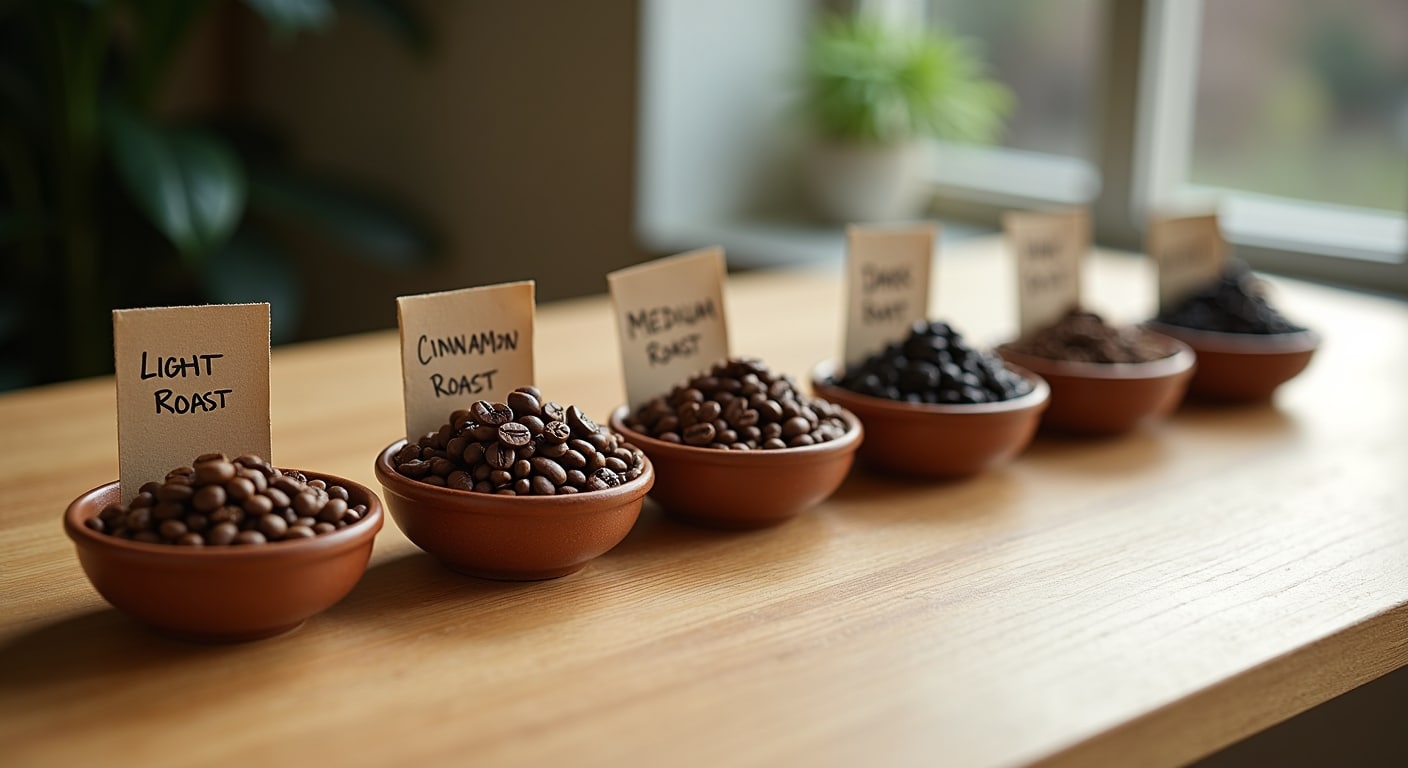
Coffee roast levels play a big role in how your cup tastes, smells, and feels. Whether you enjoy fruity filter coffee, a balanced daily brew, or a bold kopi-style cup with stronger roast character, understanding coffee roast levels helps you choose beans more confidently. For coffee drinkers in Malaysia, roast level matters even more because local preferences range from bright specialty brews to darker, richer profiles that pair well with milk, sugar, or traditional preparation styles. In this guide, we will explain what light, medium, and dark roast really mean, how roasting changes flavour, and how to pick the right roast for your brewing style.
What are coffee roast levels?
Coffee roast levels refer to how long and how intensely green coffee beans are roasted. As beans are exposed to heat, they go through physical and chemical changes. Their colour darkens, moisture decreases, sugars caramelise, acids change, and aromatic compounds develop. These changes influence flavour, body, acidity, bitterness, and aroma.
In simple terms, roast level is usually grouped into three major categories:
- Light roast
- Medium roast
- Dark roast
Some roasters also use terms like light-medium, medium-dark, cinnamon roast, city roast, full city roast, French roast, or Italian roast. These names can vary, so the most useful approach is to understand the broad flavour direction behind each category rather than depend only on labels.
If you are still learning how beans, roast, and brewing work together, it helps to start with a broader guide to coffee beans and their characteristics before narrowing down your preferred roast style.
How roasting changes coffee beans
Green coffee beans do not smell like the brewed coffee most people know. Roasting transforms them through heat. Early in the roast, water inside the bean evaporates. Then sugars and amino acids react, producing browning and aromatic compounds. As roasting continues, oils may move closer to the surface, and the bean structure becomes more brittle.
One common milestone is the first crack, when the beans expand and make an audible popping sound. Light roasts are usually ended around or shortly after this stage. Medium roasts continue a bit further for more sweetness and body. Dark roasts go deeper into development, often approaching or reaching second crack, which creates stronger roast notes and less origin clarity.
That is why the same coffee bean can taste very different depending on roast level. A lightly roasted Ethiopian coffee may taste floral and citrusy, while the same bean roasted darker may lose some of those delicate notes and become more chocolatey or smoky.
Light roast coffee explained
What it looks like
Light roast beans are light brown in colour and usually have a dry surface with little to no visible oil. They are roasted for a shorter time, which preserves more of the bean’s original character.
How it tastes
Light roasts are known for higher acidity, brighter flavours, and more noticeable origin notes. Depending on the bean, you might taste citrus, berries, stone fruit, florals, honey, tea-like qualities, or delicate sweetness. Body is often lighter compared with darker roasts.
Who it suits
Light roast is often preferred by specialty coffee drinkers who enjoy clarity and complexity. It is especially popular for pour over, batch brew, and other filter methods where subtle flavour notes can be appreciated.
Best brewing uses
Light roast coffees usually shine in manual brewing methods. If you want to match roast levels with equipment and extraction style, our coffee brewing methods guide can help you understand which setup suits your beans best.
Things to keep in mind
Light roasts can be more difficult to brew well because they are denser and less soluble than darker roasts. That means you may need a finer grind, hotter water, or slightly longer extraction to bring out sweetness and balance. If under-extracted, they may taste sour, thin, or sharp.
Medium roast coffee explained
What it looks like
Medium roast beans are brown, darker than light roast, and usually still dry or only slightly oily. This roast level aims to balance origin flavour with roast development.
How it tastes
Medium roast is often the most approachable category because it combines sweetness, body, and moderate acidity. Flavour notes can include chocolate, caramel, nuts, mild fruit, or brown sugar. Compared with light roast, medium roast tastes rounder and less sharp. Compared with dark roast, it usually keeps more origin character.
Who it suits
For many Malaysians, medium roast is an easy everyday choice. It works well black and also pairs nicely with milk. It is often a safe starting point if you are not sure what style you prefer.
Best brewing uses
Medium roast is versatile. It works in drip coffee, French press, Aeropress, pourover, and espresso. Cafes often use medium or medium-dark profiles for espresso because they can balance sweetness, body, and acidity in milk drinks without tasting too intense.
Dark roast coffee explained
What it looks like
Dark roast beans are deep brown to almost black and may show oil on the surface. They are roasted longer, which pushes flavour development further toward roast character.
How it tastes
Dark roasts usually have lower perceived acidity, heavier body, and stronger bitterness. Common notes include dark chocolate, roasted nuts, smoke, spice, toasted sugar, and sometimes char if roasted very far. The bean’s origin becomes less noticeable as roast notes dominate.
Who it suits
Dark roast appeals to people who enjoy bold, intense coffee flavours. In Malaysia, drinkers familiar with richer traditional coffee styles may prefer roast levels with stronger caramelised or roasted depth.
Best brewing uses
Dark roast can work well for espresso, moka pot, French press, and milk-based drinks because its heavier body and stronger flavour can cut through milk and sugar. However, if roasted too dark, it may taste overly bitter or burnt, especially when brewed carelessly.
Light vs medium vs dark roast: key differences
Understanding coffee roast levels becomes easier when you compare the three directly.
- Acidity: Light roast usually has the highest acidity, medium roast is balanced, and dark roast has the lowest perceived acidity.
- Body: Light roast tends to be lighter-bodied, medium roast is moderate, and dark roast is heavier.
- Origin flavour: Light roast shows origin characteristics most clearly, medium roast keeps some origin character, and dark roast emphasises roast flavour more than origin.
- Bitterness: Light roast is usually less bitter, while dark roast often tastes more bitter due to increased roast development.
- Brewing flexibility: Medium roast is often the most forgiving across different brewing methods.
This is why no roast level is automatically “better” than another. The best option depends on your taste, brew method, and the kind of coffee experience you want.
Does roast level affect caffeine?
This is one of the most common coffee questions. Many people assume dark roast is stronger and therefore has more caffeine. In reality, the answer is not so simple.
When measured by scoop, dark roast beans are lighter in mass because they lose more moisture during roasting and expand more. When measured by weight, the caffeine difference between roast levels is generally small. So if you use the same weight of coffee, light and dark roast usually have very similar caffeine levels.
What people often perceive as “stronger” in dark roast is flavour intensity, bitterness, and body, not necessarily more caffeine.
How roast level affects espresso and milk drinks
Roast level has a big impact on espresso. Light roasts can produce vibrant, fruity shots, but they are harder to dial in and may taste sour if extraction is not well controlled. Medium roasts often create balanced espresso with sweetness and enough body for black coffee or milk drinks. Dark roasts can produce classic bold espresso with heavier roast notes and less acidity.
For lattes, cappuccinos, and flat whites, medium to dark roasts are often easier to enjoy because milk softens bitterness and highlights chocolate, caramel, and nutty notes. That said, some specialty cafes in Malaysia now use lighter espresso roasts to create more complex milk beverages.
How roast level affects filter coffee
Filter brewing tends to highlight clarity and nuance, so light and medium roasts are common choices. A light roast can reveal floral aromas and fruit acidity beautifully when brewed with care. A medium roast can produce a sweeter, rounder cup with broad appeal. Dark roast in filter coffee can still be enjoyable, but it may taste flatter or more bitter if the roast is too intense.
If you explore café menus across the country, from Klang Valley to Penang and Johor Bahru, you will notice that many specialty shops lean toward lighter filter profiles while still offering medium or darker espresso options. This reflects the diverse coffee culture covered in our Malaysia coffee scene guide.
How to choose the right roast level for your taste
Choose light roast if you enjoy:
- Fruity or floral flavours
- Brighter acidity
- Single origin coffees
- Pour over and filter brewing
Choose medium roast if you enjoy:
- Balanced sweetness and body
- Chocolate, caramel, and nutty notes
- Versatility across brew methods
- An easy everyday coffee
Choose dark roast if you enjoy:
- Bold, roasty flavours
- Lower perceived acidity
- Heavier body
- Coffee with milk, sugar, or stronger traditional character
If you are unsure, start with medium roast. It is often the easiest entry point and helps you decide whether you want to move brighter or darker from there.
Common myths about coffee roast levels
Myth 1: Dark roast is always better quality
Not true. Roast level does not automatically indicate quality. Excellent beans can be roasted light, medium, or dark. Quality depends on the green beans, roast skill, freshness, and brewing.
Myth 2: Oily beans are always premium
Not necessarily. Oily beans are often simply more darkly roasted. Too much surface oil can also suggest age or excessive roast development.
Myth 3: Light roast is weak coffee
Light roast may taste less heavy, but that does not mean it is weak. It can be highly flavourful, aromatic, and complex.
Myth 4: Dark roast has much more caffeine
As explained earlier, caffeine differences are usually minor when measured properly.
Tips for buying roasted coffee beans
When shopping for beans, do not rely only on roast level labels. Also check:
- Roast date: Fresher is usually better.
- Origin: Single origin coffees often show clearer flavour traits, especially in lighter roasts.
- Processing method: Washed, natural, and honey processing can change flavour significantly.
- Brew recommendation: Some roasters label beans for espresso or filter.
- Tasting notes: These give clues about whether the profile suits your preferences.
For example, if you see notes like jasmine, bergamot, and peach, expect a lighter and brighter style. If the bag mentions chocolate, hazelnut, and caramel, it may point toward a medium roast. Notes like dark cocoa, smoke, or roasted nuts may suggest a darker profile.
Roast level and freshness
Freshness matters at every roast level. Coffee is generally best after a short resting period following roasting, often a few days to two weeks depending on the bean and brew method. Espresso sometimes benefits from a slightly longer rest than filter coffee.
Store your beans in an airtight container away from heat, moisture, and direct sunlight. In Malaysia’s warm and humid climate, proper storage is especially important. Avoid keeping beans in the fridge unless storage is carefully managed, as condensation can affect quality.
Final thoughts on coffee roast levels
Understanding coffee roast levels makes it easier to choose beans that actually match your taste. Light roast highlights origin character, medium roast offers balance and versatility, and dark roast delivers bold roast-driven flavour. None is universally best. The right roast depends on what you enjoy drinking and how you brew it.
If you are exploring coffee more seriously, try tasting the same origin at different roast levels. It is one of the easiest ways to discover how roasting shapes flavour. Over time, you will develop a clearer sense of whether you prefer bright and delicate cups, smooth and balanced daily brews, or stronger, darker profiles.
If you enjoy practical coffee guides like this, subscribe to our newsletter for more tips on beans, brewing, and café culture in Malaysia.
