

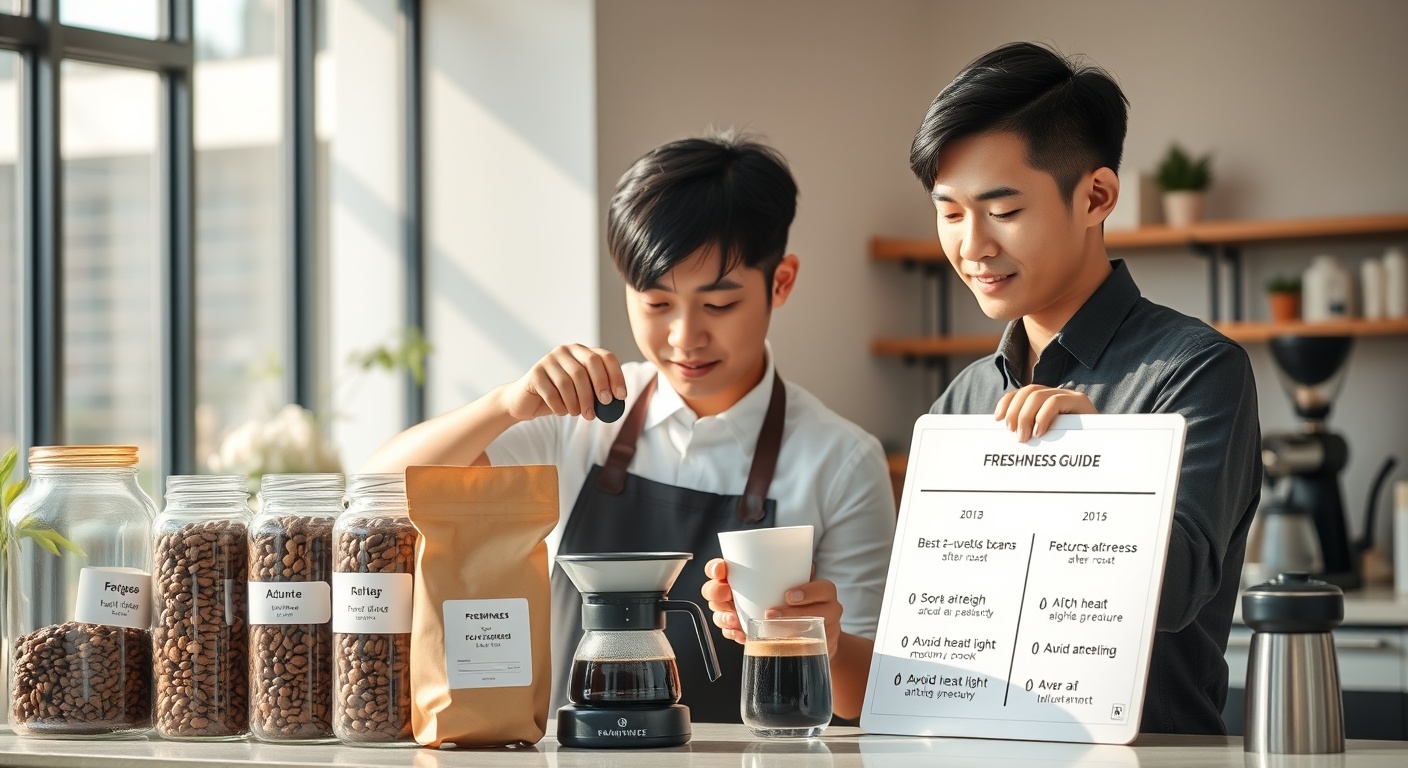
Coffee freshness plays a major role in how your cup tastes, smells, and feels. Whether you brew at home, run a small cafe, or simply want better morning coffee in Malaysia’s warm and humid climate, understanding coffee freshness can help you get more value from every bag of beans. Fresh coffee usually brings clearer aroma, better sweetness, more balanced acidity, and a fuller overall flavour. Stale coffee, on the other hand, often tastes flat, woody, dull, or overly bitter.
In this guide, we will break down what coffee freshness really means, how long coffee stays fresh, what affects flavour over time, and how to store your beans properly. If you are still learning the basics of brewing, our guide to coffee brewing methods is a useful next read for choosing the right way to make the most of fresh beans.
What coffee freshness actually means
When people talk about coffee freshness, they usually mean how recently the coffee was roasted and how well it has been protected from air, moisture, heat, and light. Coffee changes continuously after roasting. In the first few days, roasted beans release gases, especially carbon dioxide. This process is called degassing. During this period, many coffees are still developing and may not yet taste their best.
After the ideal resting period, coffee can enter a sweet spot where the flavours are vibrant and balanced. Eventually, oxidation and environmental exposure start breaking down aromatics and oils. That is when the coffee begins to taste stale. So coffee freshness is not just about “as fresh as possible” but about using coffee within the right window.
Fresh does not always mean day-one coffee
A common misconception is that coffee should be brewed immediately after roasting. In reality, many beans taste better after resting for a few days. Espresso often benefits from slightly more rest because excessive gas can disrupt extraction and create inconsistent shots. Filter coffee may open up a little sooner, depending on the roast and origin.
If you want to understand how roast style and bean type change flavour over time, a good starting point is this coffee beans guide, which explains core differences that affect brewing and freshness.
Why freshness matters so much
Fresh coffee is easier to enjoy because the aroma compounds are still present in higher amounts. Once these volatile compounds fade, the coffee can lose complexity. A once-fruity Ethiopian coffee may turn muted. A chocolatey Brazilian coffee may become dry and plain. Milk drinks can also suffer because stale espresso often tastes harsher and less sweet.
For many coffee drinkers in Malaysia, freshness is especially important because our climate can speed up quality loss. Heat and humidity are not friendly to roasted coffee. If beans are stored poorly in a kitchen near sunlight or steam, they may deteriorate faster than expected. Buying good beans matters, but keeping them fresh matters just as much.
Signs of good coffee freshness
Fresh coffee often shows a strong, pleasant aroma when you open the bag. The fragrance should be distinct rather than dusty or faint. During brewing, you may notice better bloom in filter coffee and a more active crema in espresso, though these are not perfect indicators on their own. In the cup, fresh coffee tends to taste sweeter, livelier, and more defined.
Signs your coffee is going stale
Stale coffee usually smells weak, papery, woody, oily in an unpleasant way, or simply bland. The brewed cup may taste flat, hollow, bitter, or lifeless. If your beans have been sitting open for weeks in a humid kitchen, the loss of flavour can be quite obvious. Ground coffee tends to stale even faster than whole beans because more surface area is exposed to oxygen.
How long coffee stays fresh
There is no single answer because freshness depends on roast date, roast level, packaging, storage, and whether the coffee is whole bean or pre-ground. Still, there are practical timelines you can use.
Whole bean coffee
Whole beans generally stay fresher longer than ground coffee. Many coffees taste best from around 5 to 30 days after roast, though some can remain enjoyable beyond that if stored well. Lighter roasts may continue opening up over a longer period, while darker roasts can lose their peak character more quickly.
Ground coffee
Ground coffee loses freshness much faster. Once coffee is ground, oxidation accelerates. Even within minutes, aromatic compounds begin to fade. For the best flavour, grind only what you need right before brewing. If you buy pre-ground coffee, use it as soon as possible and keep expectations realistic, especially in a humid environment.
Espresso vs filter timing
Espresso and filter coffee can have different ideal windows. Espresso often performs best after a slightly longer rest because excess gas can interfere with extraction. Filter coffee may taste excellent earlier, although this depends on the bean. If you are experimenting with recipes at home, it helps to note the roast date and taste the same coffee across several days.
The biggest enemies of coffee freshness
There are four main threats to coffee freshness: oxygen, moisture, heat, and light. Understanding them makes storage decisions easier.
Oxygen
Oxygen causes oxidation, which breaks down flavour and aroma compounds. Every time you open your coffee bag, fresh air enters. This is normal, but repeated exposure over many days gradually reduces quality. That is why good packaging with a one-way valve and an airtight seal is so important.
Moisture
Humidity is a major concern in Malaysia. Coffee absorbs moisture from the air, which can affect flavour and brewing consistency. Moisture exposure can make beans deteriorate faster and may even create storage issues if the environment is poor enough. This is one reason coffee should not be stored in the fridge under normal conditions.
Heat
Warm conditions speed up staling. A kitchen counter near a window, oven, or kettle is not ideal. Even if the coffee is in a good bag, excessive heat can accelerate flavour loss. Keeping beans in a cool, stable place is better than moving them around between different temperatures.
Light
Sunlight and strong artificial light can degrade coffee over time. Opaque packaging or a solid storage container helps reduce this risk. While light may not be the fastest cause of staling compared with oxygen and humidity, it still matters.
How to store coffee properly at home
The best storage method is simple: keep whole beans in an airtight, opaque container, in a cool and dry place, away from sunlight, steam, and strong odours. If the original coffee bag is high quality and resealable, you may be able to use it inside a cupboard. Otherwise, a proper storage canister is a smart upgrade.
Choose whole beans when possible
If coffee freshness is your priority, buy whole beans and grind right before brewing. This single habit can significantly improve your coffee. Even an entry-level burr grinder can make a noticeable difference compared with using pre-ground coffee for weeks.
Store in small portions
If you buy a larger bag, dividing it into smaller portions helps reduce repeated oxygen exposure. Keep one portion for current use and leave the rest sealed. This is especially helpful for people who do not brew daily or who like to keep several coffees at home.
Avoid transparent jars on the counter
Glass jars may look attractive, but they expose coffee to light unless kept inside a dark cupboard. They are also often opened frequently. A better option is an opaque airtight container stored somewhere cool and dry.
Should you refrigerate or freeze coffee?
For most people, refrigerating coffee is not recommended. Fridges contain moisture and odours, and coffee can absorb both. Frequent temperature changes also create condensation risk, which is bad for coffee freshness.
Freezing can work, but only if done carefully. If you bought more coffee than you can finish within its ideal window, freezing small airtight portions can help preserve quality. The key is to freeze once, keep portions sealed, and thaw only what you plan to use. Do not repeatedly freeze and thaw the same coffee.
When freezing makes sense
Freezing is useful for larger purchases, rare beans, or backup coffee. For example, if you found a roaster’s seasonal release and want to keep part of it for later, portioning and freezing can be practical. However, for everyday use, room-temperature storage in the right container is simpler and often enough.
How roast level affects freshness
Roast level influences how coffee behaves over time. Darker roasts are more porous and can degas faster. Their flavour profile may peak earlier but also fade sooner. Lighter roasts are denser and sometimes benefit from a slightly longer resting period before they taste fully open.
This does not mean one roast level is always fresher than another. It simply means the ideal drinking window can differ. If you enjoy trying beans from different cafes and roasters across the country, our Malaysia coffee guide can help you explore the local scene more deeply.
How brewing method affects freshness perception
Different brewing styles highlight staleness in different ways. Espresso is intense, so stale coffee can show up as bitterness, harshness, or thin crema. Pour over and drip methods make aromatics easier to notice, so dullness becomes more obvious. French press may still produce a heavy cup with older beans, but clarity and sweetness can drop.
Espresso
Freshness matters a lot for espresso because pressure and short extraction magnify both strengths and flaws. Beans that are too fresh may be unstable, while stale beans often pull lifeless shots. If your espresso suddenly tastes thin and bitter, the issue may be age rather than technique alone.
Filter coffee
Filter brewing often reveals flavour detail clearly. As coffee loses freshness, floral, fruity, and sweet notes become less vibrant. The cup may still be drinkable, but it can feel muted and less memorable.
How to buy coffee more strategically
One of the easiest ways to improve coffee freshness is to buy according to your actual consumption. A large 1kg bag may seem economical, but if it takes two months to finish, quality may decline before you get through it. For many households, smaller bags are a better fit.
Check the roast date
Whenever possible, choose coffee with a clear roast date rather than only an expiry date. The roast date gives you a much better idea of freshness and helps you decide when to start brewing it.
Buy from roasters or cafes with good turnover
Shops that roast regularly or move stock quickly are more likely to carry fresher coffee. This does not guarantee quality, but it improves your odds. Ask staff when the coffee was roasted and what brewing window they recommend.
Match quantity to your routine
If you brew one cup a day, you may be better off buying 200g or 250g at a time. If your household uses coffee quickly, a larger bag can still work. The goal is to enjoy the beans while they are still tasting their best.
Common myths about coffee freshness
Myth: oily beans are always fresher
Not necessarily. Oily surfaces are often linked to darker roasts, not freshness. In some cases, very oily beans may already be aging or simply roasted darker.
Myth: the stronger the smell, the better the coffee
A strong smell can be a good sign, but it does not tell the full story. Some coffees are naturally more aromatic than others, and packaging can trap aroma that escapes quickly once opened.
Myth: expiry date matters more than roast date
For flavour, roast date is usually more useful. Expiry dates are often broad shelf-life markers and do not tell you when the coffee will taste best.
A simple freshness routine for everyday coffee drinkers
If you want a practical system, keep it simple. Buy whole beans in manageable quantities, check the roast date, store beans in an airtight opaque container, grind only what you need, and keep your coffee away from heat and humidity. Taste your coffee across several days so you can learn when it peaks. Over time, you will develop a better understanding of coffee freshness and how different beans behave.
This habit is useful whether you brew with a French press, a pour over dripper, an espresso machine, or a basic home setup. Freshness is one of the easiest upgrades because it does not require advanced brewing skill. Better storage and smarter buying can already make a noticeable difference.
Final thoughts on coffee freshness
Coffee freshness is not just a buzzword. It is one of the core reasons why the same beans can taste amazing one week and disappointing the next. By paying attention to roast date, storage, grind timing, and your brewing method, you can enjoy more aroma, better balance, and a more satisfying cup overall. In Malaysia, where heat and humidity can speed up staling, these steps matter even more.
If you enjoy practical coffee tips like this, subscribe to our newsletter for more guides on beans, brewing, cafes, and the coffee industry in Malaysia.
