

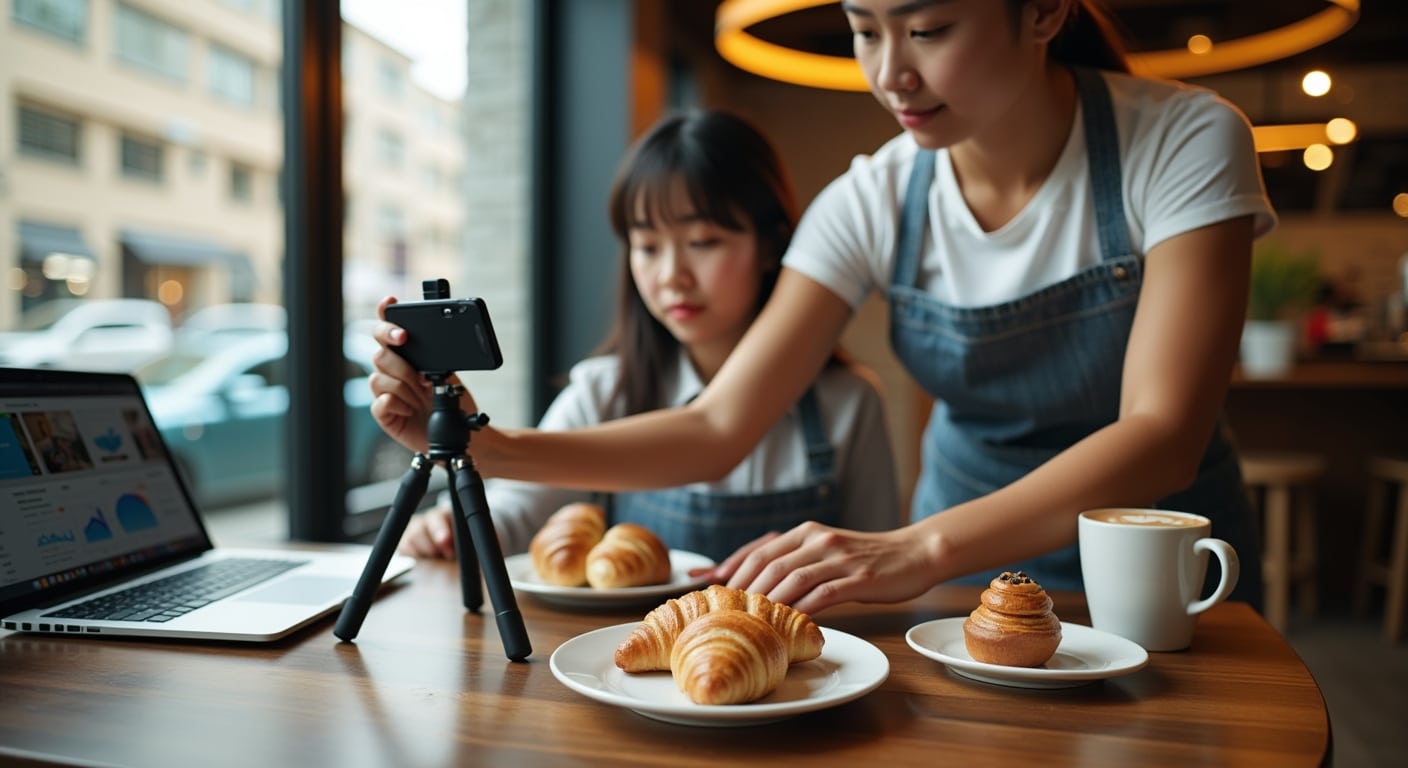
Social media cafe marketing is no longer optional for cafe owners in Malaysia. Whether you run a neighbourhood coffee bar in PJ, a brunch spot in Penang, or a specialty cafe in Johor Bahru, your customers are already discovering places to eat and drink through Instagram, TikTok, Google Maps, and short-form video. A good social media presence helps people notice your brand, understand your vibe, and decide to visit. More importantly, it can turn one-time guests into regulars when your content stays relevant, local, and consistent.
For many cafe operators, the challenge is not knowing that social media matters. The real issue is knowing what to post, where to focus, and how to turn likes into foot traffic. This guide breaks down social media cafe marketing into practical steps for Malaysian cafes, including content planning, platform selection, promotions, community building, and how social media works together with local SEO and your cafe website.
Why social media matters for cafes in Malaysia
Cafes are highly visual businesses. Customers want to see your coffee, pastries, space, crowd, lighting, and menu items before they decide to visit. In Malaysia, where cafe culture is competitive and fast-moving, social platforms often act as the first impression of your brand. A customer may see a Reel of your new matcha latte, save it, check your location, then visit on the weekend.
Social media also helps cafes compete without relying only on paid ads. Strong organic content can build awareness in your area, especially if your posts are shareable, location-based, and tied to real customer behaviour. For example, users often search for cafes that are “OOTD friendly,” good for studying, family-friendly, Muslim-friendly, or known for a signature drink. Your content can answer these questions before customers even message you.
If you are still at the planning stage, it helps to understand the wider setup beyond promotion. Our guide on how to start a coffee shop in Malaysia gives useful context on positioning, planning, and operations that support your marketing later.
Choose the right platforms instead of trying to be everywhere
One of the biggest mistakes in social media cafe marketing is trying to post on every platform with the same content. Most cafes do better when they focus on two main channels and manage them properly.
Instagram remains a strong platform for Malaysian cafes because it is visual, local, and familiar. It works well for menu launches, aesthetic interior shots, customer reposts, Stories, and Reels. If your cafe has a strong brand look, Instagram should usually be one of your main channels.
TikTok
TikTok is powerful for discovery. Short videos showing drink-making, behind-the-scenes prep, customer reactions, or a new menu item can reach audiences beyond your followers. Cafes that feel casual, trendy, or youth-focused often perform well here. For many urban cafe brands in Klang Valley, TikTok can drive sudden spikes in visits when a post gains traction.
Facebook is still useful for local community reach, event promotion, and practical updates such as opening hours, holiday notices, and family-oriented offers. It may not be the trendiest platform, but it still matters for some customer groups in Malaysia.
Google Business Profile
Strictly speaking, this is not social media, but it is essential to your online visibility. Many users discover cafes by searching on Google or Google Maps rather than scrolling feeds. Photos, reviews, updates, and accurate business details influence walk-in traffic directly. This is where social media and local SEO should support each other.
Build a content strategy around customer intent
Effective social media cafe marketing is not just about posting pretty photos. It should answer the reasons people choose a cafe. Most cafe customers want one or more of the following:
- Good coffee or unique drinks
- A comfortable environment
- Instagrammable design
- A place to work or study
- Halal-friendly or dietary-friendly options
- Convenient location and parking
- Seasonal promotions or value sets
Your content should speak to these needs clearly. Instead of only uploading a latte photo, explain what makes it special. Instead of only filming the space, show how customers use it during quiet morning hours or brunch peaks.
Core content pillars for cafes
Most Malaysian cafes can build content around four simple pillars:
- Product content: coffee, desserts, food, seasonal specials, barista action.
- Space and experience: ambience, seating, lighting, study corners, pet-friendly or family-friendly features.
- People and stories: founders, baristas, kitchen team, regular customers, sourcing stories.
- Promotions and utility: opening hours, lunch deals, festive specials, reservations, collaborations.
These pillars keep your feed balanced. They also make it easier to plan weekly content without repeating the same angle too often.
What to post: practical content ideas that work
If you often run out of post ideas, start with repeatable formats. The best content is usually simple, authentic, and easy to produce consistently.
Menu spotlights
Feature one drink or dish at a time. Use close-up visuals, short captions, and a clear reason to try it. Mention flavour notes, price range, or what time of day it is best enjoyed.
Behind-the-scenes videos
Show espresso extraction, latte art, pastry baking, prep before opening, or your team setting up brunch service. These videos feel real and are often more engaging than polished static graphics.
Customer experience clips
Film the customer journey: entering the cafe, ordering, waiting for drinks, finding a seat, and enjoying the space. This helps new customers picture their own visit.
User-generated content
Repost customer Stories and tagged posts when appropriate. Social proof matters. If real people enjoy your cafe, that naturally builds trust.
Educational content
Teach customers something small, like the difference between a flat white and latte, what single-origin means, or why your beans taste a certain way. Educational content helps specialty cafes stand out without sounding too technical.
Local and festive posts
In Malaysia, festive campaigns can perform well when done tastefully. Hari Raya sets, Chinese New Year specials, Deepavali gift boxes, Merdeka drinks, or Ramadan operating updates can make your brand feel timely and relevant.
Create content that matches your cafe brand
Not every cafe should copy viral trends. A minimalist specialty cafe in Bangsar, a student cafe in Subang, and a family-friendly outlet in Ipoh all need different tones. Before creating content, define your brand more clearly:
- Are you premium or casual?
- Are you quiet and artisanal, or energetic and social?
- Are you targeting office workers, students, tourists, or families?
- Do you want to be known for espresso, desserts, brunch, or atmosphere?
Your answers affect your captions, colours, music choices, posting style, and even how your team appears on camera. Good social media cafe marketing feels consistent because the online personality matches the in-store experience.
Use short-form video to increase reach
Short-form video is one of the most effective ways for cafes to grow brand awareness. You do not need expensive production. A smartphone, decent lighting, and simple editing are enough to start.
Try these video formats:
- “Watch us make our best-selling iced latte”
- “3 reasons customers love our brunch set”
- “A calm weekday morning at our cafe”
- “New seasonal drink now available”
- “What RM25 gets you at our cafe”
Keep videos concise, add on-screen text, and include your location when relevant. Many users watch without sound, so text overlays help. Videos that show movement, texture, steam, pouring, or crowd atmosphere usually perform better than still shots.
Turn engagement into actual foot traffic
Likes and views are useful, but cafe owners need visits and sales. To make social media cafe marketing commercially useful, include gentle conversion points in your content.
Make key details easy to find
Your bio should clearly show location, opening hours, booking method, and a link to your menu or contact page. If parking is limited or you are inside a mall or shoplot row, mention it.
Use captions with action
You do not need hard selling. A simple line like “Available from 10am until sold out” or “Drop by this weekend” can create urgency.
Promote time-based offers
Weekday coffee deals, lunch combos, student specials, or new drink launches can encourage visits during slower periods. Just make sure offers are operationally manageable.
Promotions also need to make financial sense. If you are testing discounts or bundle sets, it helps to understand your margins first. Our article on cafe startup costs in Malaysia gives a useful business perspective on cost structure and planning.
Connect social media with local SEO
Social media should not operate alone. For cafes, local discovery often happens through Google Search and Google Maps. Someone may first see your Reel, but later search your cafe name, check reviews, and look at directions before deciding to visit.
That is why online visibility should include more than posting on Instagram or TikTok. Your cafe should also maintain an updated Google Business Profile, encourage real customer reviews, keep business details consistent, and publish useful website content where possible. This combination strengthens both search presence and brand trust.
For a broader strategy, our guide to cafe marketing in Malaysia covers how social channels, branding, promotions, and local outreach can work together.
From an SEO perspective, simple actions can help:
- Use your location in captions when relevant
- Tag your cafe accurately on posts
- Upload fresh photos to Google Business Profile
- Link social media to your website
- Create website content around your cafe, menu, and location
- Keep Google Maps information updated
These are not complicated tasks, but they improve how easily customers can find you online.
Work with influencers carefully
Inviting creators or food reviewers can help, but only when there is a fit between their audience and your cafe. Bigger follower counts do not always mean better results. In Malaysia, micro-influencers with a local audience may bring more relevant traffic than broad lifestyle accounts.
Before offering free meals or paid collaborations, decide what success looks like. Is it reach, content creation, profile visits, table bookings, or promo code use? Track basic outcomes instead of assuming every collaboration is worthwhile.
Measure what actually matters
Many cafe owners focus on vanity metrics, but performance should be tied to business outcomes. Useful indicators include:
- Profile visits
- Direction clicks
- WhatsApp or DM enquiries
- Link clicks to menu or booking page
- Reach within your target area
- Promo redemptions
- Growth in repeat customer engagement
Review your top posts monthly. Look for patterns. Did drink videos outperform static food shots? Did weekday posts drive more direct messages? Did location-based content get more saves? Use these insights to refine your calendar.
Common mistakes in social media cafe marketing
Posting inconsistently
Disappearing for weeks makes it harder to stay top of mind. Even three quality posts a week can be enough if you stay consistent.
Using low-quality visuals
Dark, blurry content can make even a good cafe look unappealing. Natural light and clean framing go a long way.
Ignoring comments and messages
Customers may ask about reservations, ingredients, or opening hours. Slow replies can cost visits.
Copying trends without relevance
Trend-chasing can dilute your brand if the content feels forced.
Not linking social efforts to search presence
If customers cannot quickly find your website, menu, or Google Maps listing after seeing a post, you may lose intent at the point of decision.
A simple monthly plan for cafe owners
If you want a manageable system, start with this structure each month:
- 4 product posts
- 4 short videos
- 2 behind-the-scenes posts
- 2 customer or community posts
- 2 promotional posts
- Weekly Stories with live updates
Batch your content once or twice a month. Photograph multiple menu items in one session. Film several short clips on the same day. This reduces pressure on busy operating days.
Final thoughts
Social media cafe marketing works best when it reflects the real strengths of your cafe. You do not need to go viral to benefit. A clear brand, useful content, good visuals, local relevance, and consistent posting can already make a meaningful difference to foot traffic and repeat visits in Malaysia.
Most importantly, think beyond the feed. Customers move between Instagram, TikTok, Google Maps, and your website before they choose where to go. When your social content, local SEO, and business information all support one another, your cafe becomes easier to discover and easier to trust.
If you want a more structured approach, it may help to look at both content and search visibility together. A solid mix of local SEO, Google Maps optimisation, and website content can help cafes get more customers online without relying only on paid ads.
