

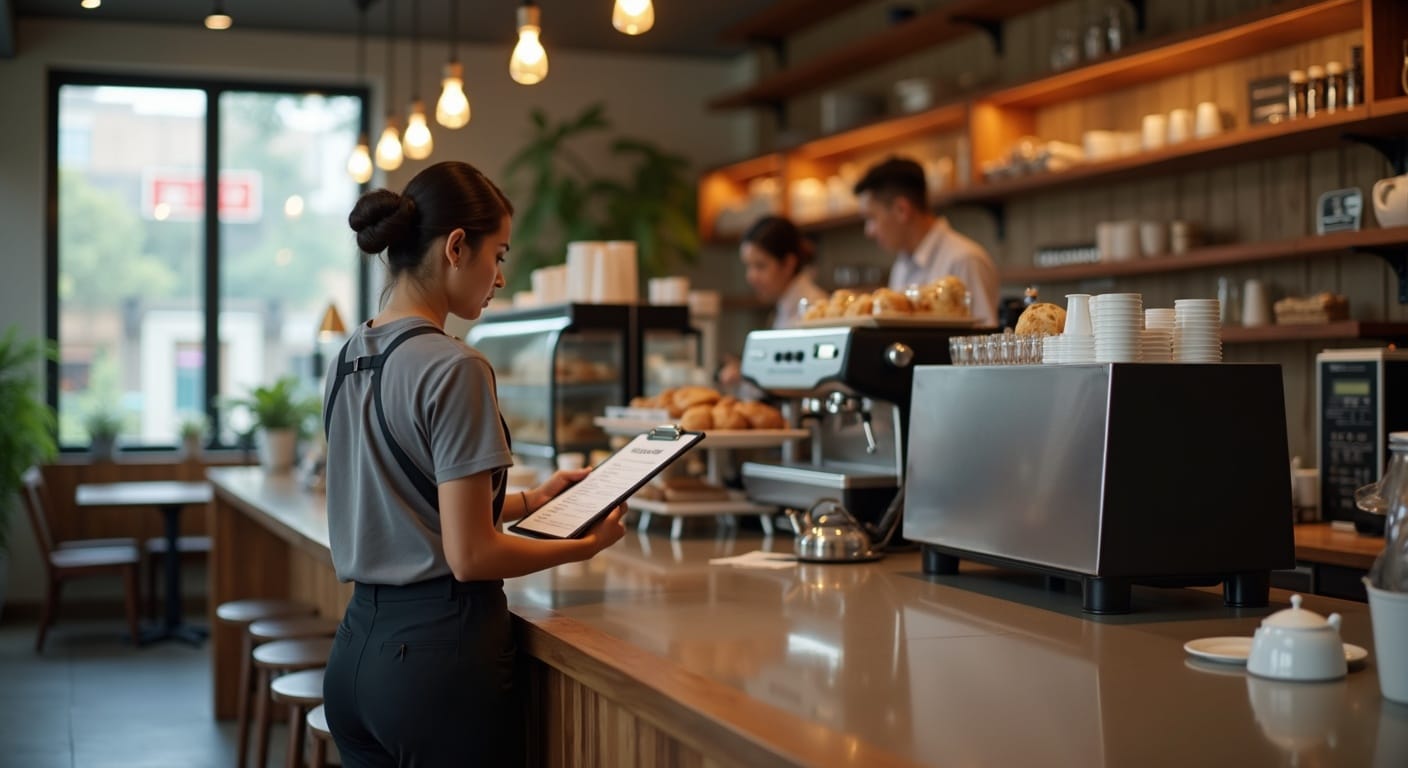
Running a cafe is not just about serving good coffee. Behind every smooth service period is a clear system covering opening routines, staffing, stock control, hygiene, equipment care, customer experience, and end-of-day reporting. A practical cafe operations checklist helps cafe owners and managers stay consistent, reduce mistakes, and keep the business running efficiently. For cafe operators in Malaysia, where labour costs, rental pressure, food safety expectations, and customer reviews can quickly affect profitability, having a repeatable checklist is especially important.
Whether you are launching a new concept or improving an existing outlet, this guide breaks down the key areas every cafe should monitor daily, weekly, and monthly. If you are still planning your business foundations, it helps to first understand the bigger picture in our guide on how to start a coffee shop in Malaysia.
Why a cafe operations checklist matters
A checklist gives your team a simple framework for execution. Instead of relying on memory or informal habits, staff can follow a fixed process for opening, service, and closing. This improves consistency across shifts and reduces the chance of missed tasks such as stock top-ups, grinder cleaning, fridge temperature checks, or cash reconciliation.
For owners, the benefits go beyond organisation. A good checklist supports:
- Better customer experience through consistent service
- Lower wastage from tighter stock monitoring
- Improved hygiene and food safety standards
- Clearer staff accountability
- Faster training for new hires
- More accurate reporting on sales and costs
In a competitive cafe market, operational discipline often matters just as much as branding or menu creativity.
Core areas every cafe operations checklist should cover
A complete cafe operations checklist should be built around the main parts of day-to-day management. These usually include premises, equipment, staff, stock, customer service, cleaning, compliance, and financial control. Not every cafe will use the exact same process, but most outlets should adapt their checklist to cover these fundamentals.
Opening procedures
The opening shift sets the tone for the entire day. If the team starts late or misses key prep work, service quality can drop during peak hours. Your opening checklist should cover:
- Unlocking and inspecting the premises
- Turning on lights, air conditioning, music, POS system, and Wi-Fi
- Checking espresso machine warm-up and grinder calibration
- Preparing brew bar, milk stations, syrups, pastry displays, and takeaway supplies
- Reviewing reservation notes, online orders, or catering requests
- Checking cash float and payment terminals
- Inspecting cleanliness of tables, toilets, service counters, and kitchen areas
Opening routines should be timed properly. In many Malaysian cafes, breakfast traffic and morning coffee demand begin early, especially in office districts and neighbourhood shoplots. Staff should arrive with enough buffer time to complete setup without rushing.
Staff readiness and shift coordination
People management is one of the biggest operational challenges in cafes. Your checklist should include pre-shift staff checks to ensure the team is ready for service. This can involve attendance confirmation, uniform checks, role assignment, and a short briefing on promotions, sold-out items, large bookings, and expected peak periods.
Hiring, staff training, and employee management also matter here. New baristas and service crew should be trained using standard operating procedures, not verbal instructions alone. A checklist helps managers spot gaps quickly and maintain consistent standards even when staff turnover is high.
Useful shift questions include:
- Who is handling espresso, manual brew, cashier, floor, and kitchen coordination?
- Are break schedules planned to avoid service gaps?
- Has each staff member reviewed menu updates or unavailable items?
- Does the team know the target upsell items for the day?
Inventory and stock control
A cafe that runs out of milk, coffee beans, cups, or popular food items during peak hours will lose sales and customer trust. Inventory should therefore be a major part of your cafe operations checklist. Daily checks should include key ingredients and front-of-house supplies, while weekly counts can cover broader stock reconciliation.
Typical stock categories include:
- Coffee beans and retail coffee products
- Milk, non-dairy alternatives, cream, and syrups
- Tea, chocolate, matcha, and other beverage bases
- Pastries, cakes, bread, and kitchen ingredients
- Takeaway cups, lids, sleeves, napkins, and straws
- Cleaning chemicals and disposable gloves
It is also wise to link stock tracking to cost control. If you are reviewing your numbers closely, our breakdown of cafe startup costs in Malaysia can help frame how inventory, equipment, and fixed expenses affect your margins.
Equipment checks and supplier coordination
Cafe operations depend heavily on reliable equipment. Espresso machines, grinders, refrigerators, blenders, ovens, water filters, POS systems, and ice machines should all be checked regularly. Small issues can become costly during service if they are ignored.
Your checklist should include:
- Espresso machine pressure and cleaning status
- Grinder calibration and burr condition
- Water filtration replacement schedule
- Fridge and freezer temperature logs
- Oven, toaster, and blender functionality
- POS printer paper, scanner, and payment terminal readiness
It is equally useful to maintain a contact list of coffee equipment, machines, grinders, and suppliers for urgent repairs or replacement orders. Preventive maintenance generally costs less than emergency downtime.
Daily cafe operations checklist
Most cafes benefit from splitting daily operations into opening, during-service, and closing tasks. This makes execution clearer and helps managers monitor completion more easily.
Opening checklist
- Disarm alarm and inspect the outside entrance
- Check cleanliness of dining area, restrooms, and counter
- Switch on equipment and test essential systems
- Calibrate grinder and pull espresso test shots
- Prepare ingredients, garnishes, and display items
- Replenish takeaway packaging and condiments
- Verify float, POS access, and internet connection
- Review deliveries, reservations, and special instructions
- Conduct quick staff briefing
During-service checklist
- Monitor queue times and table turnover
- Top up milk, cups, lids, and consumables before they run low
- Keep bar counters and tables clean throughout service
- Check item availability and update staff on low-stock products
- Track customer complaints, delays, or drink remakes
- Confirm food holding conditions and freshness
- Ensure toilets remain clean and stocked
- Watch for equipment issues before they escalate
Closing checklist
- Count cash and reconcile POS records
- Turn off or clean coffee equipment based on SOP
- Backflush espresso machine and clean grinders
- Store milk and food items correctly
- Record wastage, breakages, and low-stock alerts
- Empty rubbish and sanitise food-contact surfaces
- Lock up stock rooms and secure the premises
- Prepare prep list for the next day
Weekly and monthly operational checks
Daily checklists keep the cafe functioning, but weekly and monthly reviews help improve the business over time. These broader reviews are where owners can identify patterns, cut unnecessary costs, and improve team performance.
Weekly checklist
- Conduct full stock count and compare against sales
- Review best-selling and slow-moving menu items
- Deep clean kitchen, storage, and brewing equipment
- Inspect pest risks, drainage, and waste areas
- Review staff roster efficiency and overtime issues
- Check supplier deliveries, quality, and lead times
- Monitor customer reviews on Google and social media
Hygiene, food safety, and pest prevention should never be treated as one-time tasks. A weekly review of waste zones, food storage, drains, and cleaning compliance can help reduce operational risks and protect your reputation.
Monthly checklist
- Review profit and loss trends
- Assess labour cost percentage and scheduling efficiency
- Compare beverage cost and food cost against targets
- Check equipment servicing needs
- Audit licensing, compliance, and business documentation
- Evaluate marketing campaigns and customer acquisition channels
- Update training needs for new and existing staff
Bookkeeping, tax planning, and profit tracking for cafes are also important at this stage. Even if your outlet is busy, poor reporting can hide weak margins. Monthly reviews should connect operational performance with financial outcomes, not just sales volume.
Hygiene, safety, and compliance standards
In Malaysia, cafe operators need to take cleanliness and compliance seriously. Customers expect visible hygiene, and local authorities may inspect aspects related to food handling, premises cleanliness, and business operations. Your cafe operations checklist should include clear responsibilities for sanitation, storage, and documentation.
Key points include:
- Handwashing and glove-use procedures
- Food labelling and storage rotation
- Fridge and freezer temperature logs
- Daily toilet cleaning checks
- Pest prevention around rubbish and drains
- Valid licence, compliance, and documentation records
When these standards are built into routine checklists, compliance becomes easier to maintain consistently instead of only reacting before inspections.
Customer experience should be part of operations
Many owners separate service from operations, but they are closely linked. A well-run cafe creates a better customer experience because drinks arrive faster, tables turn over more smoothly, staff communicate clearly, and out-of-stock situations are minimised. Your checklist should therefore include a few service quality indicators.
Examples include:
- Greeting customers within a set time
- Checking dine-in tables after food is served
- Handling complaints using a standard recovery process
- Ensuring online order pickups are organised and labelled
- Keeping music volume, lighting, and seating comfort appropriate
Operational consistency also supports your marketing. If you attract customers through promotions or social content but fail in service execution, repeat visits will suffer. That is why it helps to connect operations with a stronger cafe marketing strategy in Malaysia so the customer journey stays consistent from discovery to return visits.
How to build your own cafe operations checklist
The best checklist is one your team will actually use. Avoid making it too vague or too long. Start with recurring tasks that directly affect service, safety, and sales. Then group them by timing and assign ownership.
Step 1: List critical tasks
Write down every task required to open, run, and close the cafe smoothly. Include coffee prep, kitchen prep, cleaning, stock checks, and reporting.
Step 2: Group tasks by frequency
Divide tasks into daily, weekly, and monthly actions. Some larger outlets may also use per-shift and quarterly checklists.
Step 3: Assign responsibility
Each task should have an owner, such as barista, supervisor, kitchen lead, or manager. Shared responsibility often leads to missed tasks.
Step 4: Use measurable standards
Instead of writing “check cleanliness,” specify what that means, such as sanitise tables every turnover, clean grinders at close, or log fridge temperature twice daily.
Step 5: Review and improve
Checklists should evolve with the business. If repeated issues keep happening, update the checklist and retrain the team.
Common mistakes cafe owners make
Even with good intentions, many operators create checklists that do not work in practice. Common problems include:
- Making the checklist too detailed for busy shifts
- Failing to train staff on why each task matters
- Not assigning clear accountability
- Ignoring stock data until shortages happen
- Overlooking maintenance until equipment fails
- Skipping monthly financial and compliance reviews
A checklist should support decision-making, not become paperwork for its own sake.
Recommended services for smoother cafe operations
If you want to strengthen day-to-day performance, a few outside services can make operations easier. Many Malaysian cafes benefit from reliable bookkeeping support for profit tracking, scheduled equipment servicing from trusted coffee equipment suppliers, HR support for hiring and staff training, and periodic hygiene or pest prevention checks to maintain food safety standards. As your outlet grows, local SEO support can also help improve Google Maps visibility and website content so more nearby customers can find you online.
Final thoughts
A strong cafe operations checklist brings structure to one of the most demanding parts of running a cafe. It helps your team stay consistent, protects quality during busy periods, and gives owners better visibility into stock, staff, hygiene, and profitability. Start simple, tailor it to your concept, and review it regularly. Over time, a clear checklist becomes part of the operating culture that keeps your cafe efficient and competitive.
