

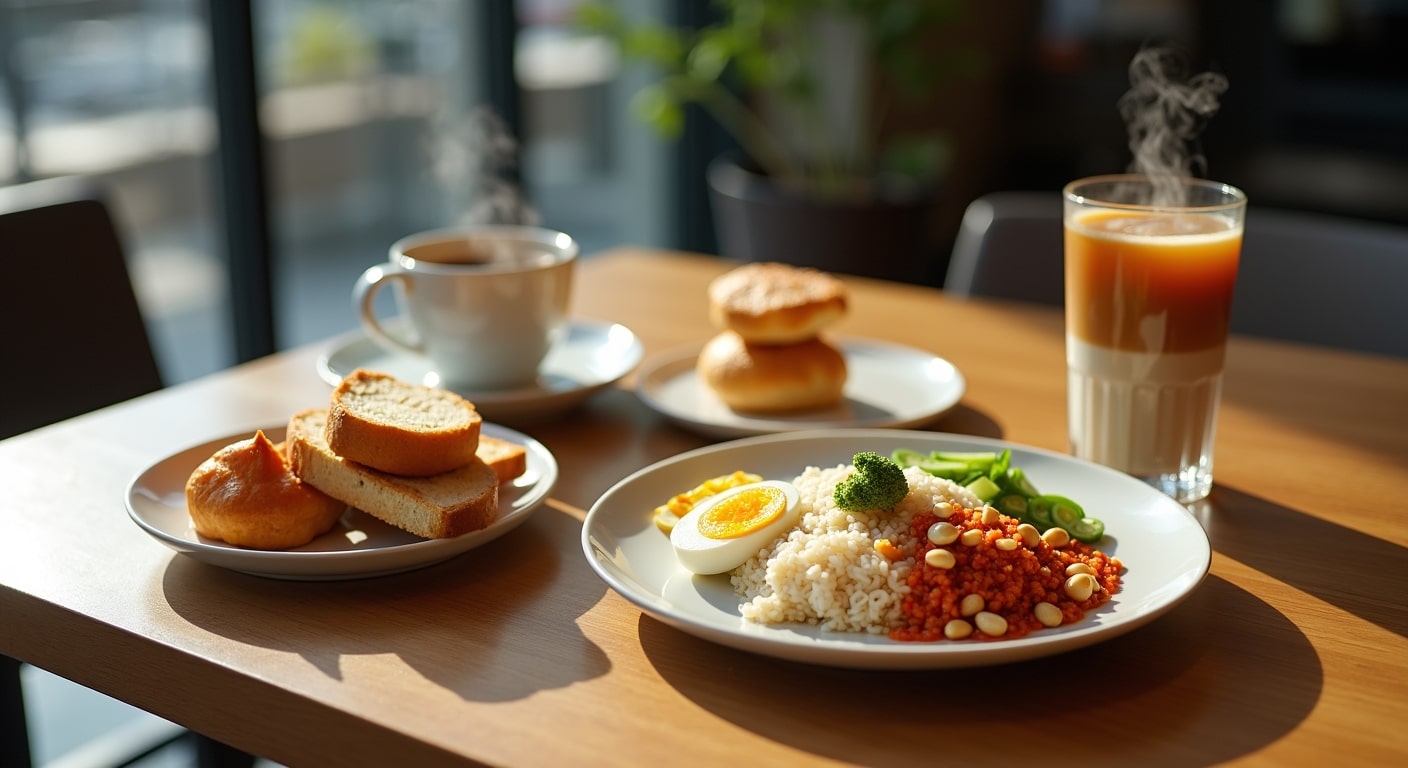
Malaysian food and coffee pairing is more than matching a drink with a meal. In Malaysia, coffee sits naturally beside rich breakfasts, spicy street food, sweet kuih, and kopitiam classics that carry strong flavours and deep nostalgia. The right pairing can highlight a dish’s texture, balance spice, refresh the palate, or bring out hidden notes in the coffee itself. Whether you enjoy traditional kopi, clean pour over, espresso-based drinks, or cold brew, there are many ways to pair coffee with local food without making it feel forced. This guide explores practical, local-first pairing ideas that work for everyday coffee drinkers, cafe operators, and anyone curious about how coffee can fit more naturally into Malaysian dining culture.
Why Malaysian food and coffee pairing works so well
Malaysia’s food scene is layered, bold, and highly aromatic. Coconut milk, pandan, sambal, curry spices, palm sugar, butter, eggs, and grilled meats all create strong taste profiles. Because coffee also contains acidity, bitterness, sweetness, body, and aroma, it can either complement or contrast these flavours in satisfying ways.
A good malaysian food coffee pairing usually follows one of three principles. First, matching intensity: a full-bodied coffee works better with rich dishes, while lighter brews suit delicate snacks. Second, balancing flavour: sweeter milk-based coffee can soften spicy or salty foods. Third, contrast: bright, fruity coffees can cut through oily or creamy dishes and make the meal feel fresher.
If you are new to pairing, it helps to first understand the broader relationship between dishes, flavour intensity, and brewing style. Our coffee and food pairing guide gives a useful foundation before you start exploring more local combinations.
How to think about flavour in Malaysian dishes
Many Western coffee pairing guides focus on pastries, cheese, chocolate, or steak. In Malaysia, the flavour logic is different. Local dishes often combine sweet, savoury, spicy, creamy, and herbal notes in the same plate. That means the best pairings are rarely based on one flavour alone.
Look at richness and oiliness
Dishes like nasi lemak, roti canai, and curry puffs have either coconut richness, buttery fat, or fried textures. Coffees with moderate acidity or a cleaner finish can help reset the palate between bites.
Consider sweetness separately
Kuih, kaya, condensed milk, and palm sugar desserts already bring substantial sweetness. Pairing them with very sweet coffee can become too heavy, so black coffee or less sweet milk coffee often works better.
Notice spice and aromatics
Sambal, curry leaf, lemongrass, ginger, and pandan can clash with coffees that are too sharp or overly fermented. A balanced coffee with chocolatey, nutty, or caramel notes tends to perform more consistently with Malaysian flavours.
Classic Malaysian breakfast pairings
Kaya toast and soft-boiled eggs with kopi o or long black
Kaya toast offers butter, coconut jam sweetness, and toasted bread aroma, while soft-boiled eggs add a silky, savoury side. A kopi o or long black works well here because the bitterness keeps the meal from feeling too sweet. The coffee also lifts the toast’s caramelised notes and cleans the palate after the richness of butter and egg.
If you prefer specialty coffee, a medium roast with nutty and chocolate notes is an easy win. Avoid something too floral or citrusy, as it may distract from the comforting simplicity of the breakfast.
Roti bakar with flat white
For a more modern cafe-style breakfast, roti bakar pairs nicely with a flat white. Milk texture rounds out the toast, especially if the spread includes kaya, peanut butter, or soft scrambled eggs. The smaller milk volume of a flat white still lets the espresso show through, so the pairing feels balanced rather than overly creamy.
Half-boiled eggs and butter toast with filter coffee
If you enjoy a lighter presentation, try a clean filter coffee. Brewing method matters here because paper-filter brews often bring more clarity and less heaviness than immersion styles. If you want to compare how brew styles change pairings, our guide to coffee brewing methods can help you choose the right cup for breakfast foods.
Best coffee pairings for nasi lemak
Nasi lemak is one of the most interesting local foods to pair with coffee because it includes fragrant rice, sambal, anchovies, peanuts, egg, and often fried chicken or rendang. It is rich, spicy, salty, and slightly sweet all at once.
Medium roast black coffee for balance
A medium roast black coffee is often the safest and most satisfying choice. The roast level brings enough body to stand up to coconut rice and sambal, while moderate acidity keeps the pairing lively. Chocolate, roasted nut, and brown sugar notes tend to work especially well.
Cold brew for spicy versions
For nasi lemak with stronger sambal heat, cold brew can be surprisingly effective. Its smoother profile and lower perceived acidity make it easier to drink alongside spice. It does not fight the sambal, and the chilled temperature can feel refreshing in Malaysia’s weather.
What to avoid
Very dark, smoky coffee may intensify bitterness when combined with fried anchovies and spicy sambal. On the other hand, highly acidic light roast coffee can make the entire meal feel disjointed. The best malaysian food coffee pairing for nasi lemak is usually steady, rounded, and not overly experimental.
Pairing coffee with roti canai, curry puffs, and savoury snacks
Roti canai with latte or kopi susu
Roti canai has buttery layers and is commonly paired with dhal or curry. A latte or kopi susu can soften spice and echo the comfort factor of the meal. Milk reduces the sharper edges of coffee bitterness, making it a friendly match for morning or tea-time eating.
That said, if your roti canai is served plain with sugar, a less sweet coffee is usually better. Otherwise, the whole combination can feel too heavy.
Curry puffs with Americano
Curry puffs are flaky, oily, and aromatic. An Americano gives enough roast character to complement the filling without overwhelming it. The dilution also makes the coffee easier to sip slowly, which suits snack-style eating.
Karipap and spicy buns with iced black coffee
Iced black coffee works especially well for afternoon snacks in warm weather. It refreshes the palate and helps offset fried textures. In many Malaysian settings, practical comfort matters as much as tasting notes, and temperature can shape the success of a pairing just as much as roast profile.
Sweet Malaysian kuih and dessert pairings
Kuih seri muka with espresso
Kuih seri muka brings glutinous rice richness below and pandan custard sweetness above. A small espresso creates strong contrast. The bitterness cuts through the dense texture, while the coffee’s concentrated aroma stands up to pandan without being drowned out.
Onde-onde with black coffee
Onde-onde bursts with gula melaka, so pairing it with sweet coffee is usually too much. A black coffee, especially one with caramel or cacao notes, gives the sweetness space and keeps the pairing enjoyable.
Banana fritters with cappuccino
Pisang goreng and cappuccino is a crowd-pleasing match. The foam, milk sweetness, and espresso body suit the caramelised banana flavour and fried surface. This is one of the easiest pairings for cafes because it feels familiar to customers while still rooted in local taste.
Kuih lapis and pour over
For a lighter dessert moment, kuih lapis can work with a mild pour over. Because the dessert is soft and gently sweet, a clean brew highlights texture without making the combination too rich.
Coffee pairings for heavier local dishes
Char kway teow with iced Americano
This may not be the most traditional combination, but it can work. Char kway teow has wok hei, oil, soy, and savoury sweetness. An iced Americano offers bitterness and refreshment without adding milk heaviness. It is more of a contrast pairing than a harmony pairing, but contrast can be useful with strongly flavoured dishes.
Chicken rendang with low-acid black coffee
Rendang is deep, spiced, and coconut-rich. A low-acid black coffee with dark chocolate or spice notes can complement it in small servings, especially after the meal rather than during it. Think of it as an extension of the flavour story rather than a direct side drink.
Satay with medium-bodied coffee
Satay with peanut sauce can pair nicely with coffee that has nutty, cocoa-like notes. Avoid coffees that are too fruity, since they may clash with the sauce. A medium-bodied brew, served warm or iced, usually gives the best result.
Traditional kopi versus specialty coffee in local pairing
One reason malaysian food coffee pairing is so enjoyable is that both traditional and specialty styles have a place. Traditional kopi has roast depth, sweetness, and familiarity. It naturally suits kopitiam foods, toast, eggs, and many savoury snacks. Specialty coffee, meanwhile, opens more specific pairing options based on origin, roast level, and brew style.
If you are building your coffee knowledge around local preferences, it helps to understand how coffee culture has evolved across the country. Our Malaysia coffee guide covers the local landscape, from everyday coffee habits to the growth of specialty cafes.
When to choose traditional kopi
Choose traditional kopi when the dish is nostalgic, rich, and straightforward in flavour. Kaya toast, half-boiled eggs, and simple bakery items all benefit from that familiar roast character.
When specialty coffee makes more sense
Choose specialty coffee when you want more precision. For example, a washed medium roast filter coffee may suit lighter kuih, while a chocolate-forward espresso blend can handle fried snacks and denser desserts.
Practical pairing tips for cafes in Malaysia
For cafe owners and menu planners, pairing local food with coffee is not about making the menu sound overly technical. It is about helping customers make easy, appealing choices. Even simple prompts like “best with black coffee” or “pairs well with flat white” can improve the ordering experience.
Keep pairings familiar
Customers are more likely to try pairings when the dish is already known to them. Toasts, pastries with pandan or kaya, banana-based desserts, or nasi lemak-inspired brunch plates are easier to position than highly niche combinations.
Train staff to explain pairings simply
Instead of discussing acidity and extraction in depth, staff can say things like “this coffee cuts through the richness” or “this milk coffee softens the spice.” Clear, everyday language works better.
Offer one contrast and one comfort pairing
For each food item, think of one adventurous match and one safe match. For example, pisang goreng can go with cappuccino as the comfort option and espresso tonic as the contrast option for more curious customers.
Common mistakes in Malaysian food and coffee pairing
Making everything too sweet
Many local foods already include sugar, condensed milk, kaya, or palm sugar. If the coffee is equally sweet, the result can become tiring quickly. Balance matters more than indulgence.
Ignoring temperature
Hot weather changes drinking preference in Malaysia. A pairing that works with hot coffee may feel far less pleasant at midday than the same dish with cold brew or iced black coffee.
Choosing coffee that is too light for the food
Delicate floral coffees can be beautiful, but many local dishes simply overpower them. Bold food needs enough coffee structure to stay present.
Overcomplicating the pairing
Not every pairing needs to be unique or trendy. Some of the best combinations are simple: kaya toast with kopi, pisang goreng with cappuccino, or curry puff with Americano.
Simple Malaysian food and coffee pairing ideas to try at home
If you want to experiment without buying many beans, start with a versatile medium roast and test it across different local foods. Try these easy combinations:
- Kaya toast with long black
- Nasi lemak with cold brew
- Roti canai with latte
- Pisang goreng with cappuccino
- Onde-onde with black coffee
- Curry puff with iced Americano
Keep notes on what works for you. Do you prefer contrast, where coffee refreshes the palate, or harmony, where the coffee echoes the dish’s sweetness and roast tones? Personal preference matters, and the best pairing is often the one you want to repeat.
Final thoughts
Malaysian food and coffee pairing works best when it respects the strength and character of local dishes rather than copying pairing rules from other markets. Rich breakfasts, spicy mains, fried snacks, and sweet kuih all create different opportunities for black coffee, milk coffee, espresso, filter brews, and cold drinks. Start with intensity, sweetness, spice, and texture, then make small adjustments based on roast level and brewing style. With a little practice, coffee becomes more than a side drink. It becomes part of the full Malaysian dining experience.
If you enjoy practical guides on coffee culture, brewing, and cafe trends in Malaysia, subscribe to our newsletter for more insights and ideas.
