

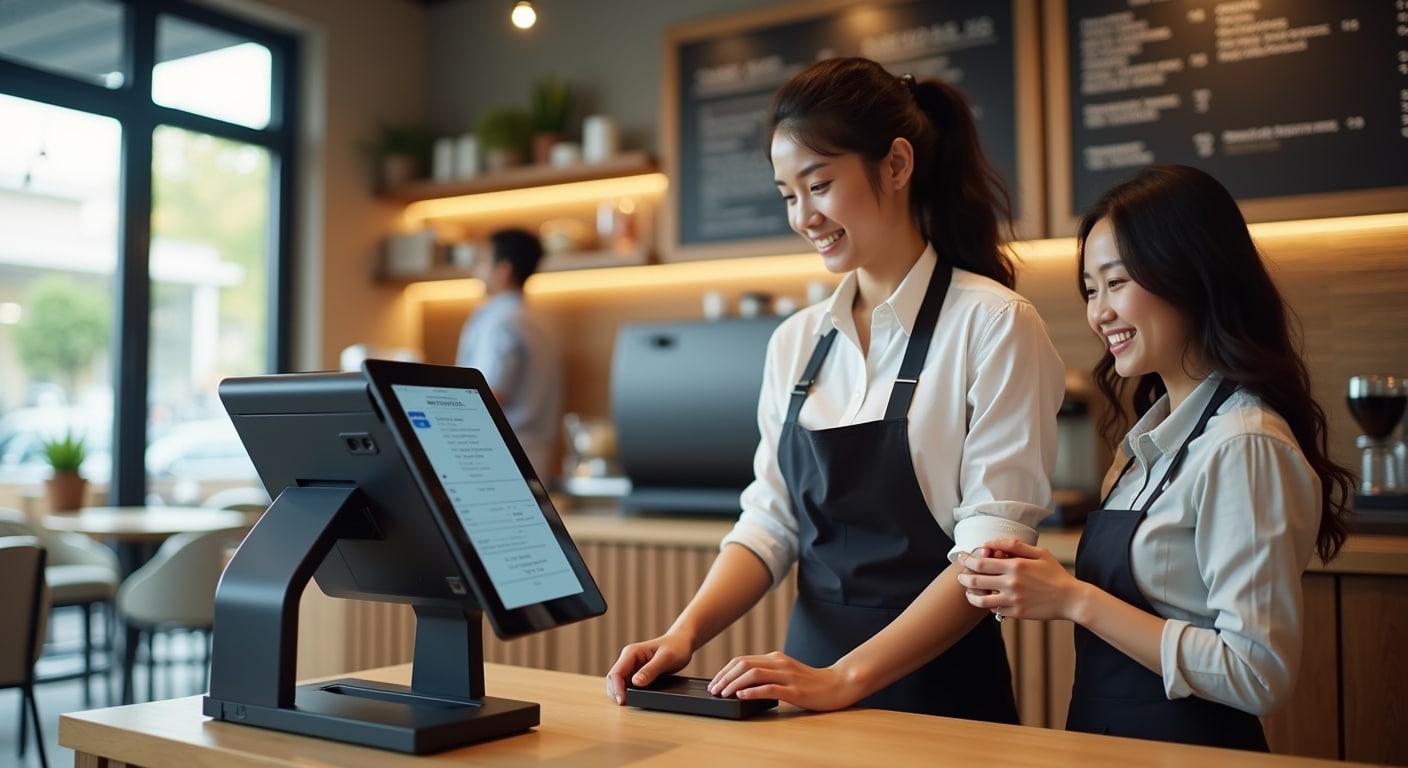
Choosing the right pos system cafe setup can have a big impact on how smoothly your business runs every day. In Malaysia, cafes now deal with more than just walk-in orders. Many operators manage dine-in, takeaway, delivery apps, e-wallet payments, loyalty programmes, and daily stock control at the same time. A good point-of-sale system helps bring these moving parts together so owners can serve customers faster, reduce mistakes, and make better business decisions from real sales data.
If you are still planning your business, it helps to understand how a POS fits into your full setup before you invest. Our guide on how to start a coffee shop in Malaysia gives a broader look at operations, licensing, staffing, and planning. But if you are specifically comparing POS options, this article will help you narrow down what matters most.
Why a POS system matters for cafes
A cafe is a high-frequency, fast-moving environment. Even a small service delay at the counter can affect queue times, drink accuracy, and customer satisfaction. Unlike a basic cash register, a modern cafe POS does much more than record transactions. It can:
- Take and organise orders clearly
- Track best-selling drinks and food items
- Sync with kitchen or barista workflows
- Accept multiple payment methods including cards and e-wallets
- Record stock usage and ingredient movement
- Generate daily and monthly sales reports
- Support promotions, vouchers, and loyalty rewards
- Integrate with accounting or online ordering tools
For many Malaysian cafe owners, the POS becomes the operational centre of the business. It affects front-of-house efficiency, reporting accuracy, and how quickly management can respond to changing customer demand.
What a cafe POS system should do well
Fast and simple order taking
Speed matters, especially during morning coffee rushes, lunch periods, and weekends. Your POS interface should be easy for staff to learn and use. Buttons should be clear, modifiers should be simple to apply, and common items should be quick to find. If your menu includes size options, milk choices, add-ons, and custom notes, the system must handle these without slowing the cashier down.
For example, an order like iced latte, less ice, oat milk, extra shot, takeaway should be captured in a way that is clean and easy for the next station to process. This reduces miscommunication between cashier and barista.
Table, takeaway, and delivery support
Not every cafe operates the same way. Some focus on dine-in, others are takeaway-heavy, and many now rely on GrabFood or food delivery platforms. A suitable pos system cafe setup should fit your service model. If you run a dine-in concept, table management can help track open bills and improve service flow. If takeaway orders are your priority, queue management and receipt clarity become more important.
If delivery is a growing revenue stream, ask whether the POS can consolidate orders from multiple channels or at least make them easy for staff to identify. This becomes especially useful during peak periods when in-store and online orders arrive together.
Inventory and ingredient tracking
One common issue in cafes is profit leakage through poor stock control. Beans, milk, syrups, pastries, and packaging all affect margins. A POS with inventory functions can help you monitor sales against stock movement, spot unusual wastage, and identify items that sell well but generate weak profits.
As you estimate your operational requirements, it is also worth reviewing typical cafe startup costs in Malaysia so you can budget not just for hardware, but also monthly software subscriptions, printers, tablets, scanners, and payment terminals.
Payment flexibility for Malaysian customers
Customers in Malaysia expect convenient payment options. Besides cash and cards, many prefer Touch ‘n Go eWallet, GrabPay, DuitNow QR, or bank transfers depending on the outlet type. A modern POS should support or integrate smoothly with the payment methods your customers actually use.
This does more than improve convenience. Faster payments mean shorter queues and less pressure on staff. It also improves transaction recording, especially compared with disconnected payment systems that force manual reconciliation later.
Useful reporting for operators
The best POS systems turn raw transactions into practical decisions. As a cafe owner, you should be able to see:
- Top-selling and slow-moving items
- Hourly and daily sales trends
- Average bill value
- Promo performance
- Refunds and voids
- Staff sales activity
- Seasonal demand patterns
These reports can help you decide whether to change menu pricing, remove weak products, adjust opening hours, or run bundles during slower periods. Marketing becomes more effective when it is based on actual sales behaviour. If you want to connect promotions with attracting repeat customers, our article on cafe marketing strategies in Malaysia offers practical ideas you can combine with POS data.
Key features to compare before choosing a cafe POS
Cloud-based vs on-premise systems
Most newer cafes prefer cloud-based POS systems because they allow owners to check sales remotely, update menus faster, and receive software improvements over time. This can be helpful if you are often off-site or operate more than one outlet. However, you should still ask what happens if the internet goes down. Offline mode is important in real-world operations.
On-premise systems may offer more local control, but they can be harder to maintain and upgrade. For many small to mid-sized cafe businesses in Malaysia, cloud-based solutions offer better flexibility.
Menu management
Cafe menus change often. You may add seasonal drinks, remove underperforming items, or test limited promotions. A good system should let you update prices, item names, modifiers, and bundles without unnecessary complexity. If changes need a vendor every time, that slows you down.
Ask how easy it is to create combo sets, happy hour discounts, or weekday promotions. The more responsive your POS is to menu changes, the easier it becomes to experiment while keeping operations controlled.
Employee access and permissions
Not every staff member should have the same level of access. Cashiers, supervisors, and managers usually require different permissions. Your POS should allow role-based controls for discounts, refunds, voids, price changes, and report access. This helps reduce errors and limits unnecessary risk.
In busy cafes with frequent staff rotation, user-friendly logins and clear permission settings can also make onboarding easier.
Kitchen or drink preparation workflow
Some cafes need only a receipt printer, while others benefit from kitchen display systems or separate printing for bar and kitchen stations. If your menu includes both coffee and hot food, routing orders properly can reduce confusion. A POS that supports station-specific printing can improve speed and order accuracy.
This matters even more if your concept has custom beverages, brunch service, or a larger seating capacity where timing affects customer experience.
Loyalty and customer retention features
Acquiring new customers usually costs more than getting repeat visits from existing ones. A POS with loyalty tools can support point collection, digital vouchers, birthday rewards, or membership tracking. These features are useful if your business depends on neighbourhood regulars or office crowd repeat traffic.
Even if built-in loyalty is limited, integrations with CRM or marketing tools may still be enough for your needs. The key is to choose features you will actually use, not a long list you pay for but ignore.
How much does a POS system cost for a cafe in Malaysia?
Prices vary based on the brand, hardware, features, and number of outlets. In general, your total cost may include:
- Initial hardware such as tablet, terminal, receipt printer, cash drawer, kitchen printer, scanner, and router
- Software subscription fees billed monthly or annually
- Setup and onboarding charges
- Payment gateway or transaction-related fees
- Add-on costs for loyalty, inventory, delivery integration, or multi-outlet dashboards
- Support or training fees, depending on the provider
Some providers promote low starting fees, but owners should look at the full operating cost over 12 to 24 months. A cheaper plan may become more expensive if essential features are paid add-ons. On the other hand, a more complete package can save time, reduce mistakes, and deliver stronger reporting.
Questions to ask before signing up
Before you commit to any provider, ask practical questions that reflect real cafe operations:
- Can the system work if the internet connection drops?
- How quickly can staff learn the interface?
- Does it support modifiers for drinks and food customisation?
- Can it handle both dine-in and takeaway workflows?
- What payment methods are supported in Malaysia?
- How are refunds, voids, and discounts controlled?
- Is inventory tracking basic or ingredient-level?
- Does it integrate with accounting, delivery, or loyalty software?
- What support is available during weekends and peak hours?
- Are there contract lock-ins or hidden upgrade costs?
These questions can save you from buying a system that looks good in a demo but feels frustrating under live operating conditions.
Common mistakes cafe owners make when choosing a POS
Buying based on price alone
Budget matters, especially for new businesses, but the cheapest option is not always the best value. If your POS slows service, creates reporting gaps, or lacks inventory visibility, the hidden cost can be much higher over time.
Ignoring workflow fit
A POS designed mainly for retail may not work well for a cafe with drink modifiers, table turnover, and split bills. It is important to choose a system built for food and beverage operations or one that can genuinely support them well.
Overpaying for features you will not use
At the same time, some owners choose advanced systems packed with features they never implement. If you run a single-outlet takeaway cafe, you may not need complex enterprise tools. Focus on what improves your actual workflow.
Not testing with real scenarios
Always request a demo using your real menu categories and service style. Test common situations such as custom drinks, discounts, bill splitting, refunds, and rush-hour order flow. A live test often reveals issues more clearly than a sales presentation.
Recommended services for cafe operators
Beyond the POS itself, some operators benefit from working with digital tools providers that can connect sales, promotions, loyalty programmes, and customer communication into one smoother system. If you are comparing software options, look for providers that understand F&B workflows, offer reliable onboarding, and can support business growth without making the system overly complicated.
For cafes planning to expand, a SaaS-based setup can be especially useful when you want centralised reporting, easier menu updates, and better visibility across daily operations. The best choice is usually the one that your team can use confidently while still giving management useful data to improve profitability.
Final thoughts on choosing the right POS system
A strong pos system cafe setup is not just a payment tool. It is part of how your cafe handles speed, accuracy, stock control, customer experience, and decision-making. In Malaysia’s competitive cafe market, that matters more than ever. Whether you are opening your first outlet or improving an existing one, the right POS should make daily work simpler, not more complicated.
Start by reviewing your service style, menu complexity, payment needs, and reporting goals. Compare providers carefully, test real use cases, and look beyond headline pricing. The right system should support both your current operations and your next stage of growth.
