

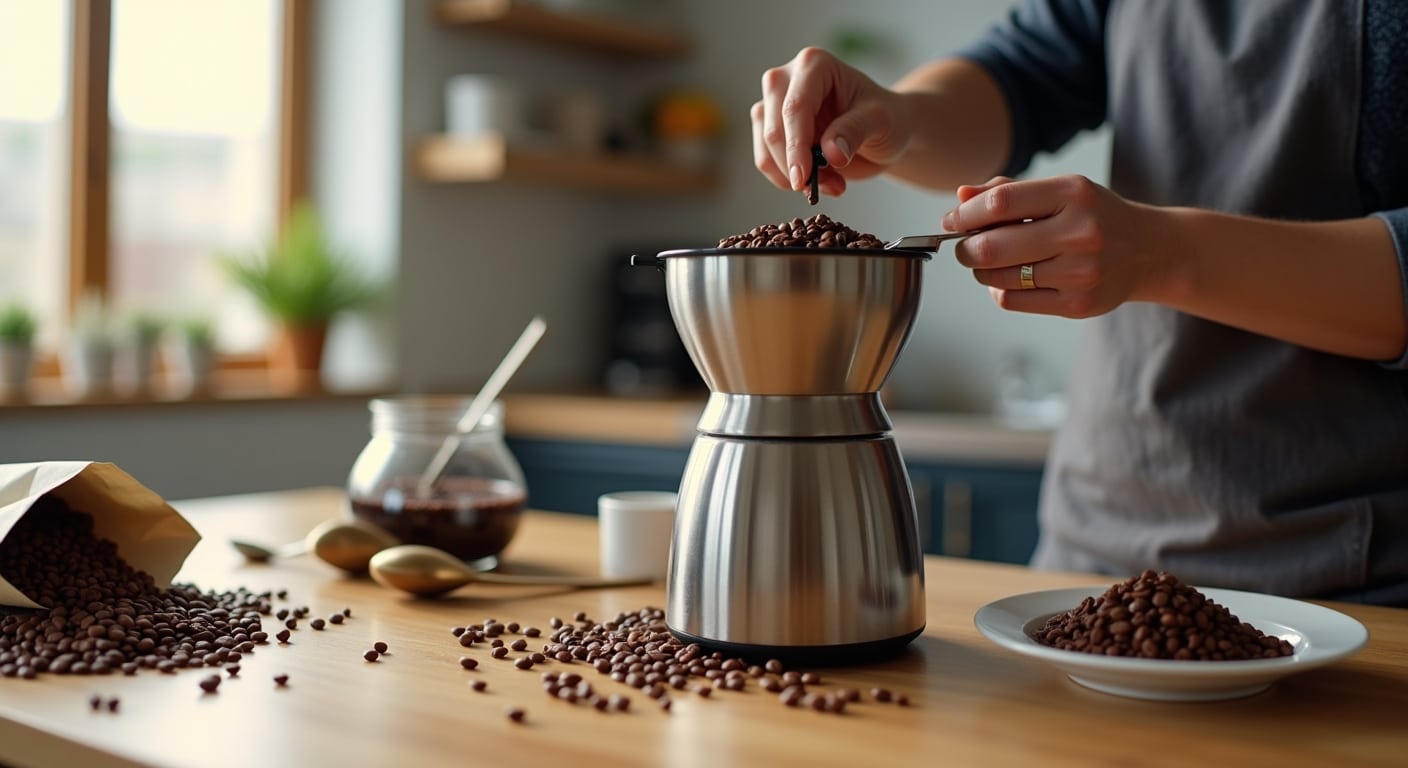
If you want better coffee at home or in a cafe, learning how to grind coffee beans properly is one of the most important skills to master. Grind size affects extraction, aroma, body, sweetness, and bitterness. Even if you buy quality beans, poor grinding can make your cup taste weak, sour, or overly bitter. For coffee drinkers in Malaysia, where brewing styles range from espresso-based drinks and filter coffee to local interpretations of kopi, understanding how to grind coffee beans helps you get more value from every bag.
In simple terms, grinding changes how quickly water can extract flavour from coffee. A finer grind exposes more surface area, so extraction happens faster. A coarser grind slows extraction down. That is why espresso uses a fine grind and French press uses a coarse one. Once you understand this relationship, it becomes much easier to match the grind to your brewing method and get more consistent results.
Why grind size matters so much
When you grind coffee beans, you are controlling contact time and resistance. Water moves differently through coarse particles than through fine particles. If the grind is too fine for your brewer, water may extract too much, leading to bitterness, harshness, or a dry finish. If the grind is too coarse, the brew may taste sour, thin, or underdeveloped because the water did not extract enough soluble compounds.
This is also why many home brewers improve their coffee more by upgrading their grinder than by buying a new brewer. A consistent grinder produces particles that are close in size, which leads to more even extraction. Inconsistent grinders create too many fines and boulders at the same time, so some grounds over-extract while others under-extract. The result is a muddled cup.
If you are still learning the basics of home brewing, our guide to popular coffee brewing methods can help you understand how different brewers affect flavour and why grind adjustment matters for each one.
Blade grinder vs burr grinder
Blade grinders
Blade grinders chop beans with a spinning blade. They are usually cheaper and easy to find, but they do not produce a very even grind. You often get a mix of powder-like fines and large chunks. For casual use they may be acceptable, especially if budget is tight, but they are harder to dial in for serious brewing.
Burr grinders
Burr grinders crush beans between two burrs set at a specific distance. This creates a much more consistent particle size and gives you better control. For anyone who wants to regularly grind coffee beans for espresso, pour over, Aeropress, or French press, a burr grinder is the better long-term choice.
For cafes and serious home brewers, burr grinder quality matters even more. In Malaysia’s growing specialty coffee scene, many operators work with reliable coffee equipment and grinder suppliers to ensure consistency, easier calibration, and smoother workflow during busy service hours.
Common grind sizes explained
Below is a practical grind size guide. Exact settings will vary depending on your grinder, bean density, roast level, humidity, and brew recipe, but these descriptions are a good starting point.
Extra coarse
Extra coarse grounds look chunky, similar to peppercorn pieces. This size is usually used for cold brew where coffee steeps for many hours.
Coarse
Coarse grounds resemble sea salt. This is commonly used for French press and some cupping styles. It allows longer contact time without over-extracting too quickly.
Medium-coarse
This texture is slightly finer than coarse, similar to rough sand. It works well for Chemex and some manual drip brewers.
Medium
Medium grind feels like regular sand. It is commonly used for drip coffee makers and some pour over recipes.
Medium-fine
Medium-fine sits between sand and table salt. It is often a good starting point for cone-shaped pour overs and some Aeropress recipes.
Fine
Fine grind feels like table salt or slightly finer. It is commonly used for espresso, moka pot, and some lower-contact-time brews.
Extra fine
Extra fine is close to powder. This is used for Turkish coffee and only specific brewing styles that require it.
How to grind coffee beans for different brewing methods
Espresso
Espresso needs a fine and highly consistent grind because the brew time is short and the water passes through under pressure. If the shot runs too fast, grind finer. If it chokes the machine or runs too slowly, grind coarser. Tiny changes can make a big difference.
Pour over
Pour over usually works best with a medium to medium-fine grind, depending on the dripper shape, filter paper, and pour speed. If your brew tastes sour and finishes too quickly, go slightly finer. If it tastes bitter and drains too slowly, go slightly coarser.
French press
French press generally calls for a coarse grind. This helps reduce sediment and prevents over-extraction during the steep. If your brew tastes weak, try a slightly finer coarse grind rather than jumping all the way to medium.
Aeropress
Aeropress is flexible and can use anything from medium-fine to fine, depending on brew time and recipe. Because it is so adaptable, it is a great tool for learning how grind size changes taste.
Cold brew
Cold brew usually uses coarse to extra coarse grounds because steeping time is long. If you grind too fine, the brew can become muddy and difficult to filter.
Moka pot
Moka pot typically works with a fine grind, but not as fine as espresso. If it is too fine, the flow may struggle and the coffee can taste overly harsh.
If you are also choosing beans for different brew styles, read our coffee beans guide for beginners to better understand roast level, origin, and flavour expectations.
How to adjust grind based on taste
A good way to improve quickly is to treat taste as feedback. Instead of guessing randomly, make one small adjustment at a time and observe the result.
If the coffee tastes sour
Sourness often points to under-extraction. Try grinding slightly finer, increasing brew time, or using slightly hotter water. Under-extracted coffee may also taste sharp, salty, or thin.
If the coffee tastes bitter
Bitterness often points to over-extraction. Try grinding slightly coarser, shortening brew time, or reducing agitation. Over-extracted coffee can also taste dry and hollow.
If the coffee tastes weak
Weak coffee may be caused by too coarse a grind, too little coffee, or too much water. Before changing everything at once, tighten the grind slightly and keep the rest of the recipe stable.
If the coffee tastes muddy
Muddiness can come from too many fines, stale beans, poor filtration, or a grinder that creates inconsistent particles. In this case, grinder quality matters as much as the setting itself.
Best practices when you grind coffee beans
Grind just before brewing
Once coffee is ground, it loses aroma faster because more surface area is exposed to air. For the freshest flavour, grind only the amount you need right before brewing.
Weigh your coffee
Use a scale instead of guessing by spoon. This improves consistency and helps you compare results when adjusting grind size.
Change one variable at a time
When you are trying to improve a recipe, only adjust the grind or brew ratio or time, not all three at once. This makes it easier to understand what caused the change.
Clean your grinder regularly
Old grounds and coffee oils build up over time and can affect flavour. Regular cleaning also helps your grinder perform more consistently.
Store beans properly
Keep beans in an airtight container away from heat, light, and moisture. In Malaysia’s warm and humid climate, good storage is especially important to maintain freshness.
How humidity and climate can affect grinding in Malaysia
Malaysia’s humidity can influence how coffee beans behave, particularly in espresso preparation. Beans may absorb some ambient moisture, static levels can change, and grind flow may become less predictable. On some days, your usual grinder setting may suddenly produce a slower or faster shot. That does not mean your grinder is faulty. It often means you need a small adjustment.
This is why cafes often calibrate grinders multiple times a day, especially during peak hours. Home brewers can learn from the same habit. If your recipe was working yesterday but tastes off today, check grind size first before blaming the beans.
For readers exploring local coffee culture, bean styles, and consumption habits, our Malaysia coffee guide offers useful context on how coffee is enjoyed across the country.
Manual grinder or electric grinder?
Manual grinders
Manual grinders are compact, travel-friendly, and often offer good value for pour over or Aeropress users. They are ideal if you brew one or two cups at a time and do not mind the effort.
Electric grinders
Electric grinders are faster and more convenient, especially for espresso or larger brew batches. For cafes, offices, and busy households, an electric burr grinder is usually the more practical choice.
If you brew frequently, convenience matters. The easier it is to grind coffee beans consistently, the more likely you are to maintain a routine and improve your results over time.
Common mistakes to avoid
Using one grind setting for everything
Different brew methods need different grind sizes. A setting that works for French press will not work well for espresso.
Buying good beans but ignoring grinder quality
Many people spend on beans and brewing gear but overlook the grinder. Yet grind consistency has a major impact on cup quality.
Changing grind too drastically
Small adjustments are usually better than large jumps. If you move too far in one direction, it becomes harder to understand what improved or worsened the cup.
Grinding far in advance
Pre-ground coffee is convenient, but it loses aromatics faster. If flavour matters to you, fresh grinding is worth the extra step.
Not recording your settings
Keeping simple notes on grind setting, dose, brew time, and taste can make a huge difference, especially when you find a recipe you want to repeat.
Useful tools and resources for grinding coffee
If you want to improve your grind consistency and brewing results, a few practical tools can help:
- Burr grinder: The most important upgrade for better grind consistency.
- Digital scale: Helps you measure coffee and water accurately.
- Timer: Useful for controlling brew time and extraction.
- Grinder brush: Keeps burrs and chute cleaner between uses.
- Airtight bean container: Helps protect beans from humidity and oxidation.
- Notebook or brew app: Lets you track recipes and grind adjustments.
Final thoughts on how to grind coffee beans
To grind coffee beans well, you do not need to memorise complicated theory. Start with the right grind range for your brewing method, taste the result, and make small changes. If your coffee is sour, go finer. If it is bitter, go coarser. Over time, you will develop a feel for how grind size shapes flavour.
Whether you are brewing at home, setting up a small cafe, or refining your daily routine, grinding is one of the simplest ways to improve coffee quality. Pair fresh beans with a consistent grinder, pay attention to your brew method, and adjust for local conditions like humidity. Those small habits can make every cup noticeably better.
