

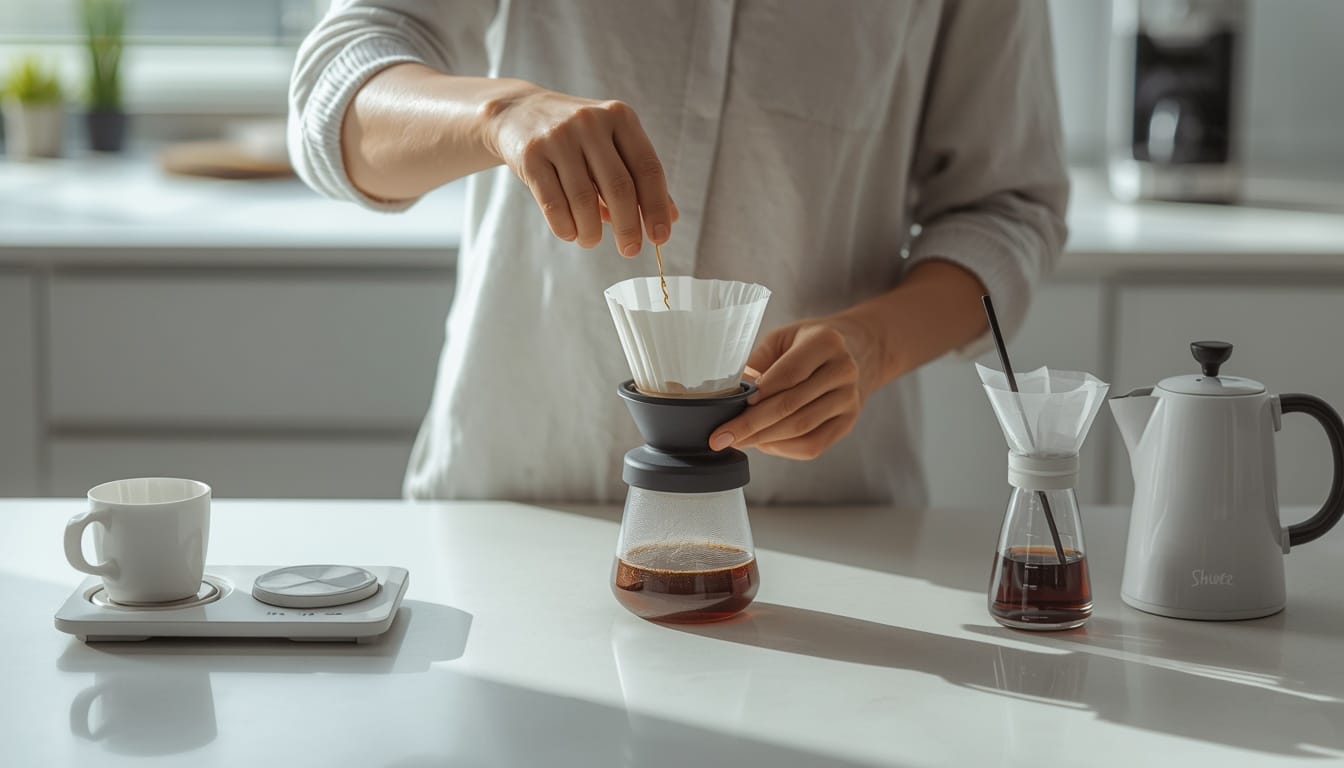
AeroPress coffee has become a favourite brewing method for many coffee drinkers in Malaysia because it is fast, portable, affordable, and capable of producing a clean yet full-bodied cup. Whether you are brewing at home in Kuala Lumpur, bringing your brewer to the office in Penang, or making coffee while travelling around the country, the AeroPress offers a flexible way to enjoy quality coffee without a large machine. This guide explains what AeroPress coffee is, how it works, what you need to brew it well, and how to adjust your recipe for better flavour.
What is AeroPress coffee?
AeroPress coffee is coffee brewed using the AeroPress, a compact manual brewer that uses immersion and pressure to extract flavour from ground coffee. Unlike a French press, it uses a paper or metal filter to reduce sediment. Unlike pour-over methods, it is less dependent on a slow, precise pouring technique. The result is often a cup that is smooth, rich, and easy to customise.
If you are comparing different brew styles, it helps to understand where AeroPress sits among other manual methods. Our guide to coffee brewing methods gives a broader overview of how AeroPress compares with pour-over, French press, moka pot, and espresso-style brewing.
Why AeroPress coffee is popular in Malaysia
There are a few reasons AeroPress coffee fits the Malaysian coffee scene so well. First, the brewer is compact and practical for smaller kitchens, apartments, and shared workspaces. Second, it is easy to clean, which matters if you want a quick brew before work. Third, it works well with many coffee origins and roast profiles that are now more widely available through local roasters and specialty cafes.
Malaysia also has a growing community of home brewers who want cafe-quality coffee without investing in expensive equipment. AeroPress is often one of the first serious brewing tools people buy because it balances ease and control. It performs well in warm weather too, since it can be used for both hot coffee and iced recipes.
How the AeroPress works
The AeroPress uses a chamber, a plunger, and a filter cap. Ground coffee and hot water are combined in the chamber for a short brew time. Then gentle manual pressure pushes the brewed coffee through the filter into a cup or server. Because the contact time is short and the pressure is controlled by hand, AeroPress coffee can be adjusted in many ways.
You can brew it in a standard method or with the inverted method. The standard method places the brewer directly over the cup from the beginning. The inverted method starts with the brewer upside down, allowing the coffee to steep before flipping and pressing. Both approaches can produce excellent results.
What you need to brew AeroPress coffee
Essential equipment
To make AeroPress coffee, you only need a few items:
- AeroPress brewer
- Fresh coffee beans
- Grinder, ideally a burr grinder
- Hot water
- Kettle
- Scale, if you want more consistency
- Timer
- Mug or server
Good beans make a big difference. If you are unsure how bean origin, roast level, and freshness affect flavour, read our coffee beans guide to choose beans that suit your preferred style of AeroPress coffee.
Paper vs metal filters
Paper filters usually create a cleaner cup with less oil and sediment. Metal filters allow more body and texture through to the cup. If you enjoy brighter, cleaner coffee, paper is often the safer choice. If you prefer a richer mouthfeel, a metal filter may suit you better.
Best coffee for AeroPress
One of the strengths of AeroPress coffee is its flexibility. You can use light, medium, or dark roasts and still get good results if your grind and recipe are adjusted properly. That said, some coffees are especially well suited to this method.
Light roast
Light roasts can highlight floral, citrus, berry, and tea-like notes. These coffees often benefit from slightly hotter water and a finer grind to ensure better extraction.
Medium roast
Medium roasts are often the easiest starting point for beginners. They offer balance, sweetness, and body without being too sharp or too heavy. Many home brewers in Malaysia find medium roast beans ideal for daily AeroPress coffee.
Dark roast
Dark roasts produce a bolder and more intense cup with chocolate, nutty, and roasted notes. These beans usually work better with cooler water and a slightly coarser grind to avoid bitterness.
A simple AeroPress coffee recipe for beginners
If you are just starting out, this recipe is a reliable base.
Ingredients
- 15g coffee
- 220g water
- Water temperature: 85 to 92 degrees Celsius for medium roast
- Medium-fine grind
Method
- Insert a paper filter into the cap and rinse it with hot water.
- Assemble the AeroPress in the standard position over your mug.
- Add 15g of ground coffee.
- Pour in 220g of hot water.
- Stir gently for 10 seconds.
- Insert the plunger and let the coffee steep for about 1 minute.
- Press slowly for 20 to 30 seconds.
- Serve and taste. Adjust in your next brew if needed.
This recipe gives a balanced cup and is a good reference point for making future adjustments.
Inverted AeroPress method
The inverted method is popular because it gives you more control over steep time and reduces dripping before the press. Many coffee enthusiasts prefer it when brewing lighter roasts or experimenting with stronger recipes.
Basic inverted recipe
- Place the plunger into the chamber and stand the AeroPress upside down.
- Add 16g coffee.
- Pour 230g hot water.
- Stir for 10 to 15 seconds.
- Attach the rinsed filter cap.
- Steep for 1 to 1.5 minutes.
- Carefully flip onto your cup.
- Press slowly until you hear a light hiss.
The inverted method is useful, but you need to flip carefully to avoid spills.
How grind size affects AeroPress coffee
Grind size is one of the most important variables in brewing. A finer grind extracts faster and usually creates a stronger, heavier cup. A coarser grind extracts more slowly and can lead to a lighter taste.
If your AeroPress coffee tastes sour, thin, or underdeveloped, your grind may be too coarse, your water too cool, or your brew time too short. If it tastes bitter, dry, or harsh, your grind may be too fine, your water too hot, or your brew time too long.
General starting points
- Light roast: medium-fine to fine
- Medium roast: medium-fine
- Dark roast: medium
Small changes can make a big difference, so adjust one variable at a time.
Best water temperature for AeroPress
Water temperature has a strong impact on extraction and flavour. Many people assume hotter is always better, but that is not always true for AeroPress coffee.
- Light roast: 90 to 96 degrees Celsius
- Medium roast: 85 to 92 degrees Celsius
- Dark roast: 80 to 88 degrees Celsius
Using slightly cooler water with darker roasts can reduce bitterness and create a sweeter cup. Using hotter water with light roasts can help bring out clarity and complexity.
How to make stronger AeroPress coffee
If you like a more concentrated cup, there are several ways to brew stronger AeroPress coffee without making it unpleasant.
Use more coffee
Increase the dose from 15g to 17g or 18g while keeping water fairly similar.
Grind a bit finer
A finer grind can increase extraction, but avoid going too fine if it leads to bitterness.
Shorten dilution
Some people brew a concentrated AeroPress coffee and add hot water after pressing, similar to an Americano style.
Extend steep time slightly
Adding 15 to 30 seconds can deepen flavour, especially with lighter roasts.
How to make iced AeroPress coffee in Malaysia
In Malaysia’s warm climate, iced AeroPress coffee is an excellent option. It is refreshing, quick to make, and can preserve clarity better than some full-immersion methods.
Simple iced recipe
- 18g coffee
- 100g hot water
- 100g ice in cup or server
- Medium-fine grind
- Put ice into your serving cup.
- Brew the coffee using the AeroPress directly over the ice.
- Stir gently after pressing.
- Taste and add more ice or a little water if needed.
This method creates a bright and crisp iced coffee that works especially well with fruit-forward beans.
If you want to build better coffee habits at home, it also helps to understand local preferences, cafe culture, and how Malaysians enjoy different coffee styles. Our coffee in Malaysia guide explores the broader local coffee scene.
Common AeroPress coffee mistakes to avoid
Using stale coffee
Fresh beans generally produce better aroma, sweetness, and complexity. If your brew tastes flat, the beans may be the issue.
Guessing measurements
The AeroPress is forgiving, but a scale helps a lot. Measuring coffee and water brings consistency.
Pressing too hard
Pressing aggressively can force fine particles through the filter and create a muddier cup. A slow, steady press is usually better.
Ignoring water quality
Filtered water can improve flavour significantly. If your tap water has strong mineral or chlorine notes, the final cup will reflect that.
Changing too many variables at once
When troubleshooting, adjust one factor at a time. Change grind size, dose, temperature, or brew time individually so you can identify what works.
How to customise AeroPress coffee to your taste
No single recipe works for everyone. Part of the appeal of AeroPress coffee is that it is easy to tune based on what you enjoy.
For a cleaner cup
- Use paper filters
- Try a slightly coarser grind
- Reduce agitation
For a sweeter cup
- Lower the water temperature slightly for darker roasts
- Use fresher beans
- Dial in a balanced brew ratio
For more body
- Use a metal filter
- Increase coffee dose slightly
- Try a finer grind with careful pressing
For more clarity
- Use lighter roasts
- Use clean water
- Keep brew time controlled and consistent
Is AeroPress coffee better than pour-over or French press?
AeroPress coffee is not automatically better, but it may be better for certain people and situations. Compared with pour-over, AeroPress is often easier for beginners and faster to complete. Compared with French press, it usually gives a cleaner cup with less sediment. It is also more portable than either option.
If you enjoy experimenting, AeroPress can be one of the most versatile brewers you own. If you prefer larger batches for several people, a pour-over dripper or French press may be more convenient.
Who should use an AeroPress?
The AeroPress is a strong choice for:
- Beginners who want better home coffee without complex equipment
- Office workers who need a compact brewer
- Travellers who want a portable coffee setup
- Enthusiasts who enjoy testing recipes and variables
- People who want both hot and iced coffee options
Its combination of convenience, low maintenance, and brew quality explains why it remains so popular across many skill levels.
Final thoughts on AeroPress coffee
AeroPress coffee stands out because it is easy to learn yet deep enough for serious experimentation. With a good grinder, fresh beans, suitable water temperature, and a consistent recipe, you can produce excellent coffee at home with very little equipment. Start with a simple recipe, taste carefully, and make small adjustments based on whether you want more sweetness, body, or clarity.
If you enjoy practical coffee guides like this, subscribe to our newsletter for more brewing tips, bean insights, and coffee resources tailored to Malaysia.
