

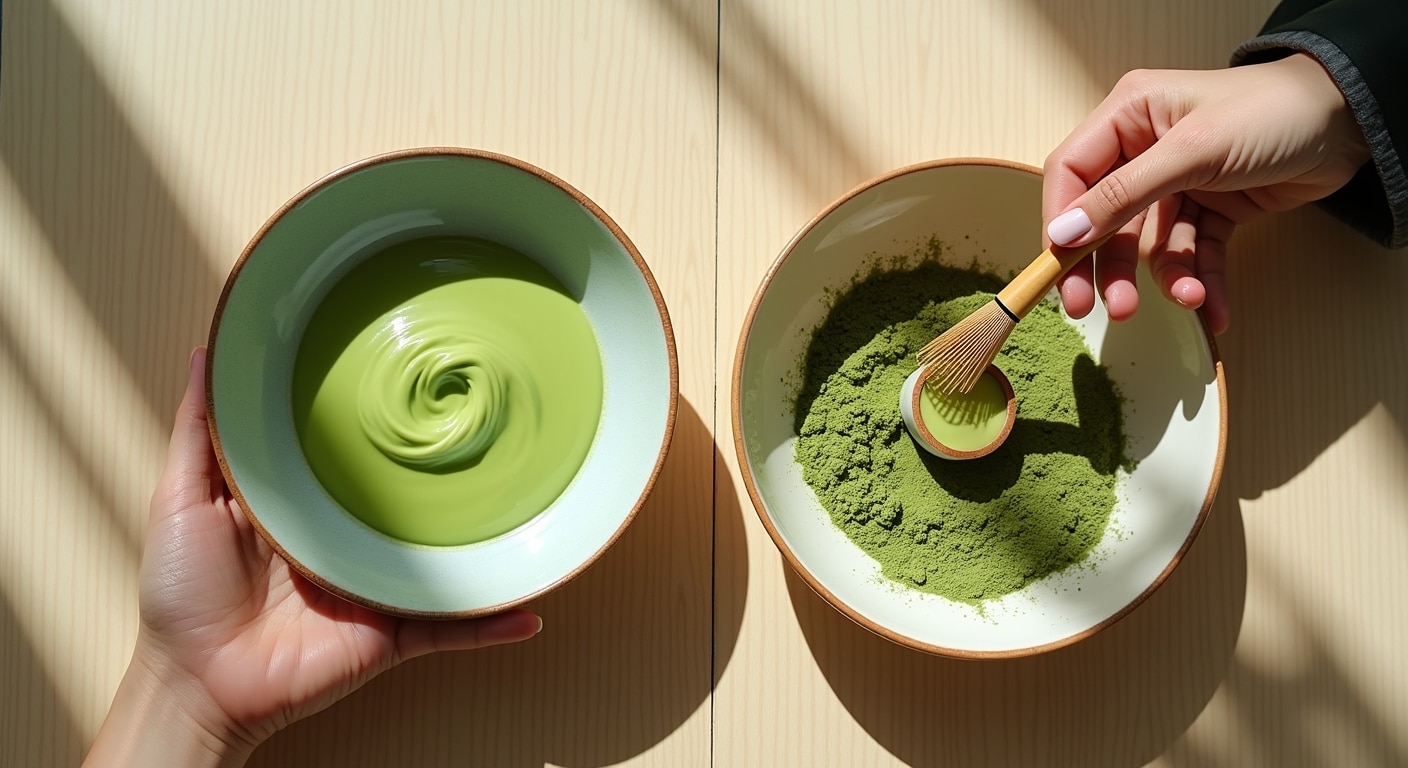
If you have ever stood in front of a shelf of green tea powder and wondered about ceremonial vs culinary matcha, you are not alone. In Malaysia, matcha is now everywhere: in Japanese cafes, modern brunch spots, home latte setups, and dessert menus. But the labels can be confusing, especially if you are new to buying matcha. The short version is simple: ceremonial matcha is usually made for drinking on its own, while culinary matcha is generally designed for mixing into lattes, baking, desserts, and other recipes.
Direct answer: ceremonial matcha is typically smoother, sweeter, brighter green, and best whisked with water, while culinary matcha is stronger, slightly more bitter, and better for recipes that include milk, sugar, or other ingredients. The best choice depends on how you plan to use it, not which one sounds more premium.
Ceremonial vs culinary matcha at a glance
| Factor | Ceremonial Matcha | Culinary Matcha |
|---|---|---|
| Best use | Drinking straight with water | Lattes, baking, desserts, smoothies |
| Taste | Smoother, sweeter, more umami | Bolder, more robust, more bitter |
| Colour | Bright, vivid green | Duller green or slightly olive |
| Texture | Very fine and soft | Fine, but often less delicate |
| Price | Usually more expensive | Usually more affordable |
| With milk and sugar | Can be overshadowed | Performs better in mixed drinks |
What is ceremonial matcha?
Ceremonial matcha refers to high-quality matcha that is generally intended to be enjoyed in a simple preparation, usually whisked with hot water. It is the style most closely associated with traditional Japanese tea drinking. Because there are fewer ingredients involved, the flavour of the tea itself matters a lot more.
A good ceremonial matcha is often known for:
- a naturally sweeter taste
- less noticeable bitterness
- clear umami notes
- a vibrant green colour
- a smooth finish without heavy harshness
When prepared properly, ceremonial matcha should taste pleasant enough to drink without sugar, syrups, or flavoured creamers. That is why many people reserve it for usucha-style drinking, where the tea is whisked with water and consumed as the main experience.
How ceremonial matcha is usually enjoyed
In practical terms, ceremonial matcha works best when you want to focus on its flavour. If you are making a premium bowl at home, or if you enjoy tasting the grassy, sweet, and savoury notes of the tea itself, this is often the better option. It is also common for people who are getting deeper into matcha to compare ceremonial products the same way coffee drinkers compare origins and roast profiles. If that sounds familiar, you may also enjoy learning how flavour differences appear in coffee through this guide to coffee beans and flavour.
What is culinary matcha?
Culinary matcha is matcha made with blending and cooking in mind. It is chosen less for delicate stand-alone sipping and more for how well it holds up when mixed with milk, ice, sugar, chocolate, vanilla, or flour-based recipes. In cafes across Kuala Lumpur, Penang, Johor Bahru, and beyond, this is often the type used for matcha lattes, soft serve, cakes, cookies, and sauces.
Good culinary matcha is not necessarily low quality. That is an important point. It is simply selected for a different purpose. Because it has a stronger, more assertive flavour, it can still taste distinct even when surrounded by other ingredients.
Culinary matcha is often known for:
- a stronger tea flavour
- more bitterness or astringency
- a less delicate finish
- good performance in recipes
- better cost efficiency for frequent use
Why culinary matcha works well in lattes
Milk softens bitterness and changes the flavour balance of matcha. In a latte, especially one with oat milk, fresh milk, or sweeteners, a delicate ceremonial powder can disappear quickly. Culinary matcha usually cuts through better, which is why many home brewers and cafe operators prefer it for everyday drinks. If you have ever ordered a matcha latte and wanted a more obvious tea taste, culinary-grade powder is often the reason it works.
The main difference between ceremonial vs culinary matcha
The biggest difference between ceremonial vs culinary matcha is intended use. Ceremonial matcha is meant to be the star of the cup. Culinary matcha is meant to stay noticeable even when other ingredients join in.
That one distinction affects everything else:
- Flavour: ceremonial matcha is smoother and sweeter; culinary matcha is stronger and more bitter.
- Texture and finish: ceremonial matcha often feels softer and cleaner on the palate.
- Price: ceremonial matcha usually costs more because it is judged more strictly for drinking quality.
- Application: ceremonial matcha suits water-based preparation, while culinary matcha suits recipes and milk drinks.
This is similar to how different drink formats call for different coffee choices. Not every bean is ideal for every brew method, which is one reason many beverage lovers eventually explore a complete guide to coffee in Malaysia to understand ingredients in context.
How to tell the difference when buying matcha
Labels can help, but they are not always enough. Some brands use the words ceremonial and premium quite loosely. To choose well, look at several cues together instead of relying on one term.
1. Look at the colour
Brighter green usually suggests fresher, higher-grade matcha. Ceremonial matcha often has a very vivid green appearance. Culinary matcha may look greener than regular powdered tea, but it is often less vibrant and can lean slightly yellow-green or olive.
2. Read the intended use
If the packaging says best for lattes, smoothies, baking, desserts, or ice cream, it is likely culinary matcha. If it recommends whisking with water or highlights traditional tea preparation, it is probably ceremonial.
3. Check the taste notes
Words like mellow, sweet, umami, silky, and smooth usually point toward ceremonial matcha. Words like bold, robust, intense, earthy, and versatile in recipes more often suggest culinary matcha.
4. Compare the price realistically
Price is not the only signal, but it matters. Ceremonial matcha generally costs more because quality standards for direct drinking are higher. If a product is very cheap but marketed as ceremonial, it is worth being cautious.
5. Consider origin and freshness
Many buyers also look for harvest information, region, and packaging date. Freshness matters because matcha is sensitive to air, light, heat, and humidity. In Malaysia’s warm climate, proper storage is especially important after opening.
Does ceremonial matcha always mean better?
No. Ceremonial does not automatically mean better for every situation. It only means better for a certain use case. If you are making iced strawberry matcha, matcha burnt cheesecake, or a sweet latte at home, culinary matcha may actually give you a better result for less money.
A common beginner mistake is buying expensive ceremonial matcha and then mixing it with a lot of milk and syrup. The subtle flavours get buried, and the value is lost. On the other hand, using a harsh culinary matcha for straight drinking can make you think you dislike matcha when the real issue is simply using the wrong grade for the purpose.
Which one should beginners buy?
For most beginners, the best choice depends on what you plan to make most often.
- Buy ceremonial matcha if you want to drink it with water and learn the taste of matcha itself.
- Buy culinary matcha if you mainly want lattes, iced drinks, baking, or desserts.
- Buy both if you drink matcha regularly and want one for sipping and one for recipes.
If your daily routine involves iced matcha latte before work, culinary matcha is usually the more practical starting point. If you are curious about traditional preparation and want to appreciate the tea’s natural sweetness, ceremonial is worth trying.
A simple beginner rule
Use ceremonial for water. Use culinary for recipes. That rule is not perfect, but it is accurate enough for most home users.
Best uses for ceremonial matcha
- traditional whisked matcha with hot water
- mindful tea drinking at home
- tasting flights or side-by-side comparisons
- minimalist iced matcha with little or no sweetener
If you are spending more on ceremonial matcha, it makes sense to keep the drink simple. That way you can actually taste what you paid for.
Best uses for culinary matcha
- hot and iced matcha lattes
- matcha smoothies
- cookies, cakes, and brownies
- matcha cream, sauces, and dessert fillings
- soft serve, ice cream, and cafe specials
This is often the smart option for busy households, cafe prep, or anyone going through matcha quickly. It gives stronger flavour impact and better value per serving.
How matcha quality affects taste in Malaysia’s cafe scene
As matcha becomes more popular in Malaysia, more cafes are paying attention to quality differences. Some use a smoother house blend for straight matcha and a separate culinary blend for lattes. Others choose one versatile powder for consistency and cost control. For customers, this is why one cafe’s latte can taste creamy and balanced while another tastes flat, grassy, or overly bitter.
Water temperature, milk choice, and whisking technique also matter. Even a good ceremonial matcha can taste rough if the water is too hot. Likewise, a decent culinary matcha can taste excellent in a latte if the ratio is right and the drink is not overloaded with syrup.
Common myths about ceremonial vs culinary matcha
Myth 1: Culinary matcha is low quality
Not always. Some culinary matcha is very good, just stronger and less delicate. It is built for mixing, not for plain drinking.
Myth 2: Ceremonial matcha should be used for everything
No. Using ceremonial matcha in baking or heavily sweetened drinks is often unnecessary and expensive.
Myth 3: Colour alone tells the full story
Colour helps, but tasting notes, freshness, and intended use matter too. A bright green powder can still vary in balance and finish.
Myth 4: More expensive always means better
Better for what? A premium ceremonial grade may be excellent for straight drinking but not the best value for daily lattes.
Key takeaways
- Ceremonial vs culinary matcha is mainly about intended use.
- Ceremonial matcha is smoother, sweeter, and better for drinking with water.
- Culinary matcha is bolder, more bitter, and better for lattes, desserts, and baking.
- Ceremonial usually costs more, but that does not mean it is the right choice for every recipe.
- Beginners should choose based on how they actually plan to use matcha.
How to choose the right one for your routine
Ask yourself three quick questions before buying:
- Do I want to drink matcha straight or mix it with milk?
- Am I buying for daily use or occasional tasting?
- Do I care more about subtle flavour or stronger recipe performance?
If your answers lean toward straight drinking, tasting, and subtle flavour, try ceremonial. If they lean toward lattes, desserts, and everyday affordability, choose culinary.
Related guides
If you enjoy learning how ingredients affect flavour and drink quality, you may also like our coffee beans guide and this complete guide to coffee in Malaysia for a broader look at cafe culture, taste, and beverage choices.
Final thoughts
The real answer to ceremonial vs culinary matcha is not which one is better in general, but which one is better for your cup. Ceremonial matcha shines when you want clarity, sweetness, and a traditional drinking experience. Culinary matcha shines when you want a strong matcha taste in lattes, bakes, and desserts. Once you match the grade to the purpose, buying matcha becomes much less confusing and much more enjoyable.
