

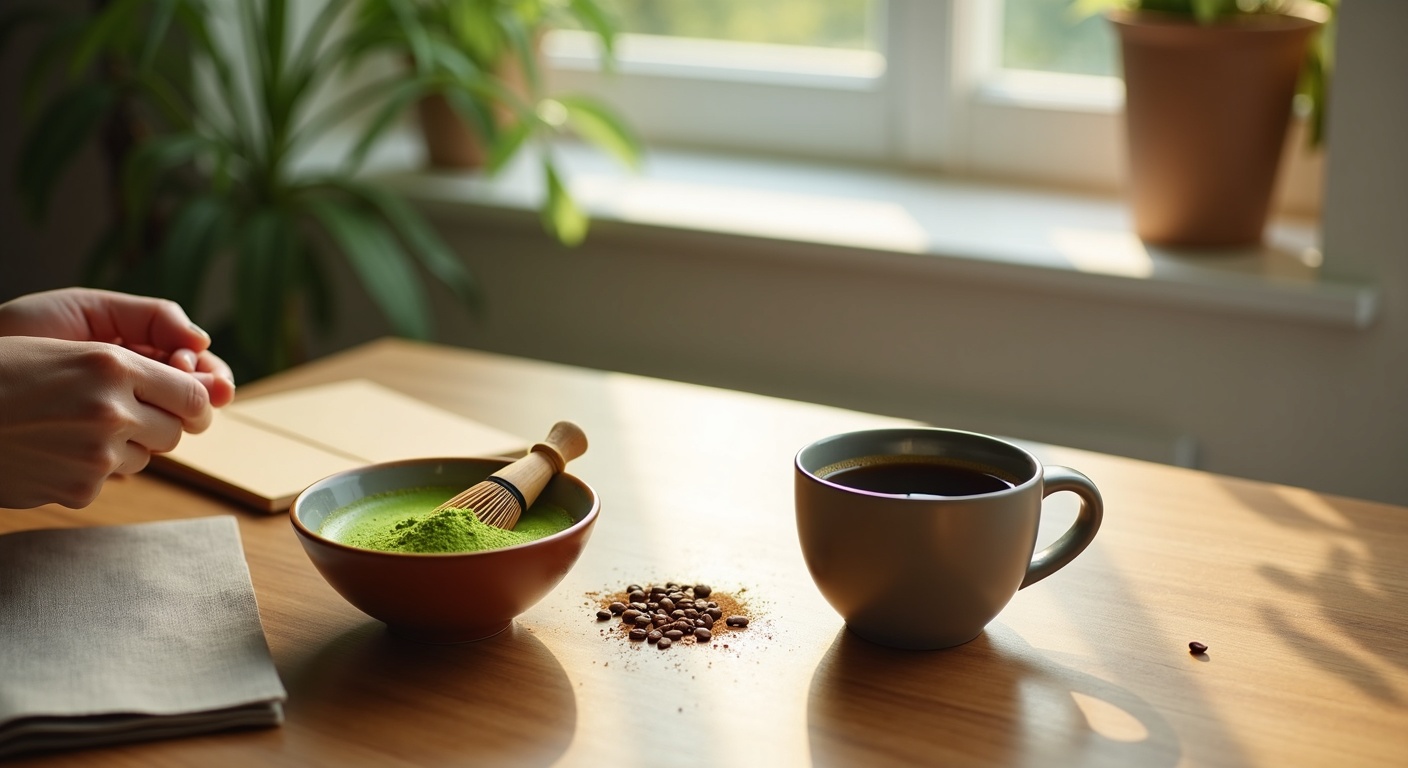
If you are comparing matcha caffeine vs coffee, the short answer is this: a typical cup of coffee usually has more caffeine than a standard serving of matcha, but matcha often feels smoother and more sustained because it also contains L-theanine. For many people in Malaysia, the better choice depends on whether you want a stronger caffeine hit, gentler energy, or fewer jitters.
Both drinks are popular for different reasons. Coffee is the go-to morning fuel for office workers, students, and café regulars, while matcha has grown quickly across Malaysian cafes thanks to its earthy taste, vibrant colour, and calmer energy profile. If you want a simple answer before the details: coffee generally contains more caffeine per serving, but matcha can still provide a noticeable boost with a steadier feel.
Direct Answer: Which Has More Caffeine?
Coffee usually has more caffeine than matcha. A standard cup of brewed coffee often contains around 80 to 120 mg of caffeine, while a typical serving of matcha usually contains around 38 to 70 mg, depending on how much powder is used and how it is prepared. However, matcha may feel less intense because its caffeine is balanced by L-theanine.
Matcha Caffeine vs Coffee at a Glance
| Drink | Typical Serving | Estimated Caffeine | How It Feels |
|---|---|---|---|
| Matcha | 1 to 2 grams powder in 1 cup | 38 to 70 mg | Smoother, steadier energy |
| Brewed coffee | 240 ml cup | 80 to 120 mg | Stronger, faster caffeine hit |
| Espresso | 1 shot | 60 to 75 mg | Concentrated and quick boost |
| Matcha latte | 1 cup | 30 to 70 mg | Milder, depends on recipe |
Why Coffee Usually Contains More Caffeine
Coffee beans naturally contain a significant amount of caffeine, and brewing extracts much of it into the cup. The final amount depends on the bean type, roast level, grind size, brew method, and serving volume. In practical terms, a large iced Americano or filter coffee from a café in Kuala Lumpur or Penang will often contain more caffeine than a regular matcha latte.
Serving size matters too. Many people think matcha is stronger because the powder is concentrated, but most café matcha drinks use a modest amount of matcha powder. Coffee, especially larger takeaway sizes, can quickly exceed matcha in total caffeine intake.
Common coffee caffeine ranges
- Brewed coffee: 80 to 120 mg per cup
- Espresso shot: 60 to 75 mg per shot
- Double espresso: 120 to 150 mg
- Iced coffee or cold brew: often 100 mg or more, depending on size
If you want a broader understanding of coffee styles and caffeine strength, our complete guide to coffee in Malaysia is a useful starting point.
How Much Caffeine Is in Matcha?
Matcha is made from shade-grown green tea leaves that are dried and stone-ground into a fine powder. Because you consume the whole leaf rather than just steeping it and discarding the leaves, matcha contains more caffeine than many regular green teas. Still, it often remains below the caffeine level of standard brewed coffee.
A typical serving of matcha uses about 1 to 2 grams of powder. That usually gives you roughly 38 to 70 mg of caffeine, though premium ceremonial matcha, café blends, or larger scoops may vary. In Malaysia, some modern matcha bars and dessert cafés prepare stronger matcha drinks than others, so the caffeine can differ quite a bit.
What changes the caffeine level in matcha?
- The amount of matcha powder used
- The grade and origin of the matcha
- Whether it is served straight or in a latte
- The café’s recipe and cup size
Why Matcha Feels Different From Coffee
This is where the comparison gets more interesting. When people search for matcha caffeine vs coffee, they are not only asking about numbers. They also want to know why the energy feels different.
Matcha contains L-theanine, an amino acid naturally found in tea. L-theanine is often linked to a calmer, more focused feeling. That means matcha’s caffeine may feel smoother and less abrupt than coffee for some people. Coffee, on the other hand, is often felt more quickly and more strongly, especially on an empty stomach.
In simple terms
- Coffee: stronger kick, faster effect, may feel more intense
- Matcha: gentler lift, more even energy, often described as calm focus
This does not mean matcha has no side effects. If you are sensitive to caffeine, drinking too much matcha can still make you feel restless. But many people who find coffee too harsh enjoy matcha as a middle ground.
Matcha vs Coffee for Energy, Focus, and Jitters
For students, office workers, creatives, and café hoppers, the best choice often depends on the outcome you want.
If you want fast morning energy
Coffee is usually the better pick. It tends to deliver a more immediate boost, which is why so many Malaysians reach for espresso-based drinks before work or during long commutes.
If you want sustained focus
Matcha may suit you better. Many people describe the energy as cleaner or steadier, especially during desk work, studying, or long afternoons when you want concentration without feeling overstimulated.
If you are sensitive to jitters
Matcha can be easier to tolerate. The lower caffeine level and presence of L-theanine may reduce the sharp edge some people feel from coffee. That said, your personal tolerance matters more than trends.
Which Is Better for Beginners?
If you are new to caffeinated drinks, matcha can be a gentler starting point, especially if plain black coffee feels too bitter or strong. A lightly sweetened matcha latte is often more approachable for beginners. However, if you want the most obvious caffeine effect, coffee will usually be easier to notice.
Beginners should also watch portion size. In Malaysia, café drinks can vary from small specialty servings to large takeaway cups with extra shots, sweeteners, and milk. A large iced coffee can deliver much more caffeine than expected.
Does Matcha Have More Caffeine Than Espresso?
Usually, no. A single espresso shot often contains around 60 to 75 mg of caffeine, which is equal to or higher than many standard matcha servings. However, a strong matcha prepared with a generous amount of powder can come close.
This is one reason comparisons can be confusing. People often compare one cup of matcha with one cup of brewed coffee, but espresso is smaller and more concentrated. If you compare by volume, espresso looks stronger. If you compare by total cup size, brewed coffee often wins on total caffeine.
Matcha Latte vs Coffee Latte: Which Has More Caffeine?
In most cases, a coffee latte has more caffeine than a matcha latte. A regular café latte is made with one or two espresso shots, while a matcha latte usually contains one measured serving of matcha powder. Unless the matcha is made extra strong, the coffee latte tends to contain more caffeine overall.
| Drink | Typical Caffeine Range | Notes |
|---|---|---|
| Matcha latte | 30 to 70 mg | Depends on powder amount and recipe |
| Coffee latte | 60 to 150 mg | Depends on single or double shot |
This matters when ordering from Malaysian cafés, where recipes differ a lot. Some specialty cafés use double espresso by default, while some matcha lattes are made more for flavour than caffeine.
Calories and Add-Ons Matter Too
Although this article focuses on caffeine, it is worth mentioning that many café drinks come with milk, sugar, syrups, or whipped toppings. A pure matcha bowl and a sweet iced matcha latte are very different drinks nutritionally. The same goes for black coffee versus caramel lattes or bottled canned coffee.
If your goal is simply managing caffeine, the base drink matters most. If your goal includes sugar intake, calories, or overall wellness, then the full recipe becomes just as important as the caffeine amount.
How to Choose Between Matcha and Coffee
If you are deciding what to drink on a normal weekday, use this simple guide:
- Choose coffee if you want a stronger caffeine hit, quicker wake-up effect, or bold roasted flavour.
- Choose matcha if you want gentler stimulation, calmer focus, or prefer tea-based drinks.
- Choose based on timing by using coffee early in the morning and matcha later in the day if stronger caffeine affects your sleep.
- Check the café recipe because serving size and strength vary widely.
Best Times to Drink Matcha or Coffee
Morning
Coffee is a common morning choice because it feels immediate and effective. If you need to start work fast, it is often the practical option.
Mid-morning to afternoon
Matcha can be ideal when you want a boost without going overboard. Many people find it useful before meetings, study sessions, or creative work.
Late afternoon
If you are caffeine-sensitive, matcha may be the safer option over strong coffee, though both can still affect sleep depending on your tolerance.
Key Takeaways
- Coffee usually contains more caffeine than matcha per serving.
- Matcha typically contains around 38 to 70 mg of caffeine.
- Brewed coffee often contains around 80 to 120 mg of caffeine per cup.
- Matcha may feel smoother because it contains L-theanine.
- Coffee is often better for a fast, strong boost.
- Matcha is often better for calmer, steady focus.
- Café recipes in Malaysia vary, so actual caffeine levels can differ.
Final Verdict on Matcha Caffeine vs Coffee
When it comes to matcha caffeine vs coffee, coffee is usually the stronger source of caffeine. Matcha still provides a meaningful boost, but it tends to feel more balanced and less aggressive for many people. If you love the ritual of coffee and want a bold wake-up call, coffee remains the classic choice. If you prefer a smoother energy curve and want something a little gentler, matcha is a strong alternative.
The best drink is the one that fits your body, schedule, and taste. In Malaysia’s growing café scene, you have plenty of good options for both, so it is worth trying each in different formats to see what works best for your day.
Related Guides
If you want to explore more beyond matcha and coffee basics, read our coffee tips and knowledge guides for practical brewing and café drink insights. You can also browse the complete guide to coffee in Malaysia to better understand beans, brew methods, and popular local café choices.
