

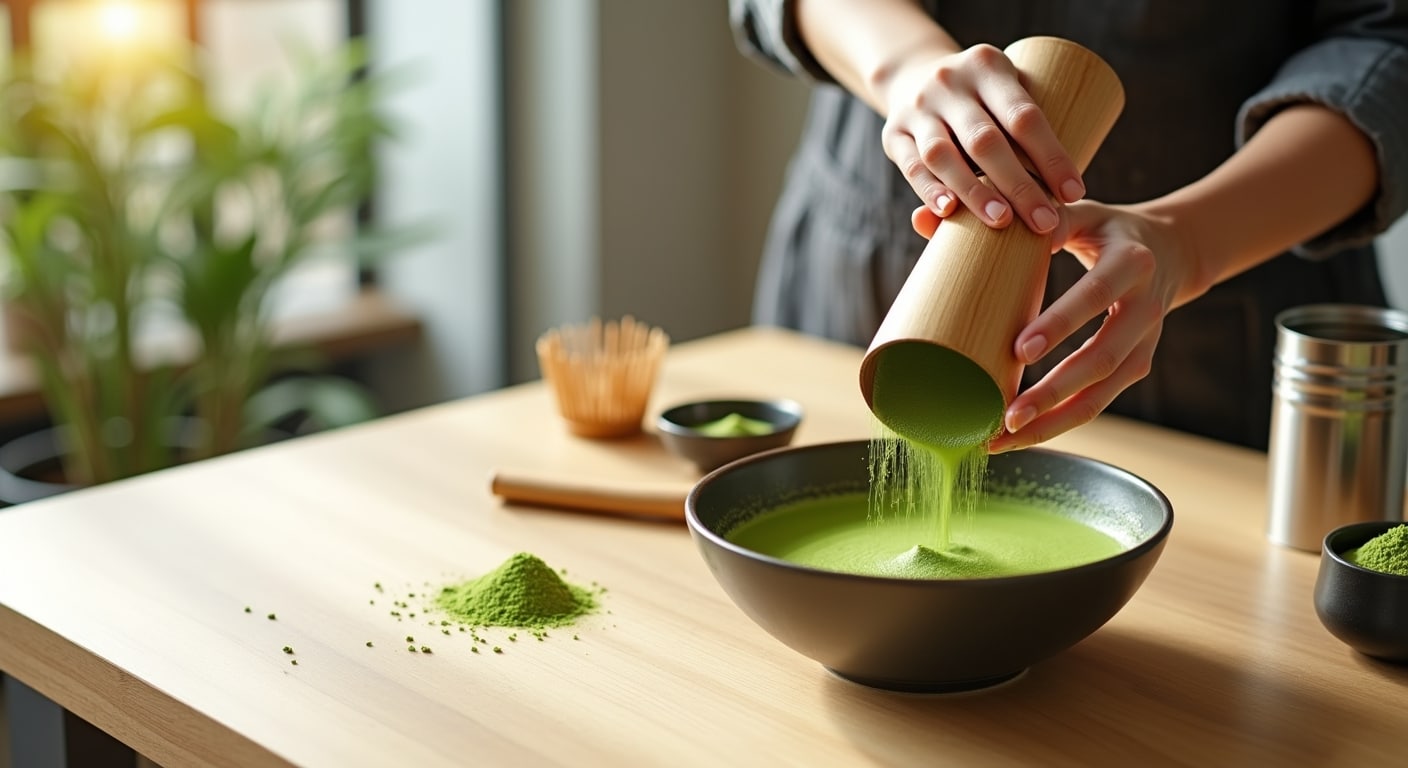
If you have been curious about matcha but do not know where to start, this beginner guide to matcha covers the essentials in a simple, practical way. From what matcha is and how it tastes to how to prepare it at home, this guide is designed for first-time drinkers in Malaysia who want clear answers without the confusion.
Matcha is a finely ground green tea powder made from specially grown tea leaves. Unlike regular green tea, you consume the whole leaf in powdered form, which gives matcha its rich flavour, vibrant green colour, and distinctive caffeine profile. For beginners, the best way to start is by learning the main grades, choosing the right tools, and trying easy drinks such as a matcha latte or usucha, which is a thinner style of whisked matcha.
What is matcha?
Matcha is a Japanese powdered green tea made from shade-grown tea leaves called tencha. After harvest, the leaves are steamed, dried, and ground into a fine powder. Because you whisk the powder directly into water or milk, you consume the whole tea leaf instead of only an infusion.
This is one reason matcha feels different from ordinary green tea. The flavour is usually more concentrated, the texture can be creamy when whisked well, and the colour is much brighter. In Malaysia, matcha has become popular not only in Japanese cafes but also in modern coffee shops, dessert bars, and home kitchens.
Direct answer: what should beginners know about matcha?
Beginners should know that matcha is powdered green tea with a grassy, slightly sweet, sometimes umami flavour. Start with ceremonial or good-quality latte-grade matcha, use water that is not boiling, whisk properly, and expect a gentler energy lift than many espresso drinks.
Why matcha is so popular
Matcha fits well into modern beverage culture because it is versatile. You can drink it hot, iced, with milk, without milk, sweetened or unsweetened. It also appeals to people looking for an alternative to coffee, especially those who want a different taste experience or a more measured caffeine effect.
In Malaysia, that popularity is easy to see. Cafes in Kuala Lumpur, Penang, Johor Bahru, and other cities often feature iced strawberry matcha, dirty matcha, matcha latte, and matcha soft serve. Social media has also helped matcha become more accessible, but many beginners still are not sure what is genuinely good matcha and what is simply colourful marketing.
What does matcha taste like?
One of the biggest questions in any beginner guide to matcha is taste. Matcha does not taste like sweet green tea ice cream unless sugar and milk are added. Pure matcha can taste:
- Grassy or fresh
- Vegetal, similar to steamed greens
- Umami or savoury
- Lightly sweet in higher grades
- Bittersweet if lower quality or prepared badly
The taste depends on quality, origin, freshness, and preparation. A good beginner experience often comes from drinking a balanced matcha latte first, then slowly trying pure whisked matcha later.
Why some matcha tastes bitter
Bitterness usually comes from one or more of these issues:
- Low-quality matcha
- Water that is too hot
- Too much powder for the amount of liquid
- Poor whisking, which creates clumps and uneven flavour
- Old matcha that has lost freshness
If your first cup tastes harsh, do not assume you dislike matcha entirely. Preparation matters a lot.
Types of matcha beginners should know
You do not need to memorise every category, but understanding the basic types helps you buy more confidently.
Ceremonial grade
This is usually the best quality for drinking with water. It tends to be smoother, brighter, and less bitter. Good ceremonial matcha can be ideal if you want to experience pure matcha as traditionally prepared.
Latte grade or premium everyday grade
This is a practical choice for many beginners in Malaysia because it works well with milk and sweeteners. It is often more affordable than ceremonial grade while still tasting pleasant.
Culinary grade
This is mainly for baking, desserts, sauces, and blended drinks. It can be stronger and more bitter, which is useful in recipes but less enjoyable as a neat tea.
Matcha grade comparison table
| Type | Best for | Taste | Price range |
|---|---|---|---|
| Ceremonial grade | Drinking with water | Smoother, sweeter, more umami | Highest |
| Latte grade | Lattes and iced drinks | Balanced, slightly stronger | Mid-range |
| Culinary grade | Baking and recipes | Bolder, more bitter | Lower |
Matcha vs green tea: what is the difference?
Regular green tea is steeped, then the leaves are removed. Matcha is whisked into the drink, so the powder stays in the cup. This changes the texture, flavour intensity, and overall experience.
For readers exploring broader beverage basics, our complete guide to coffee in Malaysia is also useful if you want to understand how different cafe drinks compare across energy, taste, and brewing style.
Matcha vs coffee for beginners
Many first-time matcha drinkers are actually coffee drinkers looking for an alternative. Both drinks contain caffeine, but they feel different to many people.
| Feature | Matcha | Coffee |
|---|---|---|
| Main flavour | Grassy, umami, vegetal | Roasty, nutty, chocolaty, fruity |
| Caffeine feel | Often steadier for many drinkers | Often faster and stronger hit |
| Common beginner format | Latte | Latte or americano |
| Preparation style | Whisked powder | Brewed grounds |
If you are deciding which drink suits your routine better, read our deeper comparison of matcha vs coffee to see how they differ in taste, caffeine experience, and everyday use.
Is matcha healthy?
Matcha is often associated with antioxidants and a calmer energy profile, but it is best to think of it as one part of a balanced lifestyle rather than a miracle drink. Because you consume the whole powdered leaf, matcha contains compounds naturally present in green tea, including catechins and L-theanine.
That said, health effects vary by person. A heavily sweetened cafe matcha drink is very different from plain whisked matcha. If you are drinking matcha mainly for wellness goals, pay attention to sugar levels, syrups, whipped toppings, and portion size.
Key things beginners should remember
- Plain matcha and sweet cafe matcha are not the same nutritionally
- Higher quality matcha usually tastes smoother with less need for sugar
- Caffeine sensitivity still matters, especially if you drink it late in the day
- Consistency matters more than hype
How much caffeine is in matcha?
Matcha contains caffeine, but the exact amount depends on the serving size and the powder itself. A typical serving often has less caffeine than a strong cafe coffee, but more than regular steeped green tea. Many people describe the effect as smoother, though individual responses differ.
If you are sensitive to caffeine, start with a smaller serving. An iced matcha latte in a cafe may include multiple scoops, so the caffeine can add up, especially when combined with sugar.
What you need to make matcha at home
You do not need a full tea ceremony setup to begin. A simple home setup can work very well.
Basic tools
- Matcha powder
- A bowl or wide cup
- A bamboo whisk or small electric frother
- A sifter, if possible
- Warm water
Optional tools
- Bamboo scoop
- Thermometer
- Glass for iced drinks
- Milk pitcher for latte preparation
A bamboo whisk gives the most traditional texture, but a frother is a practical option for beginners who just want an easy daily drink.
How to prepare matcha properly
One reason many people struggle with their first cup is that they use boiling water or skip sifting. Here is a simple beginner-friendly method.
Steps for basic hot matcha
- Sift 1 to 2 teaspoons of matcha into a bowl to remove clumps.
- Add a small amount of warm water, around 70 to 80 degrees Celsius.
- Whisk in a quick zigzag motion until the matcha is smooth and lightly frothy.
- Add more water to your preferred strength.
- Drink immediately for the freshest taste.
For an iced latte, whisk the matcha with a little warm water first, then pour it over cold milk and ice. This prevents clumping and gives a smoother drink.
Common beginner mistakes
- Using boiling water, which can make matcha taste bitter
- Choosing baking-grade powder for drinking
- Skipping the sifting step
- Adding too much sweetener too early
- Storing matcha in a warm kitchen cabinet
Malaysia’s weather is hot and humid, so storage matters more than many people realise. Keep matcha sealed, away from light, heat, and moisture. If you buy a premium tin, finish it while it is still fresh.
How to choose good matcha in Malaysia
When shopping online or in-store, look beyond the label design. Good matcha usually has a vibrant green colour rather than dull olive or brownish tones. It should smell fresh, not stale. Reputable sellers tend to share origin details, grade, and intended use.
What to look for
- Bright green colour
- Origin details such as Uji, Nishio, or other known regions
- Clear indication of whether it is for drinking or culinary use
- Packaging that protects from light and air
- Reasonable freshness information
What to be careful about
- Very cheap matcha marketed as premium ceremonial grade
- No origin or grade information
- Large bags that may go stale before you finish them
- Overly sweet pre-mixes if you want a true matcha experience
For most beginners, buying a small tin first is smarter than buying in bulk. That lets you test the flavour and see whether you prefer pure matcha or milk-based drinks.
Best ways for beginners to drink matcha
If you are just starting, these formats are the easiest entry points:
1. Matcha latte
This is the most approachable for many people because milk softens the vegetal notes. You can use dairy, oat, or soy milk depending on preference.
2. Iced matcha
Perfect for Malaysia’s warm weather. It feels refreshing and makes matcha easier to enjoy if you are not used to hot tea.
3. Usucha
This is a lighter traditional preparation using matcha and water only. It helps you understand the true flavour of the powder.
4. Matcha with light sweetening
A small amount of honey or syrup can make the first few cups easier, but try not to overpower the tea.
How to order matcha at a cafe
Ordering matcha can be confusing because cafe menus vary. Some cafes use premium Japanese powder, while others use sweetened pre-mixes. If quality matters to you, it is okay to ask a few simple questions:
- Is this made from pure matcha powder or a sweetened mix?
- Is it better as a latte or without milk?
- Can I adjust the sweetness level?
- Do you recommend it hot or iced?
This is especially helpful at specialty cafes where staff may guide you toward a drink that suits your taste, just like they would with coffee beans or espresso-based drinks.
Key takeaways for beginners
- Matcha is powdered green tea made from shade-grown leaves.
- Start with a good latte-grade or ceremonial-grade matcha.
- Do not use boiling water.
- Sift and whisk properly to avoid clumps.
- Expect a grassy, umami flavour rather than a sugary dessert taste.
- Iced matcha latte is often the easiest starting point for Malaysian beginners.
Related guides
If you want to keep learning, explore our guide to matcha vs coffee for a direct comparison, or browse our complete guide to coffee in Malaysia to better understand how matcha fits into the wider cafe drink scene.
Final thoughts
The best beginner guide to matcha is one that keeps things simple: choose decent quality powder, use the right water temperature, and start with a drink format you will actually enjoy. Matcha can be grassy, rich, refreshing, and surprisingly nuanced once you move past the first sip. Whether you discover it through a cafe in Kuala Lumpur or by whisking your first bowl at home, the learning curve is small and the payoff is worth it.
