

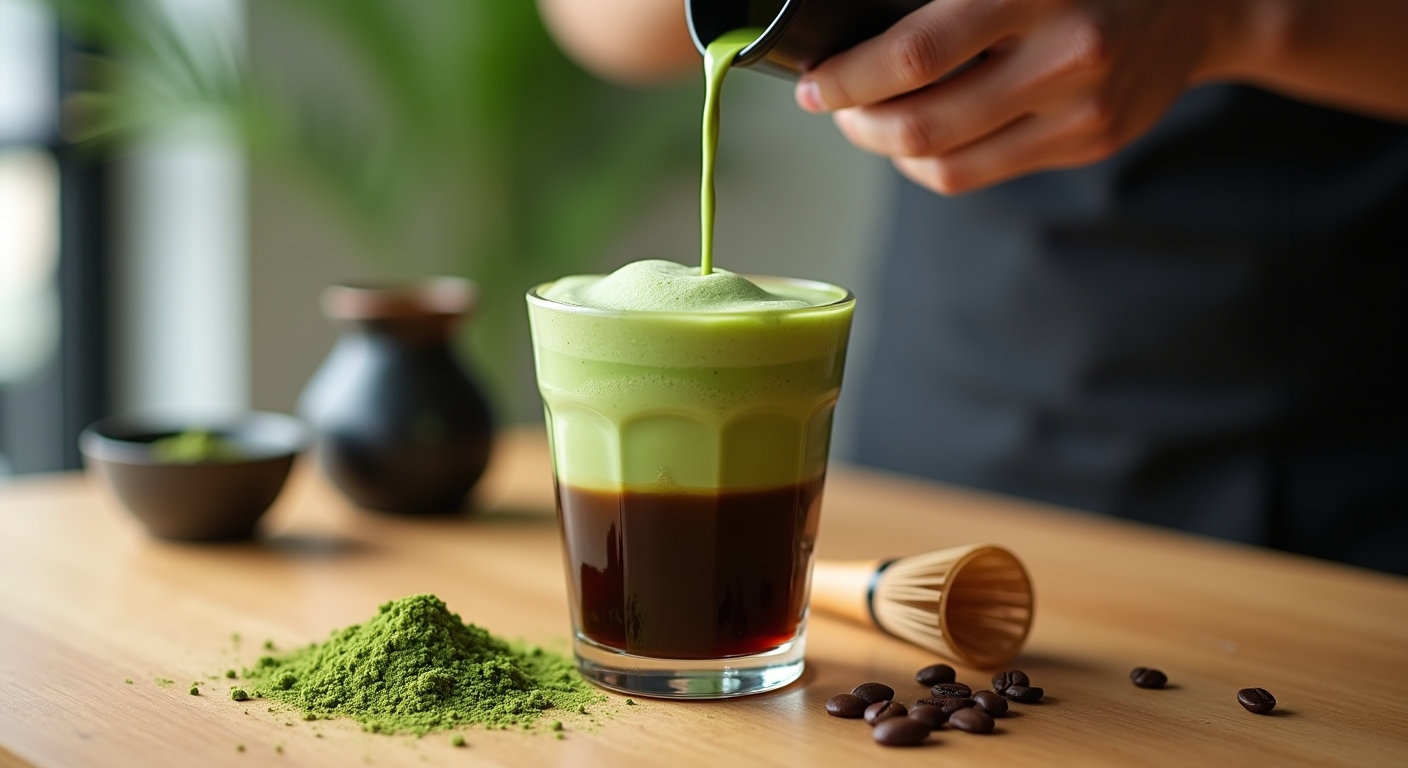
Dirty matcha is a matcha drink topped or mixed with a shot of espresso, combining the earthy, slightly sweet taste of green tea with the bold bitterness and aroma of coffee. If you have seen it on café menus in Malaysia and wondered whether it is worth trying, this guide explains exactly what dirty matcha is, how it tastes, who it suits, and how to order or make one at home.
What is dirty matcha?
Dirty matcha is a matcha latte with espresso added. Most versions use milk, ceremonial or latte-grade matcha, and one shot of espresso. The drink is called “dirty” because the dark espresso creates a layered or clouded look when poured over the green matcha base.
In cafés, you will usually see it served iced for stronger visual contrast, though hot versions are also common. The result is a drink that sits somewhere between a matcha latte and a latte or flat white, making it popular with people who enjoy both coffee and tea.
Key takeaways
- Dirty matcha combines matcha, milk, and espresso.
- It tastes earthy, creamy, lightly sweet, and slightly bitter.
- Iced dirty matcha is the most common café version in Malaysia.
- It usually contains more caffeine than a regular matcha latte.
- It suits drinkers who want both the smoothness of matcha and the kick of coffee.
Why dirty matcha has become popular
Dirty matcha fits perfectly into modern café culture. Many specialty coffee shops in Kuala Lumpur, Penang, Johor Bahru, and other Malaysian cities now serve drinks that blend classic café ingredients with trend-driven flavours. Matcha already has a loyal following, while espresso remains the backbone of most coffee menus. Put them together, and you get a beverage that feels familiar but different enough to stand out.
It also photographs well. The green matcha layer, white milk, and dark espresso shot create a striking contrast that works especially well in clear cups. That visual appeal has helped dirty matcha become a common feature in social media posts and café specials.
What does dirty matcha taste like?
Dirty matcha tastes like a balance of grassy matcha, creamy milk, and roasted espresso. The exact flavour depends on the matcha quality, the type of milk used, and the coffee bean profile.
Typical flavour notes
- Matcha: vegetal, earthy, mildly sweet, sometimes umami
- Espresso: bitter, toasty, nutty, chocolatey, or fruity depending on roast
- Milk: creamy, soft, and naturally sweet
When made well, dirty matcha should not taste like two separate drinks fighting each other. Instead, the matcha gives freshness and body, while the espresso adds depth and aroma. If the espresso is too dark or harsh, it can overwhelm the matcha. If the matcha is too weak, the drink may taste like a latte with a faint green tea note.
Dirty matcha vs matcha latte
| Drink | Main ingredients | Taste profile | Caffeine level | Best for |
|---|---|---|---|---|
| Dirty matcha | Matcha, milk, espresso | Earthy, creamy, bold, slightly bitter | Medium to high | People who like both coffee and matcha |
| Matcha latte | Matcha, milk | Smoother, greener, lighter, less bitter | Medium | People who want a tea-based drink |
| Caffè latte | Espresso, milk | Creamy, roasty, coffee-forward | Medium | Traditional coffee drinkers |
If you usually enjoy a matcha latte but want more intensity, dirty matcha can be a natural next step. If you are mostly a coffee drinker, this drink offers an easy entry point into matcha without going full tea-only.
Dirty matcha vs hojicha latte vs coffee
Many Malaysian cafés now offer several Japanese-inspired drinks, so it helps to know where dirty matcha sits among them.
Dirty matcha
Best for drinkers who want a hybrid of tea and coffee with stronger caffeine impact and layered flavour.
Hojicha latte
Made from roasted green tea powder or leaves with milk. It tastes nuttier, toastier, and usually less grassy than matcha.
Regular coffee drinks
These focus on espresso or filter coffee flavours without the vegetal note of tea. If you want to understand those foundations better, our complete guide to coffee in Malaysia covers the local coffee landscape, drink styles, and specialty coffee basics.
How much caffeine is in dirty matcha?
Dirty matcha usually contains caffeine from both matcha and espresso. In a standard café serving, you can expect roughly:
- Matcha: around 30 to 70 mg, depending on dose and grade
- Single espresso shot: around 60 to 75 mg
- Total: often around 90 to 145 mg
This makes dirty matcha stronger than a regular matcha latte and roughly similar to, or slightly more than, some milk-based coffee drinks. Actual caffeine varies by café recipe.
Because matcha and coffee deliver caffeine differently for some people, dirty matcha can feel smoother than a straight black coffee, especially when milk is added. Still, if you are caffeine-sensitive, it is smart to start with a small iced version or ask for a single shot.
Is dirty matcha healthy?
Dirty matcha can be part of a balanced diet, but whether it is “healthy” depends on the recipe and your personal needs. Matcha contains antioxidants, while espresso contributes very few calories on its own. The main variables are milk choice and added sweetener.
What affects nutrition?
- Full cream milk vs low-fat milk
- Oat, soy, almond, or other plant-based milk
- Sugar, syrup, or sweetened matcha premix
- Single vs double espresso shot
A less sweet dirty matcha made with quality matcha and fresh milk is generally a better option than one loaded with syrup. If you are ordering from a café, you can ask for less sugar or no syrup.
How many calories are in dirty matcha?
There is no single calorie count because café recipes vary, but an iced dirty matcha often falls in the range of 120 to 250 calories. The biggest contributors are the milk volume and any added sugar.
General calorie guide
- Unsweetened with low-calorie milk: lower end of the range
- Standard dairy milk with no syrup: moderate range
- Sweetened version with flavoured syrup: higher range
If you are making one at home, calorie control is much easier because you decide the milk, matcha amount, and sweetener level.
How to order dirty matcha at a café
If it is your first time ordering dirty matcha in Malaysia, these quick choices help you get a drink that suits your taste.
1. Choose iced or hot
Iced is more common and usually more refreshing in Malaysia’s weather. Hot gives a more blended flavour experience.
2. Decide on sweetness
Some cafés make matcha drinks sweeter than others. If you prefer a cleaner tea and coffee taste, ask for less sugar.
3. Pick your milk
Fresh milk is standard, but oat milk can add extra sweetness and body. Soy milk can also pair well with matcha.
4. Ask about espresso strength
A single shot is standard, but some cafés may offer double shots. If you want the matcha to remain more noticeable, stick to one shot.
How to make dirty matcha at home
You do not need a full café setup to make a good dirty matcha, though a decent espresso or strong coffee base helps. If you are exploring home drink preparation, our guide to coffee brewing methods at home can help you choose tools that suit your budget and taste.
Ingredients
- 1 to 2 teaspoons matcha powder
- 60 ml warm water
- 180 to 220 ml milk
- 1 shot espresso
- Ice, if making it cold
- Sweetener, optional
Simple method for iced dirty matcha
- Sift the matcha into a bowl or cup to remove clumps.
- Add warm water and whisk until smooth and lightly frothy.
- Fill a glass with ice and pour in the milk.
- Add the whisked matcha.
- Pull a fresh espresso shot and pour it gently over the top.
- Stir before drinking, or sip layered for changing flavour with each mouthful.
Tips for a better result
- Use good-quality matcha with a clean, vibrant taste.
- Avoid overly dark, smoky espresso roasts if you want better balance.
- Oat milk creates a thicker, café-style mouthfeel.
- Do not use boiling water on matcha, as it can make it taste bitter.
Best coffee style for dirty matcha
Not every espresso profile works equally well. In many cases, medium or medium-dark coffee beans offer the best balance because they bring chocolate, nut, or caramel notes without crushing the matcha.
Profiles that often work well
- Chocolatey Brazilian-style espresso blends
- Nutty and balanced medium roasts
- Smooth espresso with low to moderate acidity
Profiles that can be trickier
- Very dark roasts with smoky bitterness
- Highly acidic espresso that clashes with vegetal matcha notes
If you enjoy experimenting, trying dirty matcha with different espresso styles is part of the fun. The same matcha can taste very different depending on the bean used.
Who should try dirty matcha?
Dirty matcha is a good choice if:
- You already enjoy both coffee and matcha
- You find plain matcha latte too mild
- You want an alternative to a regular iced latte
- You like layered café drinks with a little bitterness and complexity
It may be less ideal if you strongly dislike grassy tea flavours or are sensitive to caffeine. In that case, a standard matcha latte or hojicha latte may be a gentler option.
Common mistakes cafés and home brewers make
Using low-quality matcha
Cheap, dull matcha can taste flat, bitter, and muddy, especially when paired with espresso.
Overpowering the tea with coffee
Too much espresso turns the drink into a latte with green colour rather than a proper dirty matcha.
Making it too sweet
Heavy syrup can hide both the matcha and the coffee. A lightly sweetened version usually tastes more balanced.
Poor layering or weak texture
For iced drinks, careful pouring improves appearance and drinking experience. For hot drinks, proper whisking helps the matcha blend smoothly.
Is dirty matcha worth trying in Malaysia?
Yes, especially if you enjoy café drinks that combine familiar flavours in a new way. Malaysia’s café scene is well suited to dirty matcha because local drinkers are already open to espresso-based drinks, specialty tea, and creative seasonal menus. In warm weather, an iced dirty matcha can be refreshing yet satisfying, making it a strong alternative to sugary blended beverages.
It is also a useful bridge drink. Coffee drinkers can ease into matcha, while matcha fans can explore espresso without jumping straight into stronger black coffee. That flexibility explains why dirty matcha keeps showing up in modern café menus.
Quick summary
- Dirty matcha is a matcha latte with espresso.
- It is usually served iced, though hot versions exist.
- The taste is creamy, earthy, roasted, and slightly bitter.
- It contains caffeine from both matcha and coffee.
- It is ideal for people who want a balanced tea-and-coffee drink.
Related guides
If you are exploring drinks beyond dirty matcha, read our complete guide to coffee in Malaysia for café and coffee essentials, or browse our introduction to coffee brewing methods at home if you want to recreate café-style drinks in your own kitchen.
