

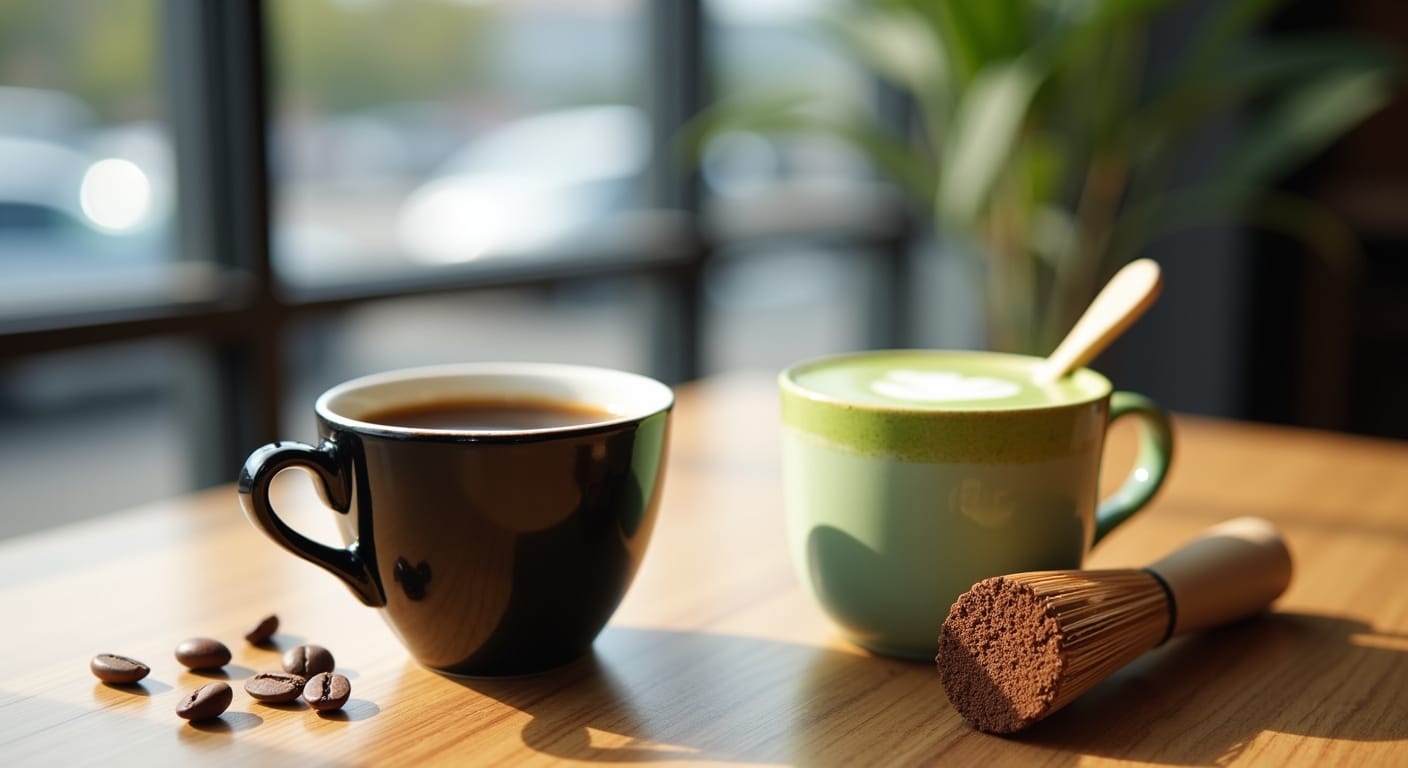
When people compare coffee vs matcha, the real question is not just which drink has more caffeine. It is also about flavour, energy, preparation, cost, and how each one fits into daily life in Malaysia. Coffee remains the default morning drink for many Malaysians, whether it is a kopi O at a kopitiam, a flat white at a specialty cafe, or a home-brewed pour-over. Matcha, on the other hand, has grown quickly in popularity among younger consumers, wellness-focused drinkers, and cafe-goers looking for something earthy, creamy, and visually appealing.
Both drinks have loyal fans, and both can be great depending on what you want from your cup. Some people want a bold, strong pick-me-up before work. Others prefer a calmer lift that feels smoother through the day. In this guide, we break down the differences between coffee and matcha in a practical way, with Malaysian habits, cafe culture, and price expectations in mind.
What is the difference between coffee and matcha?
The simplest difference is the source. Coffee comes from roasted coffee beans, brewed with water in many forms such as espresso, drip, French press, and pour-over. Matcha is a finely ground green tea powder made from specially grown tea leaves, whisked directly into water or milk.
Because of this, the flavour experience is very different. Coffee usually tastes roasted, nutty, chocolatey, fruity, or bitter depending on the bean and brewing style. Matcha tastes grassy, vegetal, umami, slightly sweet, and sometimes creamy when prepared well. If you enjoy exploring how extraction changes flavour, our guide to different coffee brewing methods gives a useful foundation for understanding why coffee can vary so much from cup to cup.
Another important difference is how you consume it. With coffee, you extract flavours from the grounds and then discard the grounds. With matcha, you drink the powdered tea leaf itself. That changes its texture, nutrient profile, and the way many people perceive its energy effect.
Caffeine: which gives more energy?
Coffee usually has more caffeine per serving
In most everyday situations, coffee contains more caffeine than matcha. A standard cup of brewed coffee may contain roughly 80 to 120 mg of caffeine, while espresso-based drinks can vary depending on shot count. Matcha often has around 30 to 70 mg per serving, though this depends on grade, portion size, and how it is prepared.
For Malaysians grabbing a quick drink before commuting, coffee often feels stronger simply because the serving format is more direct. A black coffee, long black, or iced Americano usually delivers a more noticeable caffeine hit than a standard matcha latte.
Matcha may feel smoother for some people
Although matcha normally contains less caffeine, many people describe its energy as more balanced. This is often linked to L-theanine, an amino acid naturally found in tea. In simple terms, some drinkers feel more focused and less jittery with matcha compared with strong coffee.
That does not mean matcha is automatically better for everyone. If you are sleep-deprived, need a quick lift, or enjoy the stronger impact of caffeine, coffee may still suit you better. But if coffee leaves you shaky, restless, or anxious, matcha can be worth trying as an alternative.
Taste and texture: which is easier to enjoy?
Coffee offers more variety
One big advantage in the coffee vs matcha debate is range. Coffee can be bright and citrusy, rich and chocolatey, syrupy and bold, or clean and floral. In Malaysia, that variety appears in everything from traditional kopi to modern single-origin brews. If you are new to coffee styles, our Malaysia coffee guide can help you understand the local landscape, from kopitiams to specialty cafes.
This wider flavour spectrum makes coffee easier for many people to grow into. If you dislike black coffee, you may still enjoy milk-based drinks like cappuccinos or lattes. If you dislike dark roasts, lighter beans may be more appealing.
Matcha has a distinctive earthy profile
Matcha is more specific in flavour. Good matcha can taste smooth, slightly sweet, creamy, and umami. Lower-quality matcha can taste flat, chalky, or overly bitter, especially if too much powder is used or the water is too hot. That is why first impressions often depend on where you order it.
For cafe goers, a well-made matcha latte can be comforting and satisfying, especially when paired with oat milk or fresh dairy milk. But unlike coffee, matcha usually sits within a narrower flavour lane. If you do not enjoy grassy or vegetal notes, you may struggle to love it.
Health benefits: coffee vs matcha
Both have antioxidants
Both drinks contain antioxidants and can be part of a balanced lifestyle. Coffee is commonly studied for compounds such as chlorogenic acids, while matcha is known for catechins, especially EGCG. These compounds are associated with general wellness benefits, though no drink should be treated as a magic solution.
From a practical standpoint, the healthiest version of either drink usually depends on what you add to it. A black coffee with no sugar is very different from a large blended coffee drink topped with whipped cream. A plain matcha is different from a sweetened matcha latte loaded with syrup.
Sugar content matters more than the base drink
In Malaysian cafes, sweetness can quickly change the equation. Many commercial matcha drinks are sweet by default, and many kopi orders also come with condensed milk or sugar unless you specify otherwise. If your goal is to reduce sugar, it is more useful to check the recipe than to assume one drink is healthier than the other.
If you enjoy pairing drinks with food, balance is useful too. A stronger coffee might work better with pastries, while a lighter matcha can pair well with softer desserts. For more ideas, explore our guide to coffee and food pairing combinations.
Which is better for focus and productivity?
This depends on how your body handles caffeine. Coffee is often preferred when speed matters. It is popular before meetings, long drives, exams, or early shifts because the boost is obvious and familiar. Matcha is often chosen by people who want gentler concentration, particularly for desk work, reading, or creative tasks.
In real life, the answer is often situational. A software developer working through the afternoon may prefer matcha to avoid a sudden caffeine spike. A barista opening a cafe at 7 am may reach for espresso. A student may switch between both depending on workload, sleep, and personal tolerance.
Preparation and convenience
Coffee is easier to find almost everywhere
In Malaysia, coffee wins on accessibility. You can get coffee at kopitiams, petrol stations, convenience stores, chain cafes, hotels, offices, and homes. You can drink it hot, iced, black, white, sweet, manual brewed, or espresso-based. There is a coffee option for nearly every budget and routine.
At home, coffee is also very flexible. Instant coffee is the fastest entry point, while drip brewers, moka pots, French presses, and espresso machines offer more control. Because there are so many formats, coffee adapts well to both casual and hobbyist drinkers.
Matcha takes a bit more care
Matcha can be simple, but it does ask for more attention if you want a good cup. The powder should be sifted to reduce clumps, whisked properly, and mixed at the right temperature. Poorly prepared matcha often ends up lumpy or overly bitter.
That said, ready-to-drink matcha and cafe-made matcha lattes have made it much easier for consumers. If convenience is your top priority, coffee still has the edge. If ritual matters to you, matcha preparation can be part of the appeal.
Price in Malaysia
Price can influence the coffee vs matcha decision more than many people expect. Traditional local coffee is often the cheapest option, especially at kopitiams and casual eateries. Specialty coffee costs more, but there are still many price points depending on bean quality and cafe positioning.
Matcha usually sits at a premium in cafes, especially if the venue emphasises ceremonial-grade or imported Japanese matcha. A matcha latte often costs as much as, or more than, a standard latte. At home, quality matcha can also be relatively expensive per gram, particularly if you drink it often.
For budget-conscious consumers, everyday coffee tends to be more economical. For occasional cafe treats, matcha may still feel worth it for people who enjoy the flavour and experience.
Which drink suits different lifestyles?
Coffee may suit you if:
- You want a stronger caffeine boost.
- You enjoy roasted, bold, or complex flavours.
- You need a drink that is widely available and budget friendly.
- You like experimenting with different brew styles.
- You often pair your drink with breakfast or pastries.
Matcha may suit you if:
- You prefer gentler energy and steadier focus.
- You enjoy earthy, creamy, or tea-based flavours.
- You want a cafe drink that feels lighter or more wellness-oriented.
- You are sensitive to coffee jitters.
- You enjoy preparation as part of the experience.
Coffee vs matcha for cafe culture in Malaysia
Malaysia has room for both. Coffee remains deeply rooted in everyday culture, from heritage kopitiam drinks to specialty espresso bars. It is part of morning routines, social meetings, and work breaks. Matcha has grown through modern cafe menus, lifestyle branding, and younger consumers who enjoy tea-based drinks with a premium feel.
For cafe owners, both categories can coexist well. Coffee drives familiarity and repeat demand, while matcha adds menu variety and appeals to non-coffee drinkers. For consumers, this means more choices and more crossover. It is now common to see customers switching between an iced latte one day and a matcha latte the next.
So, coffee or matcha?
If you want a direct answer, neither is universally better. Coffee is usually better for stronger caffeine, wider flavour variety, affordability, and convenience. Matcha is often better for people who want smoother energy, a tea-based alternative, or a more calming drinking experience.
The best choice comes down to your body, taste preferences, and routine. Some Malaysians genuinely do best with coffee in the morning and matcha later in the day. That may be the most practical conclusion of all. Instead of treating coffee vs matcha as a battle, it is more useful to understand what each drink does well.
Final thoughts
The rise of matcha has not replaced coffee in Malaysia, and coffee is unlikely to lose its place anytime soon. But matcha has earned its popularity by offering a different kind of energy and flavour experience. If you have only ever stuck to one, trying the other with an open mind can be worthwhile.
If you enjoy practical coffee guides, cafe culture insights, and beverage trends in Malaysia, subscribe to our newsletter for more updates from Expresso.
