

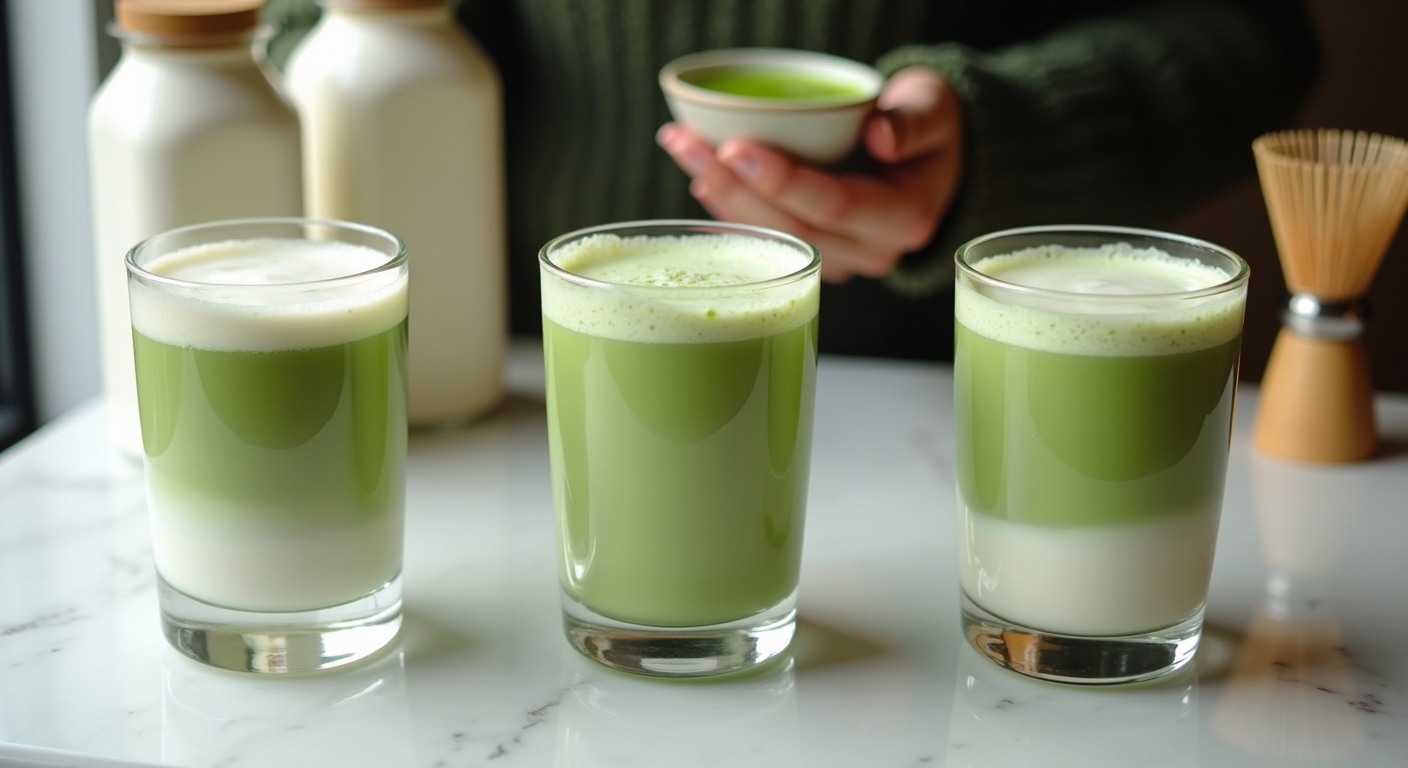
If you are wondering about the best milk for matcha latte, the short answer is this: oat milk is the easiest crowd-pleaser for a creamy, slightly sweet cup, soy milk gives a balanced and protein-rich option that pairs well with matcha, and dairy milk offers the richest texture and strongest foam. The best choice depends on whether you prioritise taste, frothing, nutrition, or a dairy-free lifestyle.
Best Milk for Matcha Latte: Quick Answer
For most people, oat milk is the best milk for matcha latte because it adds natural sweetness, smooth texture, and a creamy mouthfeel without overpowering the tea. Soy milk is a close second if you want a more neutral plant-based option with better protein. Dairy milk is best if you want classic cafe-style foam and a fuller body.
- Best overall: Oat milk
- Best dairy-free protein option: Soy milk
- Best for foam and richness: Dairy milk
- Best for strong matcha flavour: Unsweetened soy or fresh milk
Why Milk Choice Matters in a Matcha Latte
Matcha has a distinct flavour profile: grassy, slightly bitter, creamy, and sometimes naturally sweet depending on grade and preparation. Unlike coffee, which can push through stronger flavours, matcha is more delicate. That means the milk you choose can either support the drink beautifully or mute the tea too much.
In Malaysia, this matters even more because many people enjoy matcha iced, slightly sweetened, and cafe-style. The milk choice affects:
- Sweetness level
- Texture and body
- Foam quality for hot matcha latte
- How clearly the matcha taste comes through
- Calories and nutrition
- Suitability for lactose-free or vegan diets
If you are still refining your recipe, our guide on how to make a matcha latte at home helps you balance whisking, sweetness, and milk ratio more consistently.
Oat vs Soy vs Dairy for Matcha Latte
| Milk Type | Taste with Matcha | Texture | Frothing | Best For |
|---|---|---|---|---|
| Oat milk | Mildly sweet, smooth | Creamy | Good to very good | Balanced all-round matcha latte |
| Soy milk | Neutral to beany depending on brand | Medium-creamy | Good | Dairy-free drinkers who want more protein |
| Dairy milk | Rich, classic, slightly sweet | Full-bodied | Excellent | Traditional hot matcha latte and latte art |
Is Oat Milk the Best Milk for Matcha Latte?
For many home drinkers and cafes, yes. Oat milk has become the default answer to the best milk for matcha latte because it solves several problems at once. It is naturally sweeter than soy, less heavy than full-cream dairy, and usually creamy enough to make hot or iced matcha feel indulgent.
Why oat milk works so well
- Its mild sweetness softens matcha’s bitterness
- It creates a creamy texture without too much heaviness
- Barista versions froth well for hot drinks
- It suits vegan and lactose-intolerant drinkers
Possible downside of oat milk
Some oat milks are too sweet or too cereal-like, which can cover the finer taste of higher-quality matcha. If you are using ceremonial or premium matcha, choose an unsweetened or barista blend with a clean flavour.
In Malaysia, oat milk is common in specialty cafes, but it can be more expensive than soy or dairy. If budget matters and you drink matcha often, that may influence your decision as much as taste.
Is Soy Milk Better for Matcha Latte?
Soy milk is one of the most underrated options for matcha. It has enough body to support the drink, usually more protein than oat milk, and a more restrained sweetness. That makes it a strong choice if you want the matcha flavour to stay noticeable.
Why soy milk can be the best milk for matcha latte
- More neutral sweetness than oat milk
- Good protein content for better structure
- Usually froths better than many basic plant milks
- Often more affordable and widely available
What to watch out for
The main issue is flavour. Some soy milks have a noticeable beany note that does not suit every matcha powder. The result depends heavily on brand and whether it is sweetened. Unsweetened soy milk is often best if you want a clean, less sugary cup.
For readers who enjoy comparing beverage ingredients and brewing variables, our coffee tips and knowledge hub also covers useful principles that apply broadly to cafe drinks, including texture, balance, and flavour matching.
Is Dairy Milk the Best Milk for Matcha Latte?
Dairy milk is still a very strong option, especially if you want a classic cafe-style latte. Fresh milk gives a rich body, familiar sweetness, and excellent foam. If you regularly order hot matcha lattes in cafes, that silky texture you enjoy is often easiest to recreate with dairy.
Why dairy milk works
- Excellent steaming and microfoam
- Rich body and creamy finish
- Natural lactose sweetness supports matcha
- Easy to find in any supermarket
Where dairy can fall short
Full-cream milk can sometimes overwhelm lighter or more delicate matcha, especially if too much milk is used. If you want the green tea character to stay front and centre, low-fat milk or a smaller milk ratio may work better.
It is also not suitable for lactose-intolerant drinkers, which is relevant in Malaysia where many people prefer plant-based or lactose-free alternatives for comfort.
Which Milk Tastes Best with Matcha?
If we focus purely on taste, here is the simplest way to think about it:
- Oat milk tastes best if you like smooth, sweet, dessert-like matcha lattes.
- Soy milk tastes best if you want a cleaner, more tea-forward flavour.
- Dairy milk tastes best if you want a rich, classic cafe experience.
No single answer fits everyone because matcha preferences vary. Someone who enjoys iced strawberry matcha or sweeter cafe drinks may like oat milk most. Someone who buys better-quality Japanese matcha may prefer soy or fresh milk because they let the tea speak more clearly.
Best Milk for Hot Matcha Latte vs Iced Matcha Latte
For hot matcha latte
Dairy milk and barista oat milk usually perform best because they steam well and create a silky mouthfeel. Soy also works, but the brand matters more.
For iced matcha latte
Oat milk is often the winner because cold drinks benefit from extra creaminess and mild sweetness. Soy is a good option if you want a less rich finish. Dairy remains solid, especially for a cleaner and more familiar taste.
If your iced matcha tends to taste watery, the issue is often not only the milk. Ice dilution, weak matcha concentration, and too much sweetener can all flatten the drink.
Best Milk for Matcha Latte by Preference
| Your Priority | Best Choice | Why |
|---|---|---|
| Creamiest texture | Oat milk | Soft, full mouthfeel without being too heavy |
| Strongest foam | Dairy milk | Best steaming performance and latte texture |
| More matcha flavour clarity | Soy milk | Usually less sweet and less masking |
| Vegan option | Oat or soy milk | Both are accessible and work well |
| Protein content | Soy milk | Often higher protein than oat milk |
| Classic cafe taste | Dairy milk | Rich, familiar latte profile |
How to Choose the Best Milk for Matcha Latte at Home
1. Consider your matcha grade
If you are using premium matcha, avoid overly sweet milk that hides nuance. Soy or fresh milk may be better. If you are using culinary matcha, oat milk can help round out bitterness.
2. Decide if you want the tea or the latte to lead
If you want a tea-forward drink, choose soy or lighter dairy. If you want a comforting, cafe-style drink, choose oat or full-cream dairy.
3. Check the ingredient label
Some milks contain added sugar, oils, stabilisers, or strong flavourings. These change the final cup more than many people expect. Unsweetened versions give you more control.
4. Match the milk to the serving style
For hot drinks, choose a milk that froths well. For iced drinks, choose a milk that keeps body and flavour even when diluted slightly by ice.
5. Test with your usual recipe
The best milk for matcha latte is the one that works with your own powder, sweetener, and serving style. A side-by-side tasting with small batches is often the fastest way to decide.
Common Mistakes When Pairing Milk with Matcha
- Using very sweet milk with sweetened matcha: This can make the drink cloying.
- Choosing milk with strong added flavours: Vanilla-heavy or flavoured milks can distract from matcha.
- Using too much milk: Even the best milk cannot save a weak matcha ratio.
- Ignoring temperature: Overheated milk can flatten both texture and flavour.
- Assuming all brands perform the same: Oat and soy milks vary a lot in sweetness, thickness, and frothing.
Best Milk Brands and Availability in Malaysia
In Malaysia, finding the best milk for matcha latte often comes down to what is easily available at supermarkets, cafes, and online grocery platforms. Oat milk barista blends are increasingly common in urban areas, while soy milk and dairy milk remain easier to find nationwide.
When choosing, look for these characteristics rather than only brand names:
- Unsweetened or lightly sweetened for better control
- Barista edition if you want frothing
- Clean ingredient list for a less processed taste
- Chilled fresh milk if you prefer dairy texture and foam
For many Malaysians making matcha daily, soy often wins on affordability, while oat wins on cafe-style taste.
Key Takeaways
- Oat milk is the best milk for matcha latte for most people because it is creamy, slightly sweet, and easy to enjoy.
- Soy milk is ideal if you want more protein and a clearer matcha flavour.
- Dairy milk is best for rich texture, strong foam, and a classic hot latte feel.
- Unsweetened versions usually make it easier to balance the drink.
- The best choice depends on whether you prefer sweetness, texture, frothing, or a tea-forward profile.
Final Verdict: Which Milk Should You Choose?
If you want one practical answer, start with oat milk. It is the safest all-round recommendation for beginners and cafe-style drinkers, especially for iced matcha lattes. Choose soy milk if you care more about a balanced, less sweet cup and better protein. Choose dairy milk if you love traditional latte texture and drink your matcha hot.
In other words, the best milk for matcha latte is not only about trend or nutrition. It is about how much of the matcha you want to taste, how creamy you want the drink to feel, and what suits your daily routine in Malaysia.
Related Guides
If you want to improve your homemade drinks further, read our guide on how to make matcha latte at home. You can also explore more drink education in our coffee tips and knowledge section for practical cafe-style techniques and flavour tips.
